Gaming nights at home suit family budgets because much of the equipment is already in the house. A shared screen, a pack of cards and one or two controllers are enough to start, and free or low-cost options fill most of the gaps. Planning around what’s already available keeps the spending predictable week after week and means the first evening can happen without buying anything new.
Setting a Games Budget
Agree a fixed monthly amount for games before anyone starts browsing, and treat it like any other category in the household budget. A fostering allowance may cover hobbies, interests and fun days out as well as food and clothing, so families who foster could include games when they divide the money up. Before buying, ask friends and relatives whether they have games or controllers they’d be happy to lend. Inviting each person to suggest something that fits within the limit keeps spending visible.
Free Games for Local Play
Some free-to-play titles include local multiplayer, which means one console and a few controllers can host an entire evening without any spending per game. Rocket League, for instance, offers local play for up to four players on the Nintendo Switch and is free to play. That console’s Joy-Con controllers also split into two pads, so a pair of players can start straight away. Check how many people can play at once before choosing, since that decides whether everyone gets a turn.
Board and Card Games
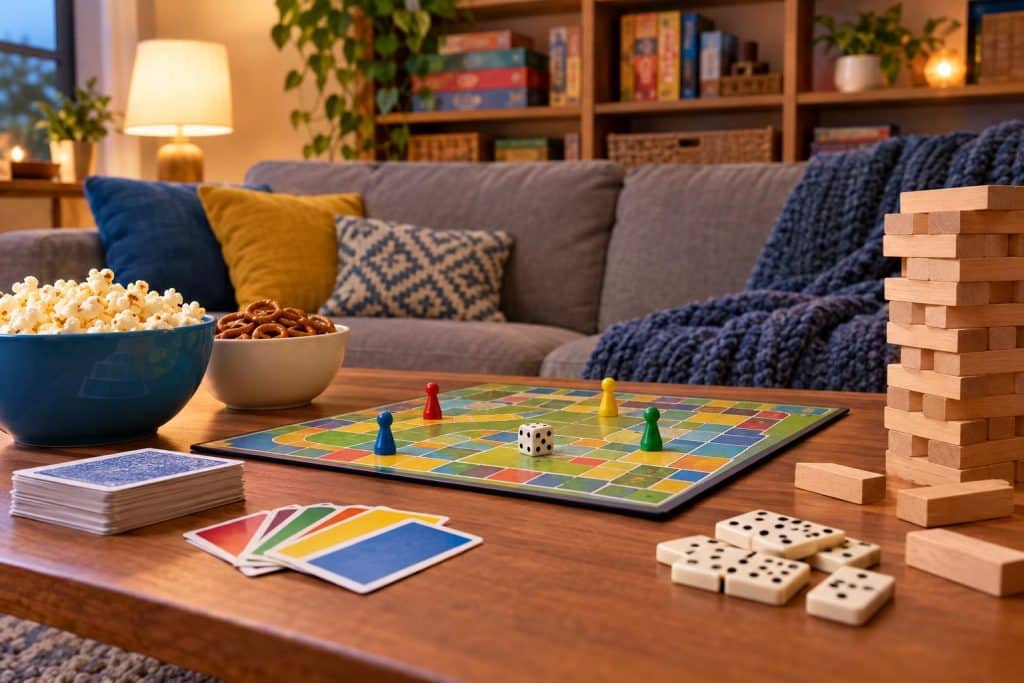
Mancala is an ancient strategy game for up to four players that takes no time to learn, which makes it easy to introduce to mixed ages. A game takes about fifteen minutes on average, which suits weeknights when bedtimes still matter. A standard pack of playing cards already covers snap, rummy and plenty of other games, and rotating through them keeps the evening varied for next to nothing.
Keeping the Evening Fun
A few small habits keep the evening enjoyable for younger children and teenagers alike, and none of them costs anything to put in place:
- Take turns choosing the game, within the agreed games budget, so no single favourite wins the vote every week and younger players get a real say in the plan.
- Pair an adult with a child, or an experienced player with a newcomer, and swap partners after each round so scores stay close and nobody feels left behind.
- Keep snacks simple, such as popcorn, homemade pizza or a bowl of fruit, which cost less than takeaway, and agree the menu beforehand so extra orders don’t creep onto the bill.
Making Game Night a Habit
Fixing a regular evening, say the first Friday of each month, makes the budget easier to plan and gives everyone something to look forward to. After a few rounds, ask what people enjoyed most and keep those games in rotation, adding something new only when there’s money left in the games pot. The simplest next step is to pick a date, agree the amount and let the youngest player choose the opening game.