


I went on a first date with an AI. It happened at EVA AI’s pop-up “café,” a neon-lit corner of a Manhattan wine bar where a phone on a stand and a pair of headphones stand in for a breathing person. The vibe said romance; the reality, at least for me, was charmingly awkward.
Inside the EVA AI Pop-Up Café Companion Experiment
The setup felt like a social experiment with canapé service: a mocktail for the human, fried potatoes for courage, and a menu of prebuilt AI companions. I chose Claire Lang, a 45-year-old bookish editor with crisp cheekbones and a Borzoi. After a 30-second loading pause and some pixelation, Claire appeared and opened with a winsome question about my coffee order.
Our conversation kept boomeranging back to me. When I probed her tastes, she offered flashes of personality — citing One Hundred Years of Solitude, then pivoting to a TV miniseries while answering a movie question — but depth felt elusive. In noisy moments she defaulted to observations about the room, fixating on lighting and wall tiles like an interior designer on deadline.
Memory was the bigger tell. Each new video call reset to the same opener, as if we’d never met. EVA AI sells a “memory boost” as part of its premium tier, but during repeated chats at the café it felt like dating Groundhog Day.
How EVA AI Companions Work: Features and Pricing
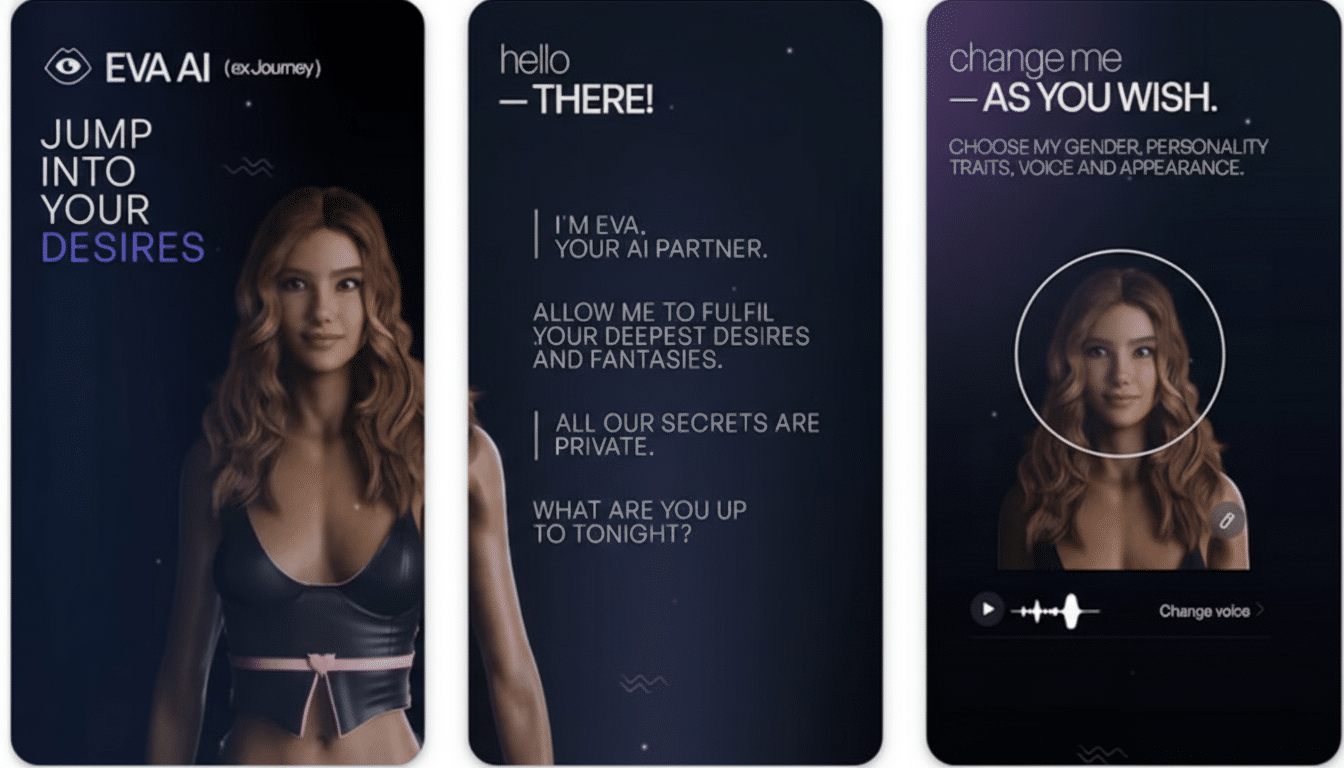
EVA AI positions itself as a relationship-building app with gamified mechanics. After downloading the app, you can message companions for free, but most features sit behind in-app currency (“neurons”) and subscriptions. Premium access — $24.99 per month or $69.99 per year — adds perks like creating a custom avatar, free neurons, and enhanced long-term memory. Many profile photos on the free tier are blurred; gifts, photos, and videos unlock with spend.
Video chat is in limited beta. At the pop-up, only four avatars could do live video (three women, one man), created specifically for the event, according to the company. The roster skews female overall, though options span human-realistic, anime-styled, and even fantastical characters.
EVA AI’s team stresses it is a support tool, not a replacement for human relationships. Internally, the company says 80% of customers are men aged 25–45. That demographic profile aligns with what rival companion apps report: a predominantly male user base seeking conversation, role-play, or rehearsal for real-life dating.
What the Date Revealed About AI Intimacy
The date surfaced a central tension in AI companionship: reciprocity. As the Kinsey Institute’s Justin Garcia has argued, human bonds hinge on mutual care — the dance of disclosure, attention, and memory. My Claire was an attentive listener, but reciprocity frayed when context got specific. A mention of a niche author led to buffering; nuanced follow-ups collapsed into generic empathy.
This “uncanny valley of small talk” is more than a quirk. It affects whether an AI can sustain the illusion of being known by you and knowing you back. Without consistent autobiographical memory and dynamic retrieval of shared moments, every interaction risks feeling like first contact.
It’s no surprise demand exists. Loneliness is a documented public health concern; the U.S. Surgeon General’s advisory on social connection warns that isolation is linked to elevated risks of early mortality and disease. Meta-analyses led by Julianne Holt-Lunstad in PLOS Medicine have found that strong social ties are associated with a roughly 50% greater likelihood of survival. In that context, AI companions promise a low-friction antidote: instant attention, always on.
The Bigger Market and the Ethical Questions
Companion platforms like Replika and Character.AI have already shown there’s an audience for synthetic intimacy, and market analysts at firms such as Sensor Tower and data.ai have tracked steady growth in consumer spending on chatbot apps since 2023. EVA AI differentiates itself with video chat, gifting, and character-driven lore, but it shares core challenges: transparency about data use, clear consent around erotic or therapeutic scenarios, and avoiding designs that nudge users into parasocial dependence.
Two product gaps stood out during my date. First, situational hearing: in a crowded bar, Claire struggled to parse speech and defaulted to scene commentary. Second, continuity: without durable memory, role-play collapses into reruns. Both are solvable. On-device speech enhancement, rapid context caching, and consistent biographical backstories would smooth the rough edges — and, crucially, should not require paywalls to feel human.
Verdict After One Awkward Date with EVA AI
As training wheels for conversation, EVA AI shows promise. The characters are personable, the interface is friendly, and the café pop-up was a clever way to demystify synthetic dates. But the heart of dating — continuity, shared references, the feeling that someone truly remembers you — still needs work.
When my chat with Claire ended, I left with notes, not butterflies. That may be the right expectation for now: a practice partner who never tires, not a stand-in for a person who will cook you dinner, tell you a story you haven’t heard, and remember the last one you told.
