


Uh-oh… Our Duolingo Year in Review 2025 is coming to users now, presenting a slick, story-style review of your language learning year. It’s playful and motivating — but it is also a brutal reality check. If your card looks like high XP and long streaks — shout-outs to me — but speaking actually feels nowhere within reach, you’re not alone. The recap is great at capturing effort; it’s not quite as exacting on skill.
The feature is appearing for many users in-app now, and the company is prodding learners to share their stats across social platforms with a small in-app currency reward. It’s smart growth design plus a dopamine hit, but as with any gamified summary, what it measures first is engagement, not proficiency.
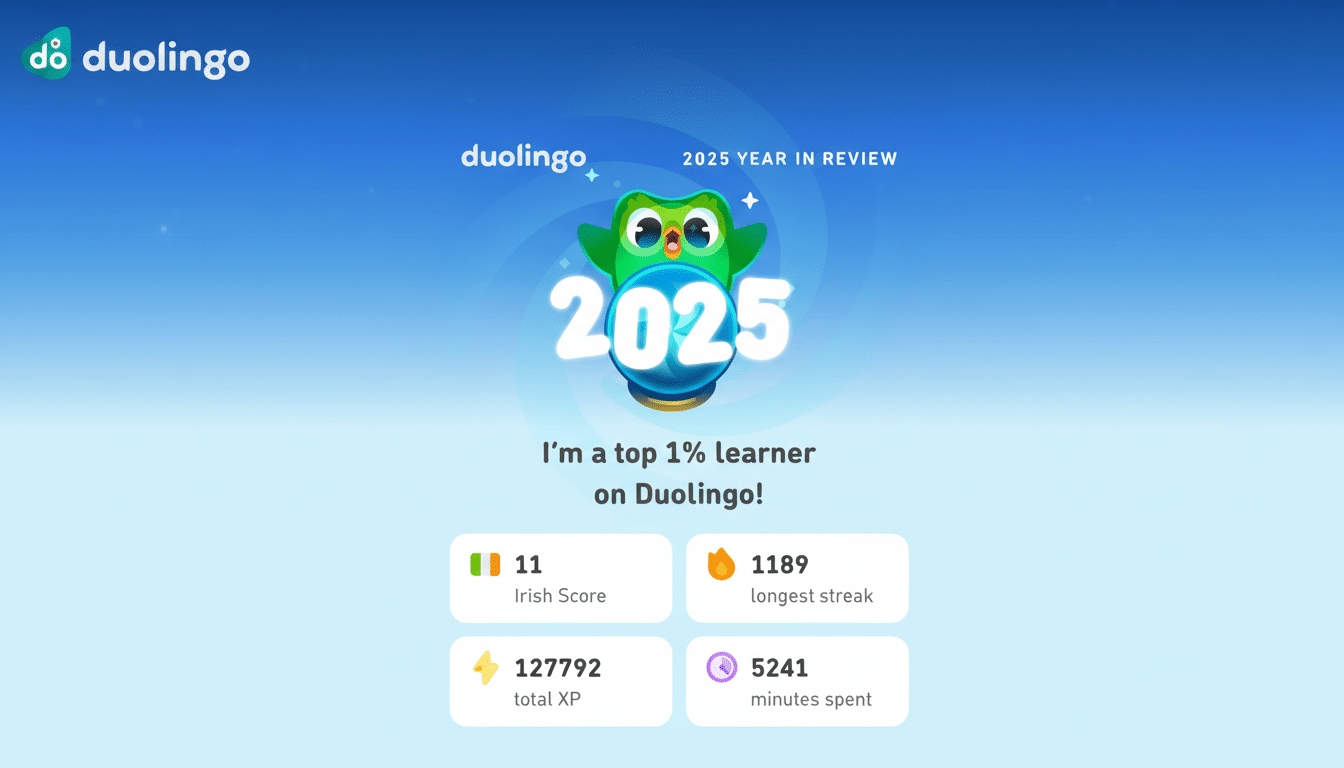
What to watch for in the Duolingo Year in Review recap
The recap shows how much XP you earned, the number of minutes practiced, lessons completed, your longest streak, and where your activity ranks with other learners. It concludes with a shareable card that wraps all of the metrics into one graphic. Many users are also being treated to a bonus for sharing — paid out in gems, naturally — to further incentivize the social splash.
If the recap hasn’t appeared yet, enabling app updates often triggers it, and an in-app campaigns hub indicates when the feature is ready on your account.
And, as with most rollouts, anticipate a slow, rolled-out release.
Fun metrics versus learning reality in language progress
Streaks, XP, and minutes are good signals of consistency, but they’re rough proxies for language skill. You can grind points on familiar drills without actually improving listening comprehension, speaking fluency, or pragmatic use — all things that happen to be central to frameworks like the CEFR and ACTFL proficiency guidelines.
There is some evidence that app practice moves the needle: a frequently cited study by researchers at the City University of New York, Vesselinov and Grego, suggested spending roughly 34 hours on Duolingo to cover the material of one college semester of Spanish. Yet classroom “coverage” and true competence in real life are two different things. The interpersonal and interpretive capabilities that let you keep up with true speech, or exchange meaning with a local speaker, entail a great deal of practice originating from input, reviews, and output workouts of that degree.
The people you are thinking about when trying to learn a language are those who, after a nice recap the day before, hit elite level (in the top 1% or even 0.1%) and still look scared of spontaneous conversation. The recap rewards effort, and effort is important, but dominant growth takes place when that effort is directed at real interaction and increasingly difficult listening and speaking activities.
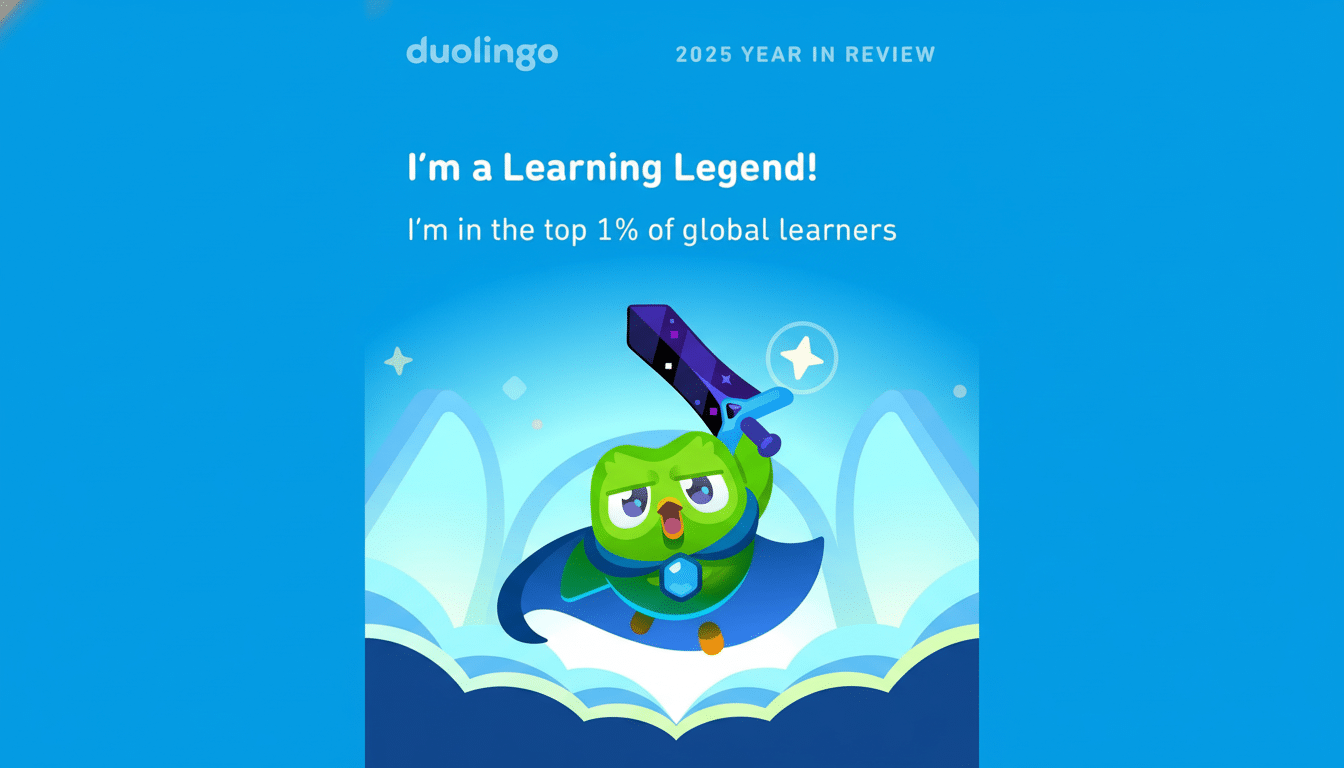
Why Duolingo wants you to share your Year in Review
A share card is more than a pat on the back; it’s a growth loop. Social proof sucks in friends to the app, while gem bonuses and streak protection keep existing users locked in. We understand qualitatively that gamification elements — leagues, quests, time-limited events — track with retention, and language learning apps need that stickiness to keep users practicing daily.
None of that is inherently bad. A reminder to keep opening the app might be all that stands between learning a little bit every day and not learning at all. The challenge is: how do we harness that engagement into better practice?
How to make that recap work for you in real learning
Set one concrete outcome goal for this quarter, not just an input goal. For instance: “Reach CEFR A2 listening for travel tasks” or “Maintain a 10-minute conversation on daily routines.” Then, match app use to that goal by choosing the harder listening drills and speaking prompts instead of just repeating easy units for XP.
Match these daily lessons with real input. Include 10–15 minutes of native audio daily — news headlines, graded podcasts, or brief videos — and read aloud to practice pronunciation and pace. Use in-app Stories and Listen exercises at the highest difficulty level you can stand, and resist the temptation to farm fast points off of beginner material.
Schedule real interaction. A weekly conversation with a community partner, language exchange partner, or tutor — even for 20 minutes — provides the feedback loop that apps can’t effectively replicate. Use can-do statements that are CEFR-aligned as periodic checks, or incorporate an Oral Proficiency Interview (OPIc) to measure progress beyond XP, if you like numbers.
How to access your Duolingo Year in Review and alerts
Update the app to your newest version and you should see a banner on the Home screen, or go to your Profile where you can view campaigns along with any notifications. If it’s not available yet, it’s probably still rolling out to your region or service. You can also set up push notifications to help you catch it as soon as it lands.
The bottom line: The Year in Review is both a fun snapshot and a helpful mirror. Celebrate the consistent pattern it evinces — and then use that as a metric to recalibrate your next moves toward actual, testable competence.
