


At CES, where glitz and spectacle often take center stage, a modest bedside accessory is making a humble promise: better nights. Ambient’s Dreamie is a phone-free sleep buddy that aims to keep your feed off your nightstand and your brain out of doomscroll mode. It’s a sunrise alarm, a sound machine and a gentle flashlight wrapped up in one compact device — no companion app, no subscription and as little friction as possible by design.
A Built-for-Purpose Alternative to Bedside Phones
At its heart, Dreamie’s promise is simple: Take the most powerful source of late-night provocations, the smartphone, and replace it with a subdued, single-purpose aid. The device has a spinnable circular touch screen for speedily setting your alarms and manipulating playback controls so that you’re not scrolling through menus or swiping past notifications at midnight. Ambient demoed the product on the CES floor and at the Pepcom media showcase; there, it framed the device as a purposeful antidote to the attention economy’s hold over bedtime.
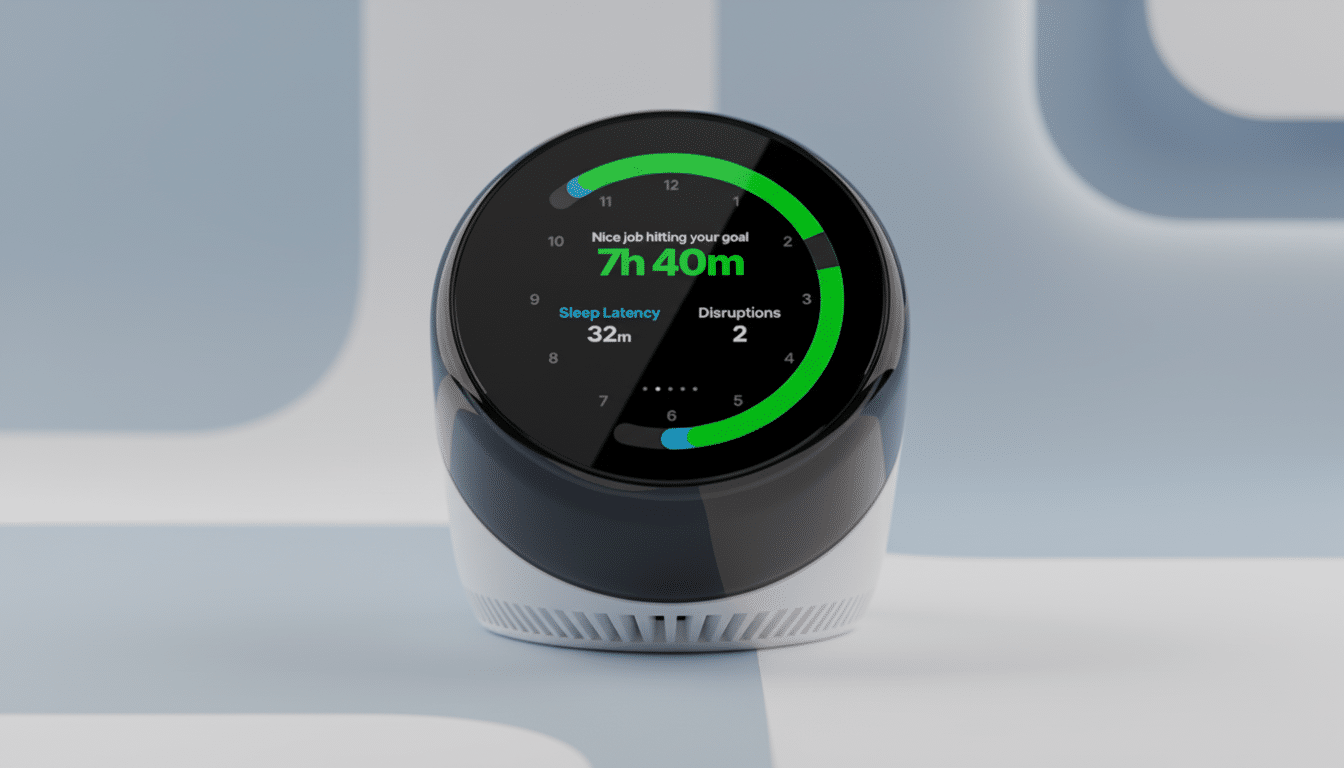
The hardware is designed to be tactile and low-clutter. A ring of LEDs around the display dims, cools, and brightens slowly, simulating dawn in order to minimize sleep inertia. Can’t find a glass of water without waking up your partner? Its light can be aimed off to one side as a targeted, bedside-safe beam. The aim is not to persuade you that you should spend more time with a screen — it’s to give you less reason ever to pick up the phone in the first place.
What the Dreamie Device Does and How It Works
Dreamie includes a selection of built-in calming audio — from environmental soundscapes to guided relaxation sessions — so you’re not fumbling between devices in search of a playlist. A powerful built-in speaker and Bluetooth (R) headphone compatibility make it even easier to relax with your favorite music. There is no account creation step and nothing to install — just go to the site on your iPhone or computer camera. Upload a selfie and apply instant effects.
Most importantly, Ambient is working on sleep tracking that’s contactless and doesn’t require wearables. Sleep data, the company says, will be encrypted on the device and remain local as opposed to being pushed to the cloud — a low-key choice in a category where convenience comes with privacy trade-offs.
Why Ditching Doomscrolling at Bedtime Matters
The health argument for a phone-free nightstand is clear. The C.D.C. estimates that about 35 percent of U.S. adults do not get the minimum needed seven hours, and time on screens before bed is a powerful reason. Studies published in journals including PNAS have connected exposure to short-wavelength light in the evening with delayed melatonin release and subsequent sleep onset. The American Academy of Sleep Medicine suggests establishing a wind-down ritual that avoids screens and bright light in the hour leading up to bedtime.
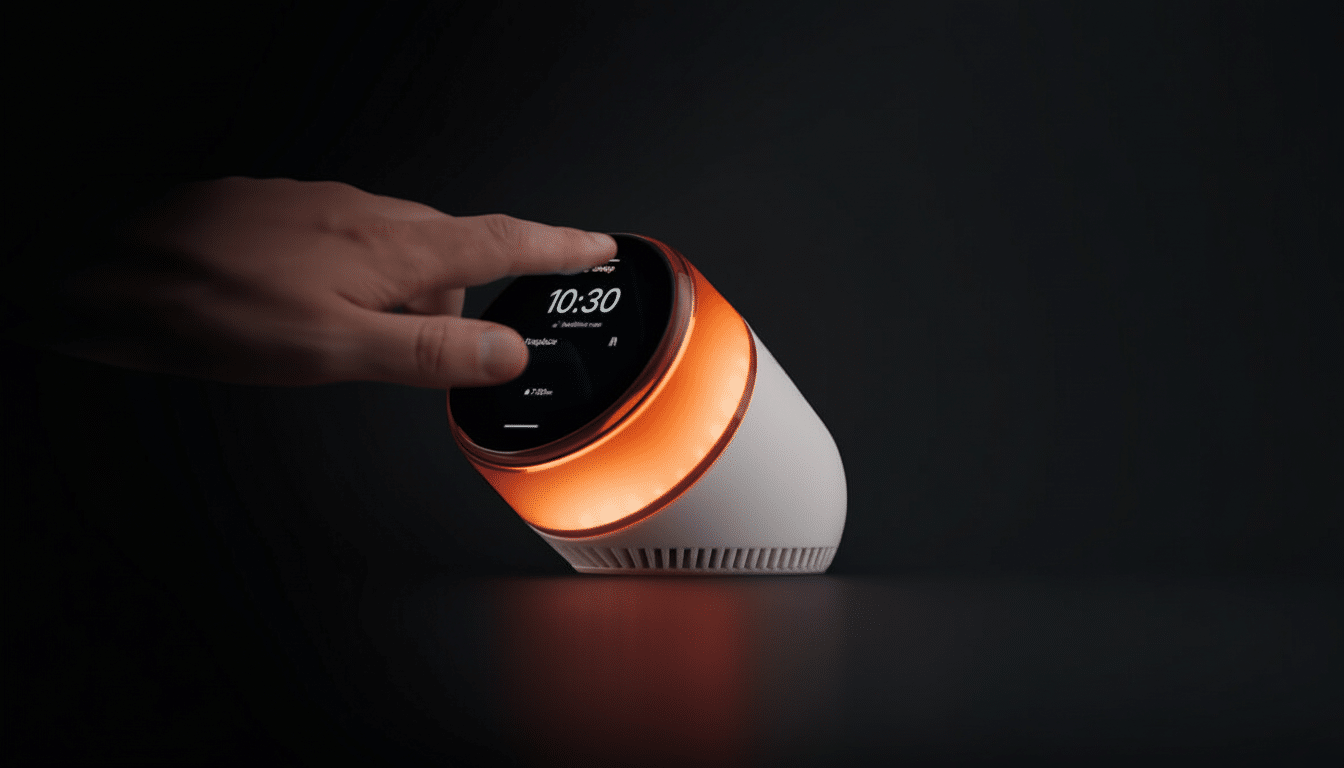
Equally important is the creation of habits. Alarms, messaging, news and infinite scroll are all in the phones that everyone has with them all the time. Even something benign like setting a wake-up time can funnel you into the morass of feeds and notifications. By removing basic utility (alarm, audio, light) from temptation (apps and alerts), Dreamie applies a behavioral nudge that sleep clinicians and cognitive behavioral therapy for insomnia frequently espouse: minimize cues for arousal and keep the routine simple.
How It Compares to Sunrise Alarms and Smart Displays
So-called sunrise alarms aren’t new: Philips and other brands have helped make dawn simulation for gentle wake-up calls a thing for years. More recently, lifestyle-oriented clocks have brought with them curated audio libraries and streamlined industrial design. Many of those competitors, however, depend on companion apps and subscriptions. Smart displays of various stripes from the biggest tech platforms add voice assistants and even radar-based sleep sensing — but they usually come with accounts and connectivity, and cloud storage for your personal data.
“Dreamie’s pitch is that you keep the essentials on the device, reduce the friction of our phone addiction and treat privacy as a feature — not a settings menu.” It will not replace the breadth of a smart display, but that is exactly the point. For families wanting to enforce a no-phones rule after lights out, a dedicated offline-first tool may also be more palatable — if nothing else, its existence can serve as a reminder of the desired reset.
Price, Availability, and Early Takeaways from CES
Dreamie is currently available from a successful crowdfunding campaign starting at $249.99. That puts it in the premium range, but that also undercuts the long-term cost of devices which gate their best content behind memberships. If Ambient delivers on its promise of contactless tracking without storing data outside the device, it could put pressure on peers to reconsider cloud use in sleep tech.
What Dreamie does not do may be its smartest move. By removing the apps, accounts and infinite feeds, it acknowledges a universal truth of modern bedrooms: The path of least resistance usually wins. If disrupting the doomscroll loop is the aim, designing it so that the healthy choice is the easy choice may be a shrewd place to begin.
