


Selecting an appropriate nurse uniform is a consideration that goes far beyond a facility’s uniform standards. A good uniform can promote comfort, safety, professionalism, and efficiency during a long busy shift. Unfortunately, it is not uncommon for healthcare providers, particularly those shopping on their own, to make common errors with nurse uniform selection that can have negative impacts on performance, aesthetics, and sometimes infection control.
With all these varieties being offered in today’s market, it is not hard to see why people can end up prioritizing style, fabric, or price over function and value. In this article, we will examine some of the most common errors nurse uniform buyers make and provide advice on how to sidestep them.
- 1. Prioritizing Appearance over Comfort
- 2. Neglecting Fabric Quality
- 3. Neglecting Infection Control Standards
- 4. Poor Match
- 5. Failure to Account for Length of Working Hours & Environment
- 6. Purchase Based Solely on Price
- 7. Ignoring Practical Features
- 8. Ignoring Colour & Role Identity
- 9. Failure to Factor in Maintenance Ease
- 10. Neglecting the Comfort and Wellbeing of the Staff
- 11. Failure to Update Uniforms Periodically
- 12. Not looking for feedback or a try-before-buying approach.
- Conclusion
1. Prioritizing Appearance over Comfort
One of the most common errors in this case is when a uniform is chosen purely on aesthetics. Although this is important in a professional setting, in a healthcare setting, comfort should never be compromised.
Nurses are engaged in prolonged hours of standing, moving from one place to another, bending when dealing with patients, among other activities. A uniform may appear fashionable but end up being a constraint to movement and comfort. Such clothes can cause tiredness, lack of concentration, and even straining.
What to do instead:
Select your uniforms with a focus on a professional look and ergonomics in terms of stretch fabric and breathability to cater to all-day wear.
2. Neglecting Fabric Quality
Fabric selection can be an important consideration which iscommonly overlooked. Poor-quality fabrics may have an initial soft touch but can soon become misshapen, discolored, or uncomfortable after a few launderings.
Common fabric-related errors are:
- Wearing heavy fabrics which have the capacity to retain heat.
- Using materials that wrinkle easily
- Purchase of uniforms which fade or pill easily after a few washes
- Neglecting breathability and moisture management Poor qualities in fabric will impact not only comfort but also hygiene and professionalism.
What to do instead:
Use high-quality and durable fabric in healthcare settings, such as a blend of polyester with stretch and other healthcare qualities.
3. Neglecting Infection Control Standards
Secondly, another critical error in uniform selection is ignoring infection control. Considering that nurse uniforms frequently come into contact with patients, surfaces, and other medical equipment, infection control ranks higher among their considerations.
Such uniforms with excessive designs, unnecessary seams, or textured fabrics can be a haven for bacteria. Additionally, materials unable to withstand high-temperature washing can affect infection control measures.
What to do instead:
Select your uniforms with a smooth finish, antimicrobial qualities, minimal designs, and fabrics that can withstand constant disinfection without failing.
4. Poor Match
Poorly fitting uniformed attire is a common problem prevalent in healthcare environments. Tight and loose-fitting uniformed attire pose different issues.
- Too tight: Limits mobility, can be very uncomfortable, and tears easily
- Too loose: Appears unprofessional, creates safety hazards, and can hamper work
Fit can also impact confidence. The nurse with an ill-fitting uniform may not appear very confident in patient encounters.
What to do instead:
Choose uniforms with an ergonomic cut, stretch fabric panels, and inclusive sizing which facilitate freedom of movement without undermining a polished finish.
5. Failure to Account for Length of Working Hours & Environment
Every healthcare setting is unique, but most healthcare professionals end up selecting their uniform without thinking where they will wear it.
For instance:
- ER nurses require very flexible and airy uniforms
- Ward nurses might prioritize pockets and durability
- Community nurses need weather-resilient, layered solutions
Wearing a uniform not suitable for the working environment may cause inconvenience and lack of efficiency.
What to do instead:
Align uniform elements with requirements of your work, your department, and your length of work hours.
6. Purchase Based Solely on Price
Cost is a factor which is well understood, but in most cases, opting for the lowest cost option can have a higher cost implication in the future. Low-cost uniforms are not very durable, fade quickly, and need to be replaced frequently.
On the other hand, improving the quality of options available, such as a long-lasting nurse uniform series, is a better investment in terms of wear life, appearance, and comfort over a series of wash cycles.
What to do instead:
Emphasize total cost of ownership rather than up-front cost. A durable uniform will prove less expensive in the end because it won’t need constant replacements.
7. Ignoring Practical Features
A nurse uniform is a tool, not just an article of clothing. One common error in nurse uniform design is using designs which don’t have all the necessary elements.
Those missing or inadequately developed features can include:
- Insufficient or shallow pockets
- Poor stitching at stress points
- Absence of badge loops or secure closures
- Non-stretch waistbands
A nurse without these elements may find it difficult to transport necessary items or complete tasks effectively.
What to do instead:
Search for nurse’s uniform designs incorporating elements such nursing seam reinforcement, strategic pocket positioning, and fastening systems.
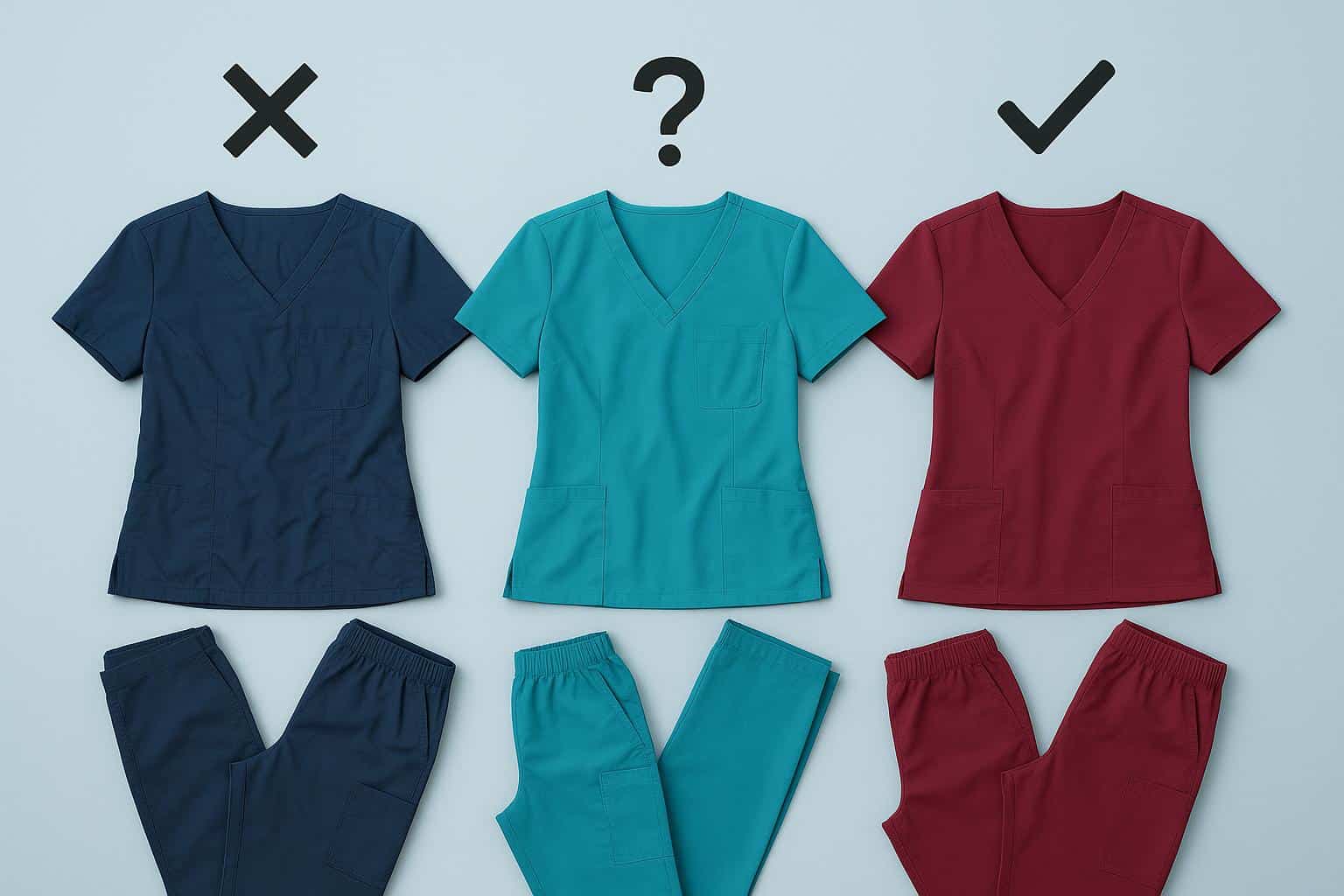
8. Ignoring Colour & Role Identity
Colors of patient attire are important in patient communication and in work organization. The selection of such colors not in line with hospital policies and departmental standards can lead to misunderstandings.
Patients have to depend on color signals for quickly recognizing nurses. Inconsistent or improper color selection can impact patient confidence and efficiency.
What to do instead:
Ensure uniform colors meet hospital or trust requirements to help facilitate role identification.
9. Failure to Factor in Maintenance Ease
“Healthcare uniforms must be frequently laundered, sometimes at high temperatures. Specialized healthcare uniforms which require special attention, ironing, and delicate washing become less practical.”
Common maintenance errors include:
- Using fabrics with tendencies of wrinkling
- Purchase of colored materials which can stain other materials
- Picking clothes which lose form after being washed
What to do instead: Select uniform designs which are easy to maintain, wrinkle-resistant, stain-resistant, and can maintain their structure and color despite being laundered multiple times.
10. Neglecting the Comfort and Wellbeing of the Staff
Uniform comfort directly impacts morale, confidence, and job satisfaction. The more uncomfortable or self-conscious workers feel in their uniforms, the more it exhibits in performance and interaction with patients.
Uniforms that always make people overheat, that chafe the skin, and restrain movement lead to stress and fatigue, particularly if a person has to work for a long period.
What to do instead:
Opt for breathable, skin-friendly fabrics and design features that make sure comfort and well-being come first, while not discounting professional appearance.
11. Failure to Update Uniforms Periodically
Healthcare standards are always changing, as are technologies and workplace needs. Continuing to wear outdated uniforms may mean losing out on some great changes in fabrics technology, infection control, and even ergonomic design.
Outdated uniforms tend to look worn out, unprofessional, and less in line with the expectations of today’s healthcare.
What to do instead:
Regularly review and update uniform choices to reflect current healthcare standards and the latest workwear designs.
12. Not looking for feedback or a try-before-buying approach.
Most medical personnel buy uniforms without trying them or asking suggestions from their coworkers. As a result, the fit is bad, or it is uncomfortable to wear, or just unpractical.
What to do instead:
Test uniforms, if possible; read the reviews; get recommendations from your peers before committing to a purchase.
Conclusion
The selection of proper nurses’ uniforms is an important decision, as it is responsible for comfort, safety, professionalism, and performance. Common mistakes include selecting based on appearance and not comfort, poor quality fabrics, infection control, and price, all of which may be very detrimental to both nurses and their patients. Health professionals will avoid all these pitfalls when emphasis is placed on high-quality material, good ergonomic fit, practicality of features, and durability for the long term. For health workers, it is important to invest in well-designed options that include a durable series of nurse uniforms for sustained comfort and professional appearance, ensuring better value over time. Ultimately, the right uniform supports both the demands of the role and the wellbeing and confidence of the professionals who wear it—freeing them to do what they do best: deliver excellent care.
