


From embodied AI to ultrabright screens and new, improved cockpits, this year’s CES felt less like a gadget show than a coming-out party for the nerds now running the world of technology.
The thread: intelligence, pushed toward the edge — into robots, PCs, displays and the home — so that experiences get faster, more personal and a whole lot more useful.
- Physical AI Steps Off the Lab Bench and Into the World
- Push Color and Contrast to the Limit on Big Screens
- Wi‑Fi’s Next Leap Is All About Lower Latency
- AI PCs Put NPUs to Work for Faster On‑Device Tasks
- Foldables Grow Up and Fan Out Across Devices
- Smart Homes Move from Fancy to Frictionless
- Exoskeletons: Assistive Tech in Daily Life
- The Bottom Line: CES Trends Shift from Flash to Function
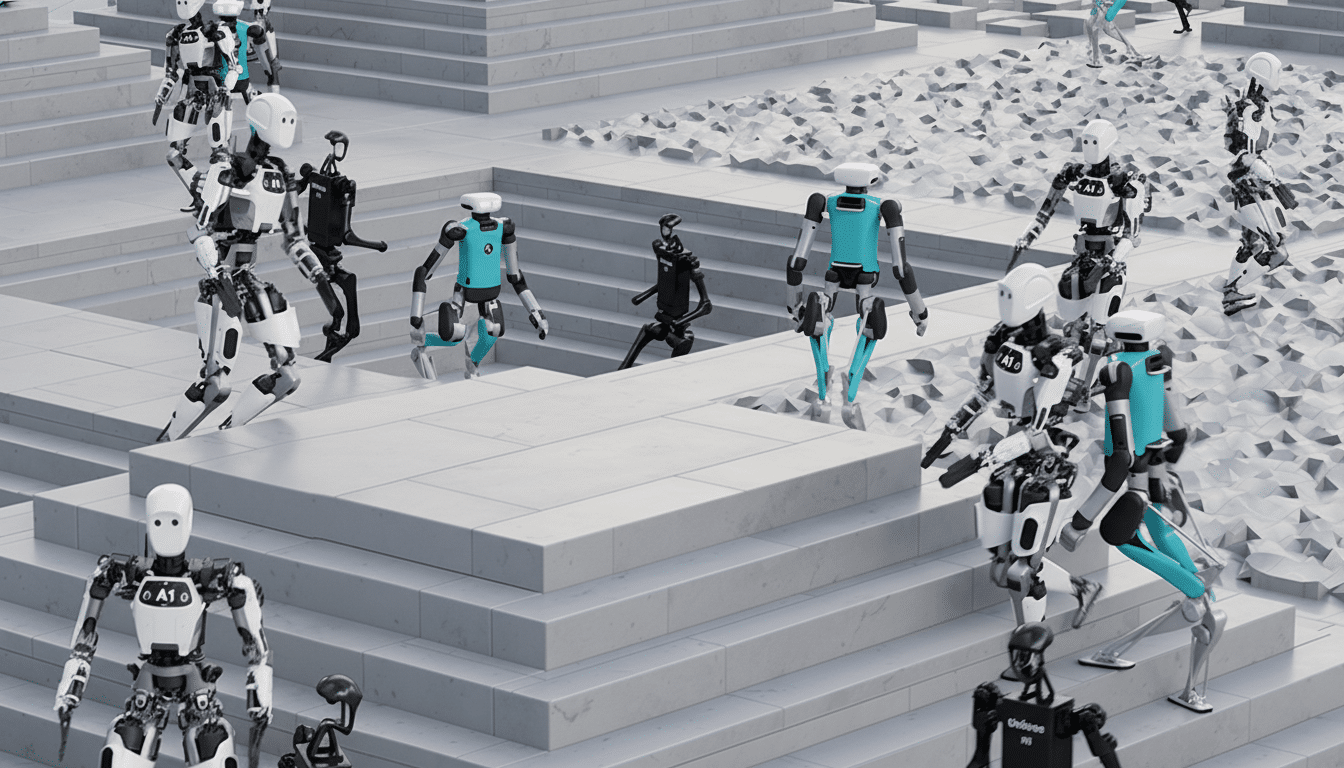
Physical AI Steps Off the Lab Bench and Into the World
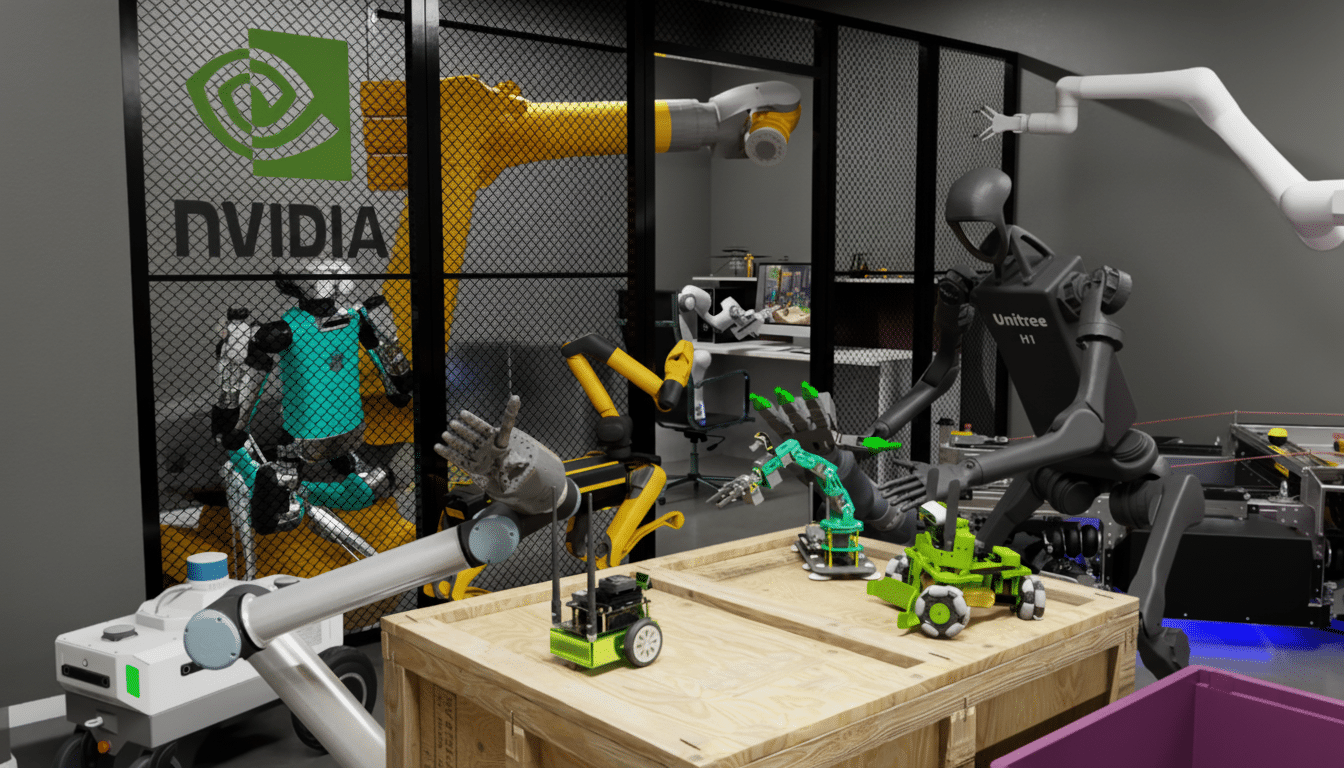
AI wasn’t confined to screens; it rolled, walked, grasped, learned. Humanoid assistants, service bots and robotic pets all demonstrated “physical AI,” where perception combines with on-device decision-making and occurs in near real time. Nvidia further amplified this vision with its robotics stack — from Isaac simulation to edge inference — that, combined with the open-source ROS 2 and more affordable depth sensors, is whittling development cycles down from months to weeks.
The practical shift matters. Factory bots debugging defects without stopping a line, home helpers software-mapping cluttered apartments without cloud calls, and mobility aids that learn to match a walker’s gait all require low-latency, power-saving inference. Gartner and IEEE analysts have independently identified edge AI as a top strategic priority since it cuts down on bandwidth fees; it also improves privacy — two obstacles that prevented consumer robotics from scaling.
Push Color and Contrast to the Limit on Big Screens
RGB Mini LED came into its own, offering the benefits of Mini LED with per-zone color control. Instead of the old white or blue backlights, clusters of red, green and blue LEDs can tune the luminance and chroma for richer highlights and cleaner shadow detail. Hisense’s 116UXS with RGB Mini LED “evo” tech packed them in, and Samsung and LG both pushed Micro LED further down the cost curve.
Not every label followed that same trajectory. TCL relied on Super Quantum Dot Mini LED to inch toward even greater color volume, and LG’s wallpaper-thin concept leaned into what a premium TV looks like when you pare it down to necessities. The takeaway: panel technology is no longer limited to brightness, but controllable color at the pixel-cluster level — finally bridging the gap between emissive and backlit approaches for living room sizes.
Wi‑Fi’s Next Leap Is All About Lower Latency
Even as most homes are getting Wi‑Fi 7 up and running, the industry is already teeing up the next generation. The early demos had less to do with raw peak throughput, and more with predictable performance: multi-link operation optimized for stability, smarter scheduling when you’ve got a crowded apartment building to compete with for airspace, and wide-ranging IoT coverage without sacrificing responsiveness.
Asus demonstrated a concept router designed for improved P99 latency at low and midband speeds, hinting at where gaming and AR/VR are headed. Component suppliers were also on the same page: Broadcom detailed a new APU and dual-band radios targeting the coming spec, while MediaTek’s Filogic platform highlighted that client devices would be timed accordingly. The Wi‑Fi Alliance’s messaging reflects this shift: reliability and efficiency are now the banner features, not merely peak speed.
AI PCs Put NPUs to Work for Faster On‑Device Tasks
Laptops were the surprise star. AMD teased Ryzen AI 400 for ultraportables and minis, claiming that the on-device models will be faster than ever without scorching a laptop’s battery. Quoting 80 TOPS — nearly double first-gen systems — in an affordable-threshold NPU, Qualcomm positioned its Snapdragon X2 Plus as the low-cost bridge to high-TOPS NPUs; it’s a part targeted at thin-and-light designs.
With its new Core Ultra line, based on the Panther Lake architecture, Intel gave ultraportables that have long been starved of thermals a beefier GPU and more efficient AI acceleration. For you absurdly smart folks, that translates into being able to decode video, perform live translation, and create content (and even do robot-vision dev work) offline and without a break. IDC has also observed that offline AI capabilities are now a critical feature, and this generation’s silicon finally matches the capability to battery expectations.
Foldables Grow Up and Fan Out Across Devices
Phone innovation went from raw specs to form factor. Motorola teased going all-in on a book-style foldable that keeps a sane footprint and added stylus support, while Samsung’s tri-fold prototype unfurled twice to surround users with tablet-class canvas. The discussion has shifted beyond crease angst to durability cycles, hinge longevity, and software that handles multiple aspect ratios as a feature rather than a compromise.
On the PC side, expandable and rollable laptop panels, along with ultrawide gaming displays, suggested workstations that shrink or expand depending on the task at hand. Omdia analysts have been charting panel yield increases and it’s no coincidence that better hinges also factored into why these foldables are going from lovely oddity to roadmap across categories.
Smart Homes Move from Fancy to Frictionless
Setup was the buzzword. The devices that “pair themselves” (thanks to Apple’s W1 wireless chip), run on low-power mesh, and work without a separate hub got the longest lines. Consider locks that don’t require charging, sensors that auto-enroll, and robot vacuums that climb stairs instead of running into them. The bigger story is the maturing of Matter and Thread: fewer apps, fewer bridges, more stability.
Wellness crept into fixtures too. The home as a health hub is becoming an increasingly popular model for the house of the future. Public-health researchers have warned about the role of biomarker accuracy and data governance in whether people will adopt devices; vendors that perform most analysis on-device and only transmit summaries are likely to foster trust soonest.
Exoskeletons: Assistive Tech in Daily Life
The idea of the slender, lightweight “exosuit” went from crazy-seeming sci-fi nonsense to potential real-world mobility aid. Calf-and-foot systems by Dephy gave an extra spring to every step for those feeling tired or with mild instability, while hip-focused rigs like the Ascentiz H1 Pro set out to perfect stride and make injury that bit less likely. Unlike many earlier industrial exos, these designs prioritize wearability, battery life, and price points that encroach upon premium e-bike territory rather than medical equipment.
Clinical studies from schools like Stanford and ETH Zurich have shown that powered assistance can decrease the metabolic costs of walking. Making that science accessible in consumer-grade hardware could be life-changing for seniors and patients recovering from an injury — and, eventually, for commuters who simply want to get where they’re going less tired.
The Bottom Line: CES Trends Shift from Flash to Function
CES solidified a not-too-distant future in which intelligence is ambient and embodied: robots with context understanding, PCs capable of continual AI processing, screens as precise colorists, networks that put stability first, and homes preparing themselves. None of these currents exists in isolation; jointly, they signify a practical turn for consumer tech — from flashy demos to everyday utility.
