


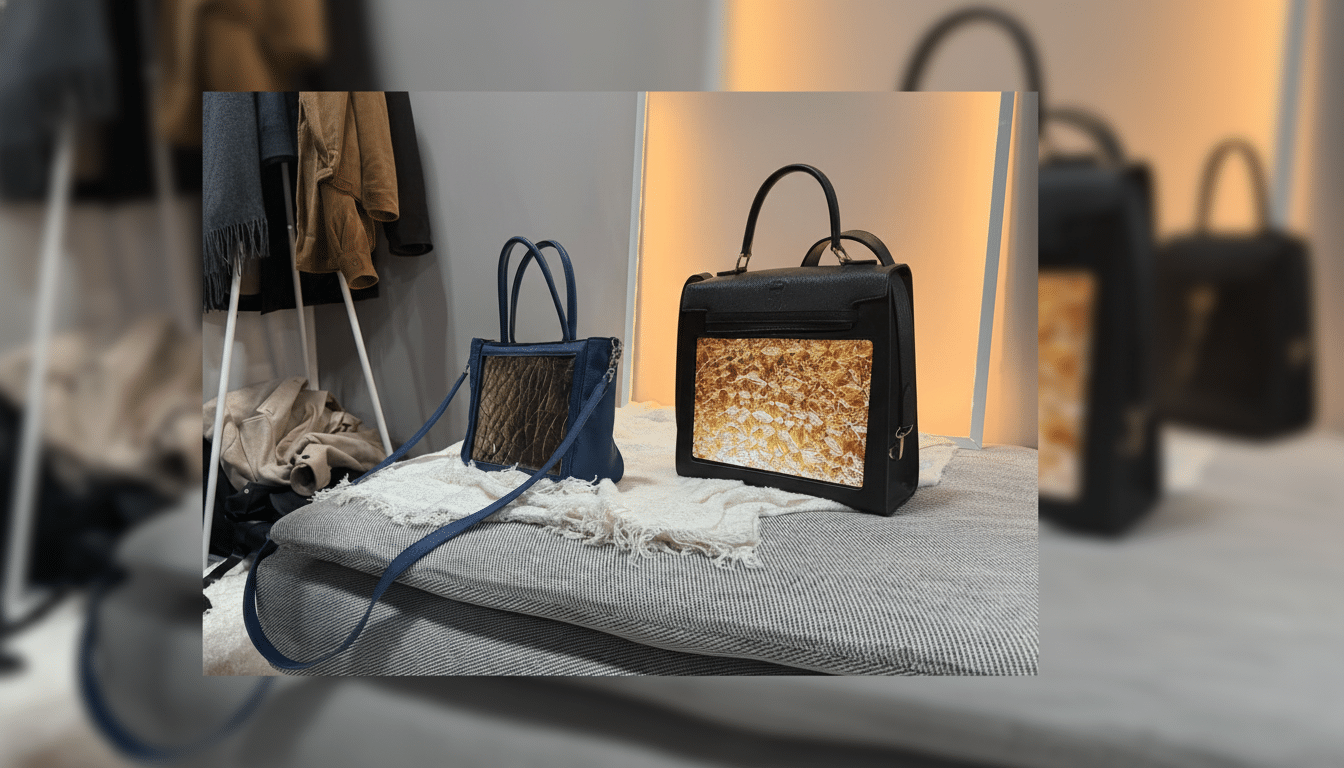
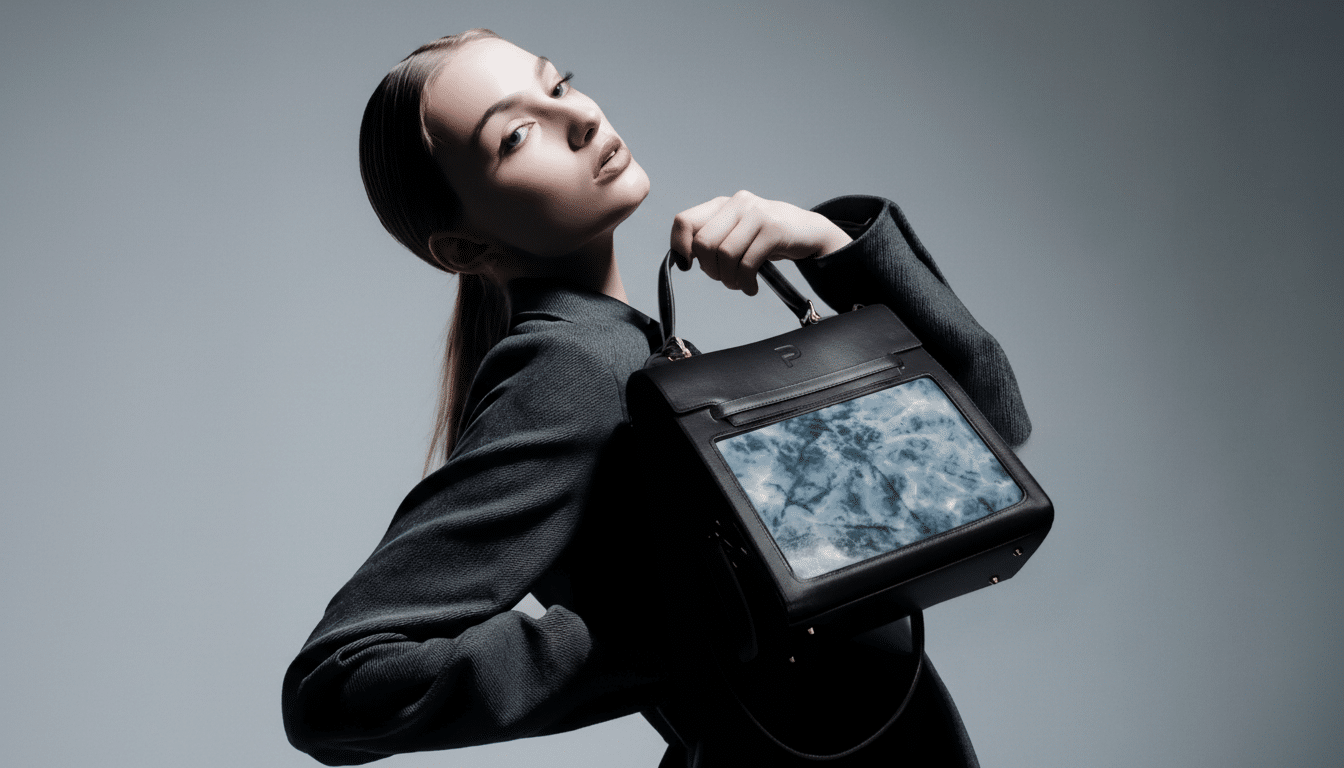
CES never met a spectacle it didn’t like, and few products drew as many eyeballs as Infinity, a leather handbag with an embedded OLED display that came coated in couture aspirations and gadget swagger. Designed by Richard Peuty and demonstrated on the floor in a shiny prototype, the bag combines traditional French leatherwork with a front-mounted, animated panel — and a price ladder that scales from about $800 for early crowdfunding tiers to more than $9,000 for one of the limited Atelier Edition models.
The pitch is a splashy one: Create an age-old accessory that has limitless digital room to grow. Instead of needing to shuffle through seasonal prints, the Infinity purse can switch up its appearance on a whim, pulling fresh visuals via Bluetooth LE and running about six to eight hours per charge. It’s half style flex, half display tech testbed and entirely for buyers who think novelty and rarity are features.
Design first, tech second: craftsmanship leads the way
At first glance Infinity looks like it’s been thoughtfully handcrafted into a structured, high-quality leather bag. This OLED module is mounted flush behind a texture-protective layer that feels more like leather than glass, within clean sewing from the frame and minimalist metal hardware. The idea, Peuty notes, is that the craftsmanship leads and the electronics fall behind until you need them.
The Atelier Edition is hand-finished in France using full-grain European leather but designed with a focus on durability and the ability to be repaired — terms more likely to be heard in ateliers than gadget launch decks.
Wireless charging means there are no ports cluttering the exterior, and the brand says software updates and new content will be able to refresh the look long after a conventional seasonal bag would begin to feel dated.
An OLED in a purse: challenges of displays on the go
It’s harder than it looks to embed a display on a mobile, flexing contraption. OLEDs, which provide deep blacks and rich color at thin profiles, also require careful protection from impact, moisture or abrasion. The textured shell is on there to disguise and protect the screen — at a cost, like all covers, of potential loss in brightness when under full sun. Battery runtime claims are set toward six to eight hours for steady-state animations; real-world operation with periodic refreshes and reduced brightness should stretch it out even more, but we haven’t tested that away from a trade show floor.
Analysts at Display Supply Chain Consultants have observed that flexible OLEDs are still on a cost decline, but making them rugged for non-phone applications adds complexity. Burn-in and scratch resistance are perennial concerns — particularly on a product you’ll presumably be tossing onto restaurant banquettes and shoving beneath airplane seats. The pitch Infinity is making: Service, repair and parts replacement are part of the ownership model — more luxury watch than disposable gadget.
Who buys a $9,000 screened bag, and why it even exists
Infinity is not in pursuit of value shoppers. It is after the same customer that purchases limited-run leather goods and experimental collaborations. That positioning reflects larger market shifts: Bain & Company estimates that the personal luxury goods market topped €360 billion in 2023 and continued growing in 2024, although at a slower rate, even as growth remained heavily skewed toward high-spending consumers. For that segment of the market, exclusivity, handwork, conversation, and cult value count for more than spec sheets.
We’ve seen luxury flirt with novelty before. Louis Vuitton showed prototype handbags with embedded AMOLED screens that doubled as advertising real estate several seasons ago, and streetwear brands have tinkered with LED matrices on backpacks and jackets. The distinction here being intent: Infinity isn’t a runway one-off — it’s being pitched as a repairable, made-in-France product with production units and tiered pricing, starting with crowdfunding but aiming for boutique shelves.
Use cases and caveats: where it shines and where it doesn’t
On the more fun side, the purse can switch between dynamic art, matching with outfits or showcasing commissioned graphics for events. Brands can spin this as portable, premium signage; artists may envision a small canvas for limited drops. On the pragmatic side, you’ve got Bluetooth Low Energy control by way of a cool app, and there’s wireless charging so you just drop it on a pad after dinner.
But there are open questions. How does the finish withstand rain, sunscreen and inadvertent scuffs? What about through security or in venues that don’t allow illuminated devices? How much for out-of-warranty screen replacements? Until customers see policies on paper — and early units in the wild — the $9K tier remains a leap of faith even for luxury stalwarts.
So, go ahead and drop $9K? Our take on the Infinity bag
If you have investment-grade leather goods in your collection already and want the one bag nobody else at the table has, Infinity meets the brief. The workmanship appears authentic, the tech is discreetly integrated, and the option to change appearance is truly intelligent.
If you’re looking for utilitarian value, skip it. Although display costs are dropping and they’re getting more durable, you’re still paying for the theater and exclusivity of a folding phone. As a statement piece at CES, Infinity does exactly what a luxury tech hybrid should: It’s an attention-getting object that transforms one question — would you actually carry a $9K OLED purse? — into a conversation worth having.
