


In a few short decades, handheld communication leapt from bulky car-mounted radios to pocketable computers that connect billions. This decade-by-decade timeline traces the milestones that made that possible, from analog experiments and digital breakthroughs to the touch-first era, foldables, and 5G. Along the way, we’ll anchor the story with real-world devices, standards, and market data from organizations that shaped mobile’s rise.
1940s to 1960s Foundations of Mobile Calling
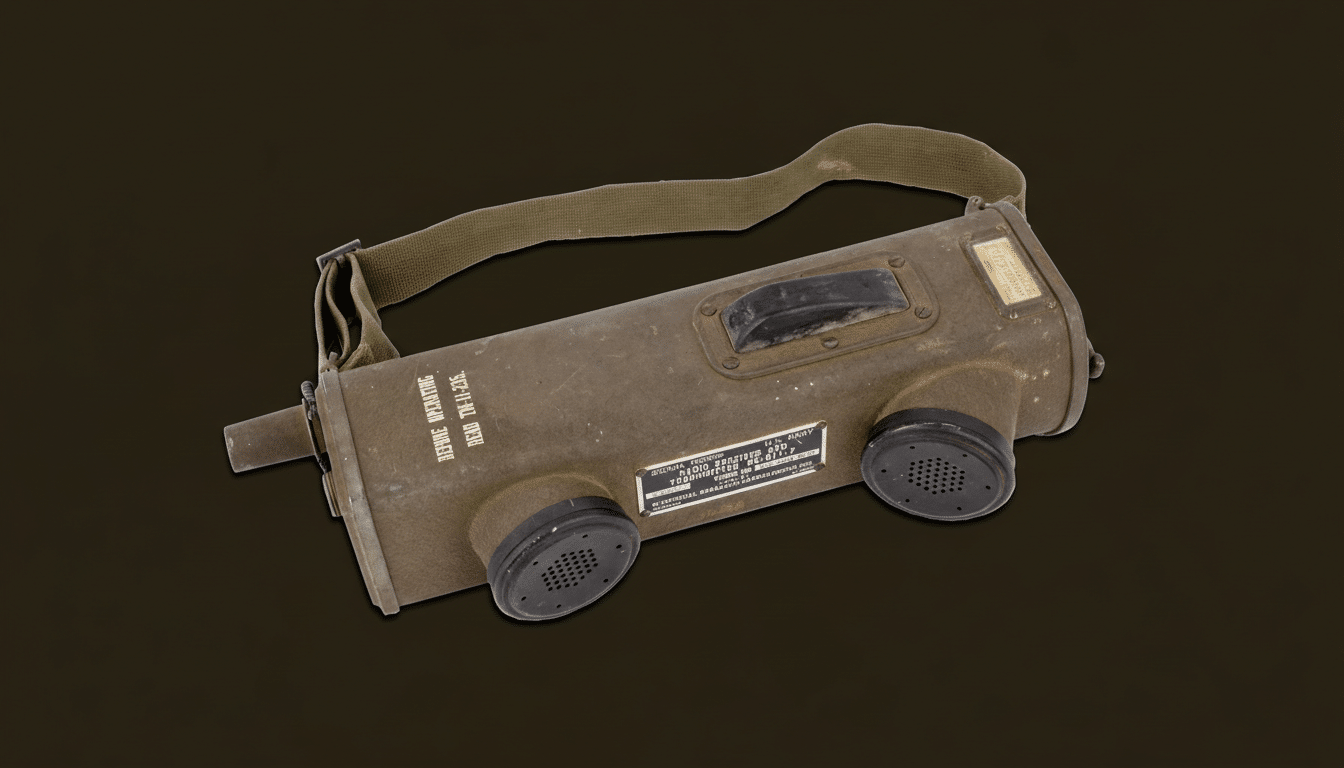
Before “cell” phones, mobility meant radios. European railways trialed wireless telephony in the 1920s, and Allied forces fielded the SCR-536 “Handie-Talkie” in World War II—proof that portable voice links were feasible, if heavy and range-limited. In 1946, Bell Labs and AT&T launched Mobile Telephone Service in select U.S. cities. The system’s first-generation car units weighed upward of 80 pounds and suffered chronic channel congestion, but it established the template: licensed spectrum, base stations, and authenticated users.
- 1940s to 1960s Foundations of Mobile Calling
- 1970s: The First Handheld Call and Cellular Concept
- 1980s: 1G Goes Commercial with Analog AMPS
- 1990s: 2G Digital Arrives and the SMS Spark
- 2000s: Cameras, 3G Services, and Design Wars
- 2007 to 2009: Touch Interfaces and the App Economy
- 2010s LTE Big Screens and Smarter Cameras
- Late 2010s Foldables Step Onto the Stage
- 2020s: 5G, AI Advances, and New Mobile Frontiers
- What the Mobile Timeline Tells Us About Progress
1970s: The First Handheld Call and Cellular Concept
Motorola engineer Martin Cooper placed the first public handheld cellular call in 1973 on a prototype that previewed the future. The science was as pivotal as the showmanship: Bell Labs’ cellular concept—small, frequency-reused “cells” with handoffs—could scale urban capacity dramatically, something point-to-point radio never could, setting the stage for commercial cellular networks.
1980s: 1G Goes Commercial with Analog AMPS
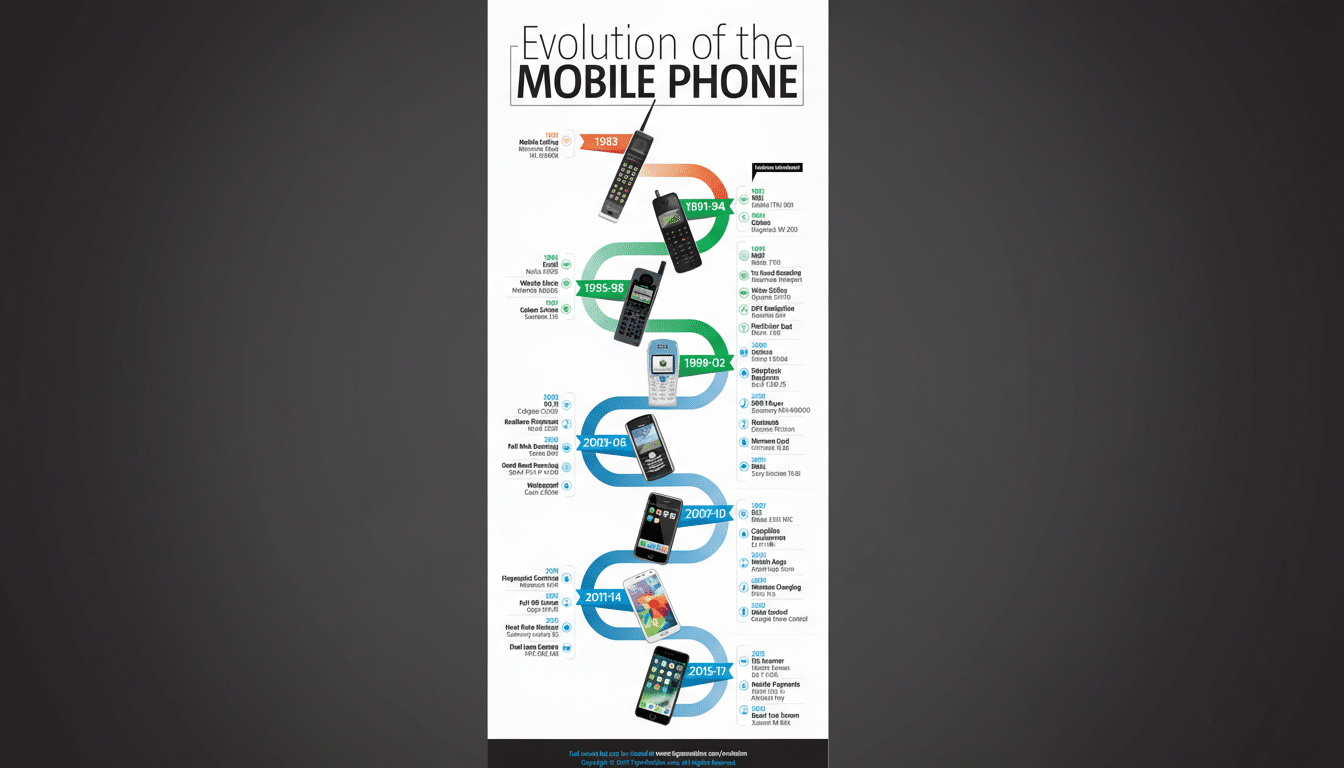
Commercial handhelds arrived in 1983 with Motorola’s DynaTAC 8000X. At roughly 2.5 pounds and about $3,995 at launch, it rode on AMPS, an analog standard Bell Labs helped define. Analog meant noisy calls, easy eavesdropping, and zero texting—but it worked. According to CTIA, U.S. cellular subscriptions exploded from hundreds of thousands in the mid-1980s to millions by decade’s end as coverage and competition improved. Nokia and Samsung entered the fray late in the decade, signaling global ambitions.
1990s: 2G Digital Arrives and the SMS Spark
Digital 2G arrived with GSM’s first live network in 1991, dramatically improving capacity, quality, and security via encryption. SIM cards enabled user portability; the standard also baked in SMS, which would become a cultural phenomenon after devices like Nokia’s 2010 (1994) made composing texts practical. IBM’s Simon (1994) previewed the smartphone by combining a touchscreen with PDA utilities and email, and Motorola’s StarTAC (1996) defined the flip form factor. Research In Motion’s BlackBerry 850 (1999) turned encrypted mobile email into an enterprise staple. By the end of the decade, GSMA figures show GSM counted well over 200 million users worldwide.
2000s: Cameras, 3G Services, and Design Wars
The 2000s made phones personal and visual. Japan’s Sharp J-SH04 (2000) introduced the integrated camera; Sprint’s Sanyo SCP-5300 brought it to U.S. shoppers in 2002. NTT DoCoMo’s FOMA kicked off 3G services, pushing mobile email, browsing, and streaming. Bluetooth untethered headsets and laptops. Meanwhile, industrial design became a selling point: Motorola’s Razr V3 sold well over 100 million units mid-decade, while Nokia’s N-Gage and other experiments chased gaming and media. Symbian led early smartphone OS share, with Palm OS and Windows Mobile powering business-centric devices.
2007 to 2009: Touch Interfaces and the App Economy
Apple’s iPhone (2007) fused capacitive multitouch, a full-browser internet experience, and elegant software into a single slab, discarding styluses and hard keyboards. The App Store (2008) turned phones into platforms—Apple reported seven figures of downloads for breakout apps within months. Google’s Android debuted on the HTC Dream/G1 (2008) with a modern browser, maps, and an open app market, catalyzing a two-platform era that would outpace legacy systems in developer support and consumer polish.
2010s LTE Big Screens and Smarter Cameras
4G LTE, introduced on devices like the HTC Evo 4G (2010) and later iPhone 5 (2012), made mobile broadband feel instantaneous and enabled cloud-first apps. Hardware trends converged on larger, edge-to-edge displays and fewer physical buttons. Imaging leapt forward: Nokia’s 808 PureView (2012) used a 41MP sensor for lossless-like zoom; the Lumia 920 mainstreamed optical image stabilization; Huawei’s P20 Pro (2018) popularized triple cameras. NFC payments, IP-rated water resistance, wireless charging, and eSIM rounded out a mature hardware stack, while computational photography—pioneered aggressively by Google’s Pixel line—started outshooting many compact cameras.
Late 2010s Foldables Step Onto the Stage
After years of OLED and materials R&D, foldables arrived. Royole’s FlexPai proved feasibility, while 2019’s Samsung Galaxy Fold and Motorola Razr reframed the form factor as premium and practical. Shipments remained niche but accelerated; Counterpoint Research estimated global foldable volumes topping roughly 15 million units in 2023 as hinge durability, ultra-thin glass, and software adaptation improved.
2020s: 5G, AI Advances, and New Mobile Frontiers
5G networks rolled out globally, bringing lower latency and higher peak speeds that benefit gaming, video, and IoT. The GSMA projects 5G will represent a substantial share of mobile connections as mid-band deployments widen. Phones gained satellite messaging for emergencies, under-display camera experiments, magnetic accessory ecosystems, and on-device AI that powers real-time transcription, enhanced photography, and smarter assistants. Despite slower annual leaps, the stack is quietly transforming—more efficient radios, better silicon, and longer support windows.
What the Mobile Timeline Tells Us About Progress
Every decade solved a constraint: spectrum scarcity (cellular reuse), portability (handhelds), capacity and privacy (2G), usability (multitouch), bandwidth (LTE), and now adaptability (foldables) and intelligence (AI on 5G). The ITU’s standards work, the FCC and other regulators’ spectrum policies, and the GSMA’s ecosystem coordination underpinned that progress. The next jump likely blends ubiquitous AI with resilient connectivity—from suburban small cells to satellites—keeping the original promise intact: a reliable, personal link to anyone, anywhere.
