


Canada will impose counter-tariffs of 15%, 25% and 50% on C$27.6 billion in selected U.S. imports beginning Sept. 8, after Ottawa said the United States imposed equivalent tariffs on Canadian goods effective Aug. 22. The government also unveiled C$7.5 billion in new and enhanced support for workers and businesses affected by the dispute.
The measures, announced Aug. 25 by Canada’s Department of Finance, make the dispute an immediate concern for importers, manufacturers and exporters on both sides of the border. The tariffs are expected to raise the landed cost of specified U.S. products for Canadian importers, while the support package includes financing and other assistance for Canadian companies affected by U.S. tariffs.
Tariffs begin after a 17-day gap
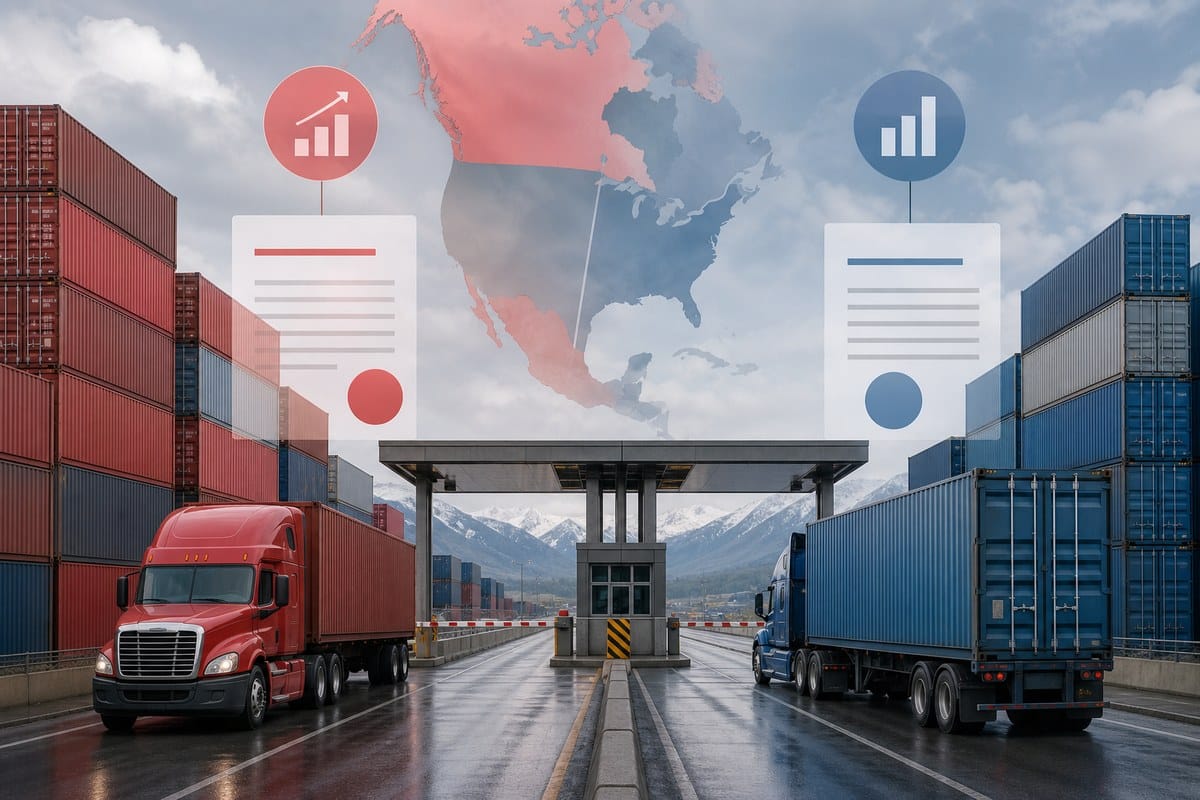
Canada said the United States imposed 50% tariffs on C$27.6 billion of Canadian goods effective Aug. 22. Ottawa’s countermeasures will take effect Sept. 8, creating a 17-day interval between the effective date Canada cites for the U.S. action and the planned start of its response.
The Canadian tariffs are rate-for-rate rather than a single blanket levy. Products assigned to a U.S. 15% tariff will receive a 15% Canadian counter-tariff, with comparable 25% and 50% categories. The announced measures apply to selected imports, not all goods entering Canada from the United States.
Canada identified steel and aluminum products previously subject to 25% counter-tariffs, furniture, and clothing and apparel among goods facing the new 50% rate. The 25% category includes appliances, dairy products and certain derivative steel and aluminum products. The government also identified agricultural equipment, pulp and paper, and electronics among sectors covered by its broader response.
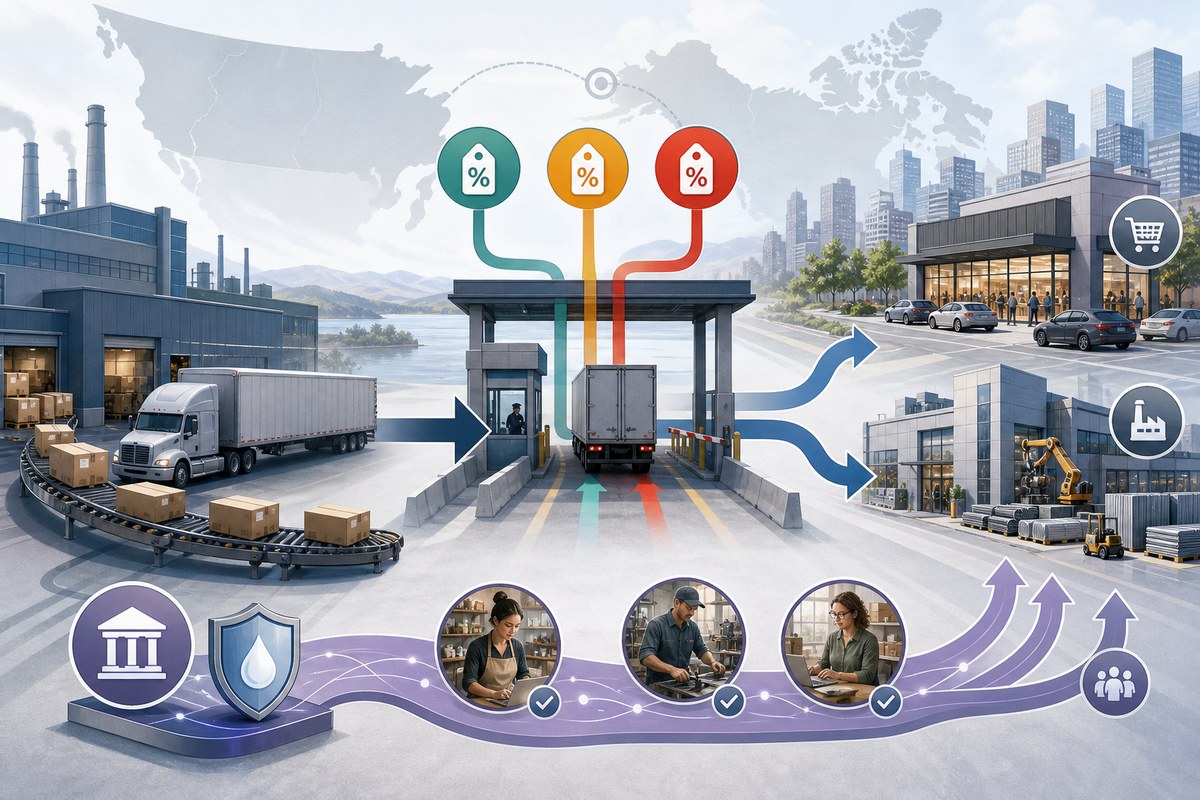
For companies buying affected inputs or finished goods in the United States, the applicable cost will depend on customs classification and tariff rate, not simply the industry in which the buyer operates.
Support package emphasizes liquidity for smaller firms
Ottawa described the C$7.5 billion package as new and enhanced assistance, separate from nearly C$25 billion in earlier tariff-related supports referenced in its announcement. The new figure is not a total of all federal measures committed since the trade dispute began.
The Regional Tariff Response Initiative will receive an additional C$1.5 billion, including liquidity support for small and medium-sized enterprises. The Business Development Bank of Canada’s Pivot to Grow program will receive a new C$500 million liquidity stream. Together, those two identified liquidity components total C$2 billion, or roughly 27% of the C$7.5 billion package.
The announcement does not specify how much individual companies will receive or how tariff costs will be divided among suppliers, importers, retailers and customers.
Business and economic assessments
The U.S. tariff rollout followed a breakdown in bilateral negotiations, according to reporting by The Logic published Aug. 23. The publication reported that companies had expected an agreement and were preparing for new levies after talks failed to produce one.
Mark Carney said businesses in Ontario, Quebec and British Columbia, including small businesses, would bear much of the burden, The Logic reported. Dan Kelly, president of the Canadian Federation of Independent Business, told the publication that 40% of small exporters would be hit by tariffs and that earlier government support had not provided meaningful relief for many small and medium-sized businesses.
Economic forecasts cited by The Logic vary. BMO Economics identified chemicals, plastics, electrical and electronic equipment, consumer goods and forestry products as especially exposed. University of Calgary economist Trevor Tombe estimated the tariff changes could cost Canada 90,000 jobs. RBC Economics said more than 80% of Canadian exports would remain duty-free under the Canada-United States-Mexico Agreement and that the change was unlikely to derail Canadian economic growth.
Canada’s counter-tariffs are scheduled to start Sept. 8. Their application will depend on product eligibility and customs treatment, while affected businesses can seek support through the announced liquidity programs.

