


U.S. Treasury Secretary Scott Bessent plans to urge fellow G20 finance officials in Asheville, North Carolina, to cut economic ties with Iran, taking Washington’s newly announced isolation campaign into meetings with countries that remain important to Iranian trade. The effort places oil buyers, shippers, banks and other commercial intermediaries at the center of an already difficult gathering focused on tariffs, debt and trade imbalances.
The immediate significance is not a new G20 agreement: none has been announced, and analysts see little prospect of collective backing from members with active economic links to Tehran. Instead, Bessent’s meetings are expected to test how far the United States can turn its control over dollar-based finance and its secondary-sanctions toolkit into leverage over Iran’s trading partners, particularly China.
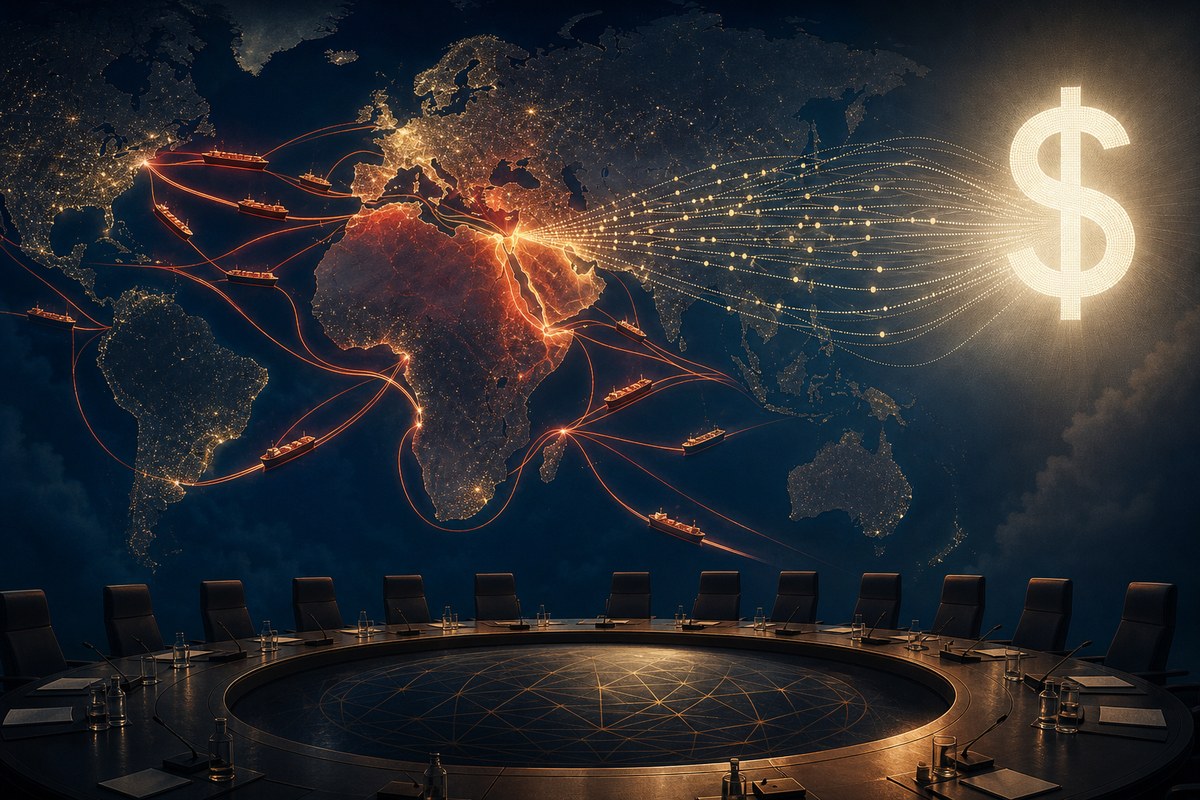
From announced designations to a broader diplomatic push
The G20 outreach follows Treasury’s Aug. 24 publication of Bessent’s prepared remarks launching what the department calls Operation Economic Outcast. Treasury said the campaign aims to disrupt Iran’s global economic and financial connections, including networks it alleges are used to move oil, obtain goods and evade restrictions.
There is an important division between actions already taken and potential enforcement still being signaled. In the August announcement, the Office of Foreign Assets Control said it was sanctioning more than 60 entities, individuals and vessels. Treasury also described sectoral sanctions determinations involving digital assets, technology, gold, aviation and shipping. Those are concrete measures directed at named or defined targets under U.S. authorities.
The administration’s broader warning is less specific. Bessent said entities that facilitate money laundering for Iran could be removed from the U.S. dollar system, and said countries would receive timelines to halt activities identified by Washington. But neither the prepared remarks nor subsequent reporting identifies which countries face particular deadlines, what conduct would trigger an immediate penalty, or whether the United States intends to target major foreign banks or national trading systems.
NBC News reported that Bessent did not detail immediate concrete measures against other countries even as he described diplomatic engagement with Iran’s trade partners and consequences for continuing business with Tehran. That leaves companies and governments with a familiar but consequential compliance question: whether a U.S. warning is principally a negotiating tool, a precursor to designations, or both.
Why G20 members complicate the strategy
The G20 is a useful venue for the U.S. case because it brings together systemically important economies and financial authorities. It is also an awkward forum for building a common front. China, India, Russia and Turkey are among members with economic ties to Iran, according to The National’s reporting on the planned discussions. A senior Treasury official told the publication that Iran would arise in every bilateral meeting hosted by Bessent.
China is the most consequential commercial variable. The National reported that China takes roughly 90% of Iran’s crude exports. That figure is a reported trade estimate, not a Treasury measure, but it illustrates why pressure on Iranian oil revenue cannot be assessed only by counting U.S. designations. The operational issue is whether buyers, insurers, ship managers, payment intermediaries and refiners change behavior when the risk of losing access to U.S.-linked finance rises.
That pressure can work through channels beyond a direct ban on a country’s trade. A vessel operator may face scrutiny over ownership and cargo documentation; a bank may decline a payment it believes could create sanctions exposure; a supplier may halt a sale of dual-use technology or services. Treasury’s reference to shipping, aviation, gold, technology and digital assets signals an attempt to address alternative routes Iran might use when conventional financial and oil-trade channels are constrained.
Yet a G20-wide endorsement would require political alignment that is absent. Rachel Ziemba, founder of Ziemba Insights, told The National such an outcome was highly unlikely. Experts cited by NBC similarly questioned whether major Iranian trading partners including China, India and Russia would regard U.S. threats as sufficiently credible to alter their approach. Those assessments do not establish that the campaign will fail; they underline that bilateral decisions by major governments and firms, rather than a communiqué, are likely to determine its reach.
Dollar access is the main point of leverage
Washington’s warning rests on the outsized importance of the U.S. financial system to cross-border commerce. Companies can transact outside the United States, but institutions that need dollar clearing, U.S. correspondent banking relationships, American investors or access to U.S. markets generally treat a sanctions designation or the prospect of one as a major commercial risk.
Secondary sanctions seek to extend that risk to non-U.S. actors that deal with a targeted country or network. In practice, their effect is rarely automatic. Treasury must define prohibited conduct, identify parties it believes are involved, and decide whether to impose designations or other restrictions. Firms then must judge their exposure based on counterparties, ownership, routing, cargo, payments and applicable regulations.
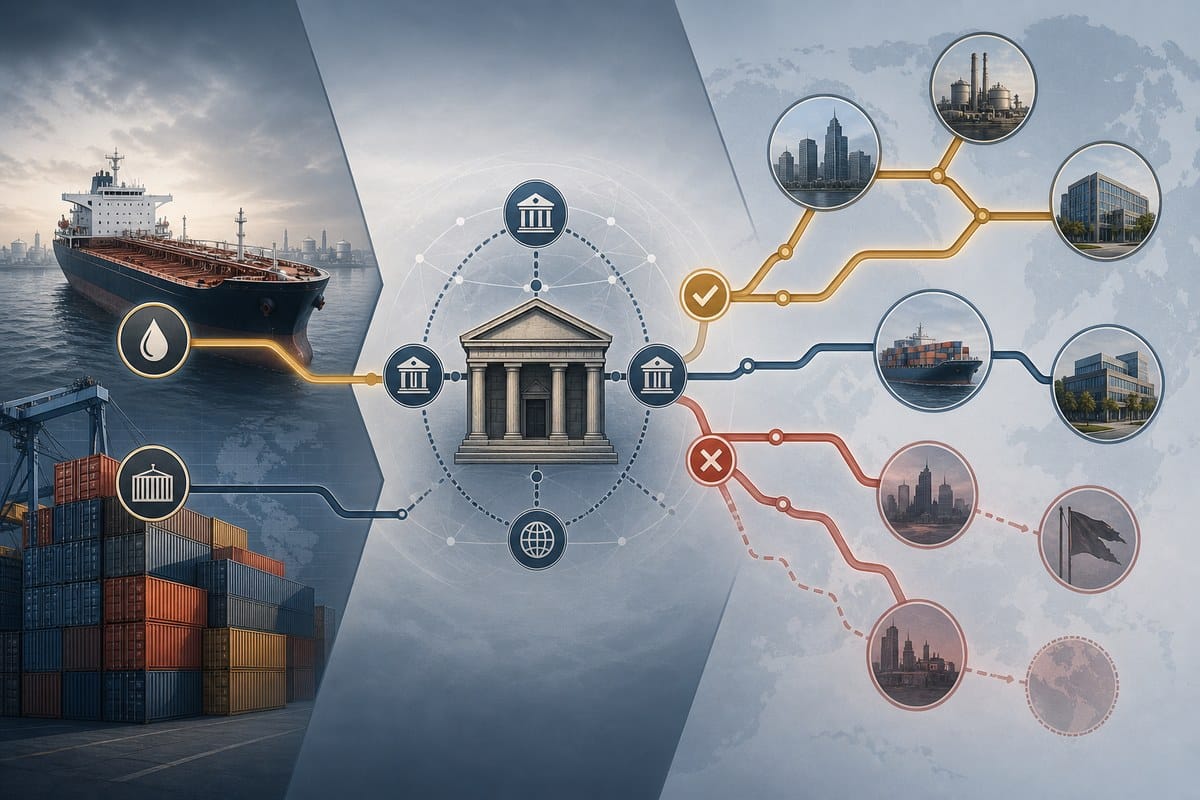
Operation Economic Outcast therefore should not be read as proof that all countries trading with Iran have already lost, or will lose, dollar-system access. Treasury has stated a conditional consequence for entities facilitating Iranian money laundering, while reporting indicates the administration is using diplomacy before spelling out penalties for governments or institutions that resist its demands.
The diplomatic campaign arrives as finance ministers and central bank governors prepare to meet Monday and Tuesday in Asheville. A Reuters report carried by Global Banking & Finance Review described an agenda already crowded by tariff disputes and debt concerns. Iran adds a sharper test: whether the U.S. can gain practical cooperation from countries that may oppose a common political declaration but still want to protect their companies’ access to the world’s most important financial market.

