


An injury can change an entire season. Training stops, competition dates get closer, and the question becomes how soon an athlete can return without getting hurt again. It’s easy to understand the appeal of a compound discussed in connection with tissue repair.
BPC-157 sits in that conversation. Researchers have investigated it in experimental models relevant to tendons and other tissues, while recovery claims have carried its name well beyond the laboratory.
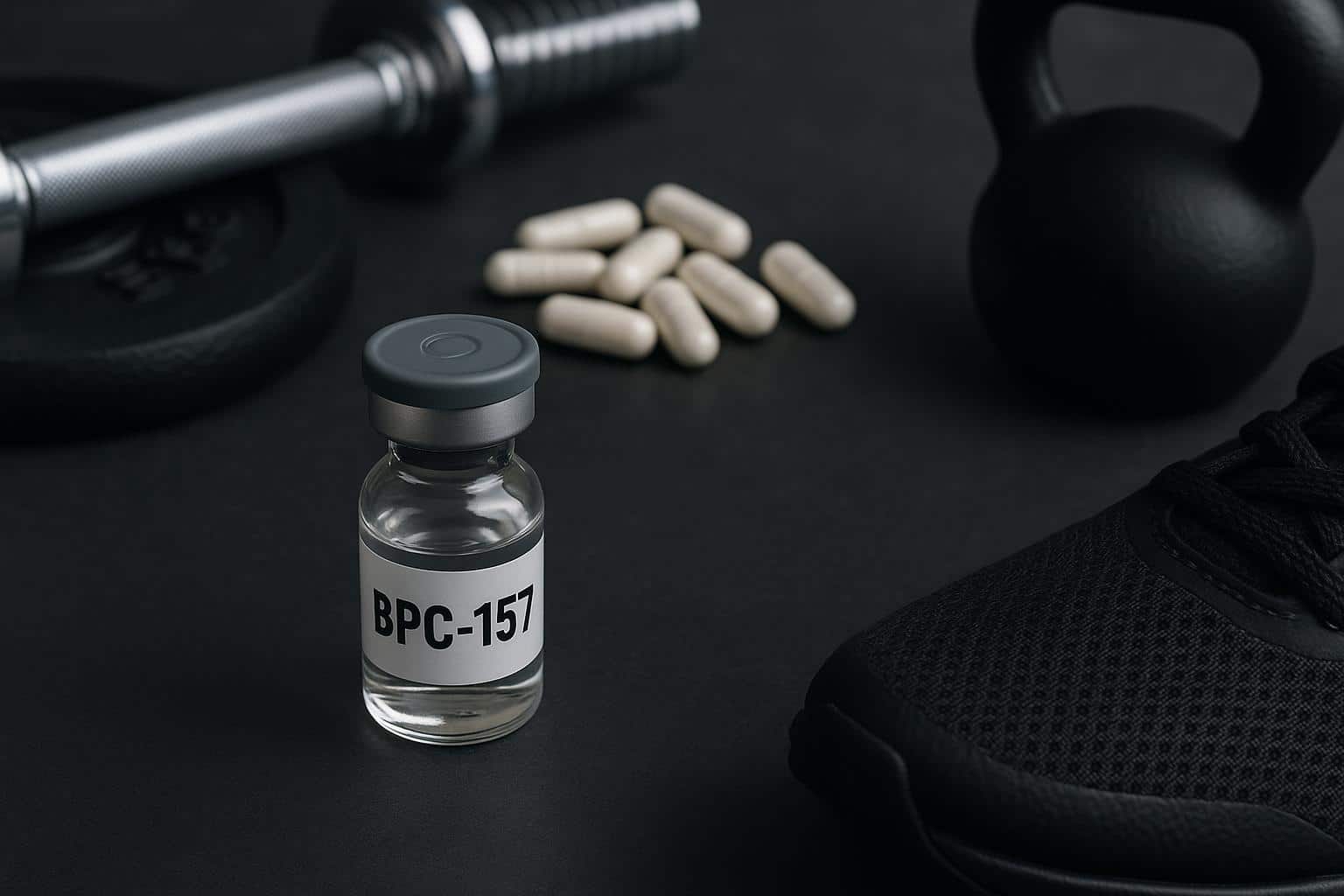
The distinction matters from the outset: BPC-157 is experimental, and its safety and effectiveness for treating sports injuries in people have not been established. It is also prohibited under World Anti-Doping Agency rules. Interest in the science should not be mistaken for evidence that athletes should use it.
What BPC-157 Is
BPC-157 is a synthetic peptide made up of 15 amino acids. Its research history is linked to a compound originally isolated from human gastric juice, which helps explain why papers about it cover both gastrointestinal and tissue-repair questions.
The US Anti-Doping Agency’s explanation of BPC-157 describes that background and notes the lack of human clinical evidence establishing an effective treatment.
Readers encountering a BPC 157 peptide listing may see familiar scientific terms without much explanation of what was actually tested. The useful questions are more specific: was the experiment conducted in cells, animals or people, and did it measure something relevant to recovery?
A compound’s name and research history cannot answer those questions on their own.
Why Tissue-Repair Research Reaches a Sports Audience
Tendon and ligament injuries have an obvious connection to sport. Research involving those tissues is likely to interest people whose training depends on their ability to run, lift, jump or change direction.
One study published in the Journal of Applied Physiology examined BPC-157 in relation to tendon outgrowth, cell survival and cell migration. These are processes researchers investigate to understand tissue repair.
That gives the discussion a scientific basis, but it also shows where the limits begin. A change in cell behaviour is a different outcome from an athlete returning to a full training load. Even a favourable result in an animal injury model needs further investigation before it can support a treatment claim for people.
Sports science ultimately needs answers about function: can someone tolerate repeated loading, regain performance and avoid reinjury? A laboratory experiment may help identify what to study next without answering any of those practical questions.
What the Small Human Knee-Pain Report Shows
There is some published human research, so saying BPC-157 has only ever been studied in animals would be inaccurate.
A 2021 retrospective report on knee pain reviewed patients treated at one clinic. Researchers reached 16 patients for telephone follow-up. Twelve had received BPC-157 alone; the remaining four had received it alongside another peptide.
Eleven of the 12 patients receiving BPC-157 alone reported improvement. That finding attracts attention, but the study had no control group, relied on patients’ recollections and did not objectively confirm tissue repair.
Without a comparison group, it cannot establish how much improvement was caused by the compound. It also cannot demonstrate that a damaged tendon or ligament healed, or that an athlete could safely resume competition.
The report offers a reason to ask better research questions. It doesn’t provide a reliable success rate for treating sports injuries.
Recovery Stories Leave Important Questions Unanswered
An account of someone feeling better can be sincere and still leave the cause uncertain. During recovery, symptoms may change alongside rest, rehabilitation, altered training and the passage of time. A personal story rarely separates those influences.
Pain relief also tells us less than it may appear to. A person can report less discomfort without a study having established the condition of the injured tissue or its ability to handle sport-specific demands.
Safety needs its own evidence. USADA notes that BPC-157 has not been studied extensively enough in humans to establish a safe way to use it for a medical condition. A small report cannot reliably reveal uncommon adverse effects or long-term risks.
Health Canada’s advisory on unauthorised injectable peptides specifically names BPC-157. It warns against using these products and states that “research use only” labels do not exempt them from regulatory requirements. Research-labelled products should not be used for self-treatment.
Competitive Athletes Have a Clear Rule to Follow
Under the 2026 WADA Prohibited List, BPC-157 is explicitly included in category S0, which covers non-approved substances. It is prohibited at all times, both in and out of competition.
That includes periods away from competition while recovering. The rule is not limited to race day or match day.
Its placement in S0 should not be read as proof that BPC-157 improves performance. The category addresses substances without current regulatory approval for human therapeutic use. Prohibited status and demonstrated clinical benefit are different questions.
BPC-157 remains a frequent topic because tissue-repair research speaks to a very practical concern: getting back to sport. To turn that interest into a credible treatment, studies would need to demonstrate meaningful recovery outcomes and adequately assess safety in people. Until then, online recovery claims offer more certainty than the evidence supports.

