


Depression care used to have a clean boundary. You came in, you did the work, you stabilized, then you went home. The clinic held the “real” treatment. Home was for rest, family, plus doing your best to stick to a plan.
That boundary is fading.
- The rehab center is no longer the “only place” treatment happens
- Onboarding starts before discharge, not after
- Your staff needs “device talk” that does not feel robotic
- “Adherence” is not willpower. It is a system you design
- Side effects and safety monitoring need a calm, boring workflow
- Create a clear symptom and side-effect checklist
- Watch the “meds plus device” interaction in a practical way
- Clinician dashboards are the new “rounding sheet”
- Reimbursement and pricing: the part nobody wants to talk about, but you have to
- Equity risks: when home tech becomes the new front door
- Make “no tech” and “low tech” paths real, not fake
- Hybrid care should expand the doorway, not narrow it
- Where this lands for you and your center
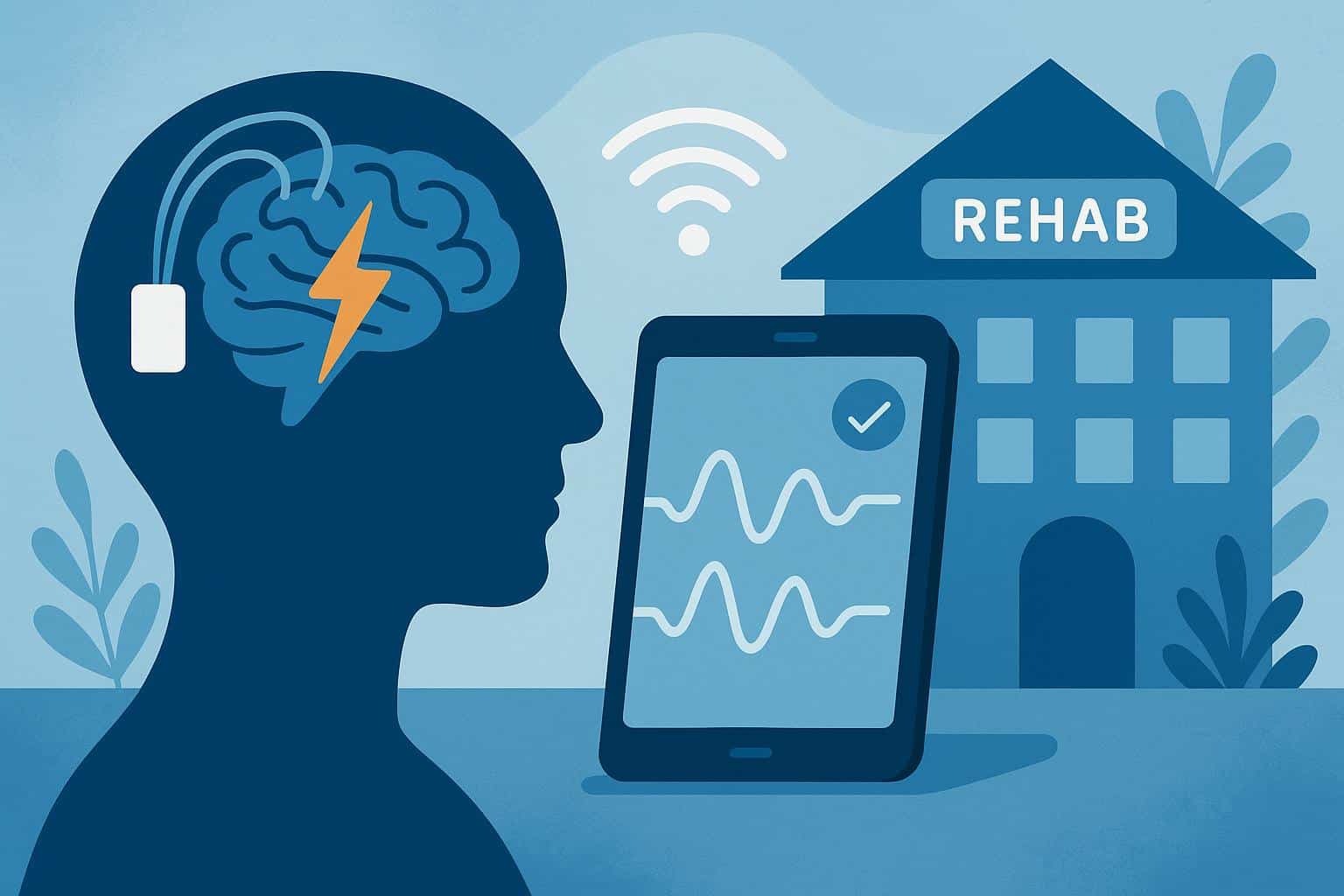
Prescription brain stimulation is starting to move into living rooms, not as a DIY gadget, but as a supervised extension of care. That shift matters for rehab centers that treat depression alongside substance use, trauma, or chronic stress. Because discharge is still the sharp edge of recovery. The moment structure drops off, symptoms can creep back. Sleep slips. Motivation gets weird. Meds feel “off.” Therapy homework collects dust.
So here comes a new question. What if your discharge plan includes a device routine that is as trackable as a med schedule, plus as coachable as therapy?
Not a miracle. Not a shortcut. But a different operating model.
The rehab center is no longer the “only place” treatment happens
At-home stimulation changes the shape of a program. It pushes care into a hybrid rhythm: some sessions on-site, some remote check-ins, some device-guided routines at home, plus therapy and meds held together by a tighter feedback loop.
That sounds great on paper. In practice, it changes everything your team touches.
You stop thinking only in “weeks in program.” You start thinking in “care cycles.”
Onboarding starts before discharge, not after
If you wait until the last day to introduce home stimulation, you have already lost half the battle. People learn new routines better when they still have structure. Rehab is structured.
So the strongest hybrid programs treat device onboarding like a mini curriculum:
- Set expectations early, in plain language
- Practice the routine during the inpatient or intensive phase
- Make the first remote supervised week feel familiar, not new
This is also where you learn who will struggle. Not because they are “noncompliant,” but because life is messy. They might share a room, work two jobs, or have a home that is not calm. You want to know that before discharge, not after a missed week.
Your staff needs “device talk” that does not feel robotic
Clients can smell scripted language. If you explain stimulation like a sales pitch, they tune out. If you explain it like a medical lecture, they get intimidated.
The sweet spot is simple and honest. Something like: this is one more tool that can support mood and energy while you keep doing therapy and staying steady with meds. You will track how you feel. We will watch for side effects. We will adjust if needed.
And when you need a reference point for what coordinated care can look like across levels of support, you can look at a full-service setting like a Mental Health Treatment Facility that already thinks in terms of teams, routines, plus continuity.
“Adherence” is not willpower. It is a system you design
Here’s the thing. People do not fail plans. Plans fail people.
Home stimulation routines live or die based on friction. If it takes 12 steps, it will not happen on a low-mood day. If the app nags like a spammy reminder, people will ignore it. If the routine clashes with work or childcare, it will drift.
So you design adherence loops the same way product teams design retention. Not to manipulate. To reduce friction and keep people supported.
Build a rhythm that fits real life
For most clients, the routine should live near an existing anchor. Morning coffee. After brushing teeth. Right after a short walk. A consistent cue beats motivation every time.
Your program can support this with:
- A setup session that ends with the client choosing their cue
- A one-page routine card that feels normal, not clinical
- A short weekly check-in that asks what got in the way, not “did you comply?”
You can also use low-tech tools. A calendar on the fridge still works. Honestly, it works better for some people than an app.
Use human follow-up, not just notifications
Automated reminders help, but they can also feel cold. People dealing with depression often read silence as judgment. A brief human touch can change the tone.
A good hybrid ops playbook includes:
- A nurse or care coordinator message after the first week
- A therapist tie-in: “What did you notice after sessions?”
- A simple rule for missed routines: reach out fast, without drama
If your center already runs strong outreach and continuity for addiction recovery, you can adapt that muscle. These programs tend to understand structured follow-up, relapse prevention planning, plus the reality of uneven weeks. That mindset translates well here.
Side effects and safety monitoring need a calm, boring workflow
Home stimulation being “remote supervised” only works if monitoring is steady. Not intense. Not scary. Just consistent and boring in the best way.
Clients should know what is normal, what is annoying-but-okay, and what is a real red flag.
Create a clear symptom and side-effect checklist
Do not make clients guess what to report. Give them a simple list that matches the experience.
Examples you might track:
- Headache or scalp discomfort
- Sleep changes
- Irritability or agitation
- Mood swings that feel sharper than usual
- New anxiety patterns
You can keep it short. The point is consistency.
And you need a clear escalation path. If a client reports something concerning, who responds first? How fast? What is the handoff to the prescribing clinician? What gets documented?
Watch the “meds plus device” interaction in a practical way
You do not need to turn this into a pharmacology seminar. But you do need coordination. If someone changes dose timing, starts a new med, stops caffeine, or has a rough sleep week, the device routine might feel different.
So your team should ask a few boring questions every week:
- Any medication changes?
- Any sleep pattern changes?
- Any new substance use or cravings?
- Any big life disruptions?
When you treat depression and substance use together, this becomes even more important. A hybrid plan can support people leaving a Drug rehab in NJ or a similar program where mood, cravings, plus stress all tangle together after discharge.
Clinician dashboards are the new “rounding sheet”
Once stimulation moves home, clinicians need visibility without drowning in data. A dashboard should not be a toy. It should answer a few questions fast.
- Did the client complete sessions?
- Are side effects trending up or down?
- How does mood tracking look over time?
- Any gaps that need outreach?
That’s it. Everything else is noise.
What a good dashboard actually does
A useful dashboard supports clinical judgment. It does not replace it.
Think of it like the modern version of a paper chart plus morning huddle notes. You want trend lines and flags, not a million metrics.
The best setups also let therapists see a simple view. Not for prescribing decisions, but to connect patterns. If a client reports “flat” mood and the routine completion also dipped, that’s a therapy conversation. Not a compliance lecture. A curious conversation.
Outcomes tracking has to connect to therapy goals
If you track mood scores but never talk about them in therapy, the numbers become hollow. Clients stop caring. Staff, stop looking.
Hybrid care works when tracking links to real goals:
- Getting out of bed before 9
- Returning to work without panic spirals
- Handling conflict without shutting down
- Reducing hopeless thoughts
- Staying consistent with recovery routines
Then the device routine becomes part of a bigger story. Not a separate tech project.
Reimbursement and pricing: the part nobody wants to talk about, but you have to
If home stimulation becomes common, it will collide with payer rules, prior authorizations, plus the messy question of who pays for what.
Rehab centers will face decisions that feel operational but are also ethical.
Expect a split between “covered” and “not covered”
Some clients will get coverage with the right documentation. Some will not. Some will face high out-of-pocket costs. That creates a two-track system fast.
Hybrid ops teams need a pricing and access plan that is not improvised:
- Financial counseling early, not at discharge
- Clear scripts for what costs look like
- A fallback care path if the device is not affordable
If you do not plan this, clients will feel like you pulled the rug out from under them. And they will blame themselves.
Documentation needs to match real-world use
Payers tend to want clear diagnoses, severity, plus evidence of follow-through. That means your workflows need clean notes, consistent outcome measures, plus a clear rationale for combining device routines with therapy and meds.
It is boring admin work, but it keeps access open.
Equity risks: when home tech becomes the new front door
This is the quiet problem that can become a loud one.
Home stimulation assumes privacy, stable housing, a phone that works, enough bandwidth, plus a safe place to store equipment. Many clients do not have that. Or they have it some weeks and not others.
So if you treat home stimulation as the “default,” you risk leaving people behind.
Make “no tech” and “low tech” paths real, not fake
Equity planning is not a paragraph in a policy doc. It is a real operational branch.
Some clients may need:
- In-clinic sessions are longer, before transition
- Community-based options
- More phone-based check-ins instead of app-heavy monitoring
- Flexible scheduling that works around shift work
Centers that already plan continuity across settings, like a Washington Addiction Treatment Center, often have the right instincts here: care has to fit the person, not the other way around.
Hybrid care should expand the doorway, not narrow it
The goal is not “everyone uses the device at home.” The goal is more consistent support after discharge, in whatever form works.
Home stimulation can help some people stay steady through a vulnerable stretch. For others, it might add stress. A good program admits that. No shame.
Where this lands for you and your center
Bioelectronic home stimulation does not replace therapy. It does not replace meds. It does not replace community, sleep, movement, plus the slow work of rebuilding a life.
But it can change the handoff between clinic and home. And that handoff is where many people wobble.
If you run or work with a depression rehab program, the big shift is operational. You are building a hybrid system that can onboard people smoothly, keep routines realistic, monitor safety without panic, plus track outcomes in a way that actually informs care.
And you know what? That is a good kind of work. It is practical. It is measurable. It can feel human.
If you are exploring this model, start small. Pick one workflow to tighten this month: onboarding scripts, a simple dashboard view, or a follow-up cadence that feels supportive instead of strict. Then build from there.
