


Student loan debt in America has reached $1.77 trillion. The average bachelor’s degree recipient graduates owing $38,000, and nearly half of college graduates are working in jobs that don’t require their degree. Meanwhile, there’s a critical shortage of skilled beauty professionals, with salons across the country struggling to find qualified stylists, estheticians, and barbers.
If you’re deciding between traditional college and vocational beauty education, the math has changed dramatically. Let’s break down the real numbers behind both paths—not the marketing brochures, but the actual return on investment you can expect in 2026.
- The True Cost Breakdown
- Time to Career: The Hidden Advantage
- The Income Reality: Breaking Down the Numbers
- Job Security in an Uncertain Economy
- The Flexibility Factor: A Game-Changer for Modern Life
- The Skills That Transfer (Both Directions)
- The “Prestige” Question: Does It Still Matter?
- The Learning Experience: Hands-On vs. Theoretical
- The Community and Network Factor
- What About Advancement Opportunities?
- The Data on Satisfaction and Regret
- Making the Decision: Key Questions to Ask Yourself
- The “Best of Both Worlds” Option
- The Bottom Line: Which Offers Better ROI?
- The Future Is Vocational
- Your Decision, Your Future

The True Cost Breakdown
Traditional 4-Year College
- Average tuition & fees: $102,000 (public in-state) to $218,000 (private)
- Living expenses: $40,000-$80,000 (over 4 years)
- Books & supplies: $5,000-$8,000
- Opportunity cost: $160,000+ (4 years of lost income)
- Total investment: $307,000-$466,000
Beauty School (Cosmetology Program)
- Average tuition: $10,000-$20,000
- Living expenses: Minimal (most students work during training)
- Supplies & kit: $1,500-$3,000
- Opportunity cost: $20,000-$35,000 (less than 1 year lost income)
- Total investment: $31,500-$58,000
The difference? $275,500 to $408,000 in favor of beauty school.
But raw costs are only half the equation. What matters most is what you get for that investment.
Time to Career: The Hidden Advantage
Traditional College Path:
- 4 years of education
- Often requires additional internships or entry-level positions
- First “real” career job typically starts at age 22-23
- Student loan repayment begins immediately
Beauty School Path:
- 9-12 months of education (cosmetology) or 4-6 months (esthetics)
- Start earning immediately upon licensure
- Career launched by age 19-20 (if starting after high school) or within a year (if career changing)
- Minimal to no debt to repay
This timeline difference compounds significantly over a career. By the time a traditional college graduate lands their first job, a beauty professional may have already built a loyal client base, earned over $100,000, and potentially opened their own business.
The Income Reality: Breaking Down the Numbers
Early Career (Years 1-3)
College Graduate (Bachelor’s Degree):
- Average starting salary: $55,000
- After loan payments: ~$45,000 disposable income
- Still accruing interest on debt
Beauty Professional:
- Starting income: $25,000-$35,000 (Year 1)
- Grows to $40,000-$55,000 (Year 2-3)
- Minimal to no debt
- Building equity in client base
The Break-Even Point: Most beauty professionals reach financial parity with college graduates within 2-3 years—and that’s before considering debt burden.
Mid-Career (Years 5-10)
This is where the beauty profession truly shines.
College Graduate:
- Average mid-career salary: $65,000-$75,000
- Still paying student loans (average repayment: 20 years)
- Income ceiling often dependent on employer promotions
Experienced Beauty Professional:
- Income range: $55,000-$100,000+
- No educational debt
- Multiple income streams possible (services, products, education, social media)
- Complete control over earning potential
When you explore professional esthetics programs that prepare students for immediate employment, you’ll find that specialization can accelerate this trajectory even further. Medical estheticians, for example, often earn $60,000-$80,000 within their first few years.
Late Career (Years 10+)
College Graduate:
- Average salary: $80,000-$90,000
- Finally paying off student loans
- Career path often plateaus without advanced degrees
Established Beauty Professional:
- Income potential: $75,000-$200,000+
- Multiple revenue streams: services, booth rental, product sales, education, brand partnerships
- Options to scale: open multiple locations, create product lines, build education programs
- Lower overhead, higher profit margins
The ceiling in beauty careers is often determined by ambition rather than credentials or corporate hierarchy.

Job Security in an Uncertain Economy
Here’s what traditional career counselors won’t tell you: in times of economic uncertainty, service-based businesses often prove more recession-resistant than corporate jobs.
During the 2008 recession:
- White-collar layoffs: 8.2% unemployment in professional sectors
- Beauty services: Experienced only 3.1% decline, faster recovery
During the 2020 pandemic:
- While corporate America laid off millions, beauty professionals (once lockdowns ended) saw surging demand
- Many established beauty professionals actually increased income by raising prices for eager clients
Why? Because people need haircuts, skincare, and grooming services regardless of economic conditions. It’s not luxury—it’s maintenance.
The Flexibility Factor: A Game-Changer for Modern Life
Traditional careers offer predictability. Beauty careers offer flexibility.
Traditional College → Corporate Career:
- Fixed schedule (typically 9-5)
- Limited vacation time
- Commute requirements
- Office politics and hierarchy
- Permission needed for schedule changes
Beauty School → Beauty Career:
- Set your own schedule
- Work part-time or full-time based on your needs
- Choose your location (salon, booth rental, mobile, home studio)
- No ceiling on time off (if you’re self-employed)
- Perfect for parents, students, or anyone needing schedule flexibility
This flexibility translates to real lifestyle value that’s hard to quantify but impossible to ignore.
The Skills That Transfer (Both Directions)
One of the biggest myths about beauty school: it’s a “dead end” if you change your mind. The reality is far different.
Skills You Gain in Beauty School:
- Business management: Client relations, inventory, pricing, marketing
- Chemistry: Product formulation, chemical processes, skin science
- Health sciences: Anatomy, physiology, sanitation, safety protocols
- Psychology: Communication, conflict resolution, customer service
- Entrepreneurship: Self-employment, financial management, brand building
These skills translate to countless other careers—from cosmetics development to healthcare to business ownership in any field.
Conversely, many college graduates are now enrolling in beauty school because they realized their degree doesn’t translate to practical, immediate income.
The “Prestige” Question: Does It Still Matter?
Let’s address the elephant in the room: societal perception.
Your aunt might be disappointed you’re not going to “real” college. Your high school guidance counselor might push university as the only respectable path. Some people will say you’re “wasting your potential.”
But here’s what’s changing rapidly: society’s definition of success is evolving.
In 2026, success means:
- Financial independence
- Work-life balance
- Career satisfaction
- Entrepreneurial opportunity
- Flexibility and autonomy
Beauty careers check all these boxes. A bachelor’s degree checks… one (societal approval from people who probably aren’t paying your bills).
The most successful people increasingly aren’t the ones with the most impressive degrees—they’re the ones who identified a skill set, mastered it quickly, and built sustainable income doing something they love.
The Learning Experience: Hands-On vs. Theoretical
Traditional College:
- Heavy emphasis on theory and research
- Learning happens primarily through lectures and readings
- Limited practical application until internships or first job
- Broad education across many subjects
- Suits abstract thinkers
Beauty School:
- Immediate hands-on practice
- Learning happens through doing
- Real clients during training
- Focused, practical education
- Suits kinesthetic learners
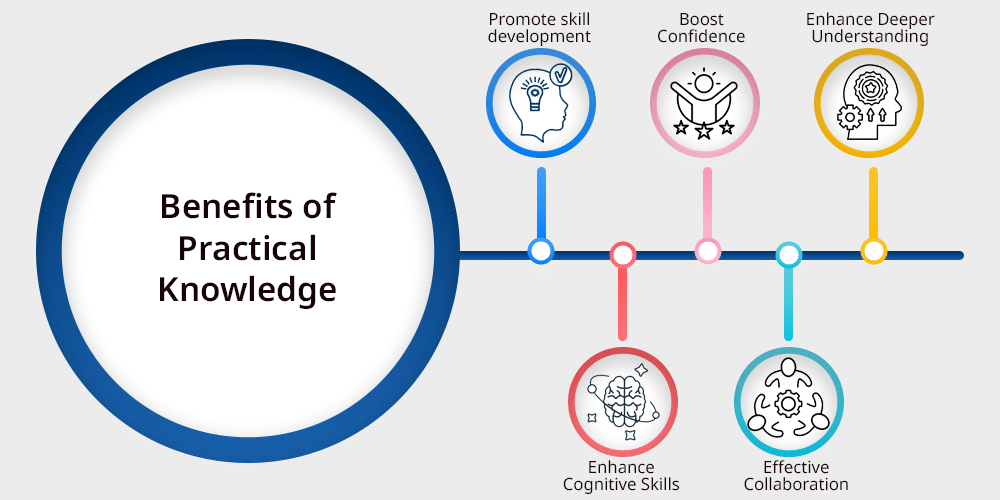
Neither is “better”—they’re different. But if you’ve ever felt frustrated by purely theoretical learning, or if you learn best by doing rather than reading, beauty education’s practical approach might be your perfect fit.
The Community and Network Factor
College Network:
- Alumni associations (often inactive after graduation)
- Classmates scattered across industries
- Professional connections develop slowly over years
Beauty Industry Network:
- Tight-knit professional community
- Active mentorship culture
- Immediate industry connections
- Social media amplifies networking (successful stylists build followings)
- Collaborative rather than competitive culture
The beauty industry is surprisingly small and interconnected. Relationships formed in school often lead directly to job opportunities, business partnerships, and career-long friendships.
What About Advancement Opportunities?
“But can you advance without a degree?”
In traditional careers, advancement often requires additional degrees (MBA, Master’s, etc.). In beauty careers, advancement comes through:
Specialization: Master cutting, color, extensions, bridal, editorial work
Certification: Medical esthetics, laser treatments, advanced skincare
Business Growth: Open your own salon, rent additional booths, hire employees
Education: Become an instructor, develop training programs
Brand Building: Social media following, product lines, sponsorships
Multiple Locations: Scale your business beyond a single location
The path isn’t vertical—it’s multidirectional. You’re not climbing someone else’s ladder; you’re building your own.
The Data on Satisfaction and Regret
College Graduates:
- 51% say their degree wasn’t worth the cost
- 44% are underemployed in their first job
- 38% would choose a different major if they could do it over
Beauty Professionals:
- 76% report high job satisfaction
- 68% say they’d choose the career again
- 82% appreciate their work-life balance
When you examine the benefits of becoming a cosmetologist, the satisfaction factor becomes clear: tangible results, immediate client appreciation, creative expression, and entrepreneurial freedom create a fulfilling career that many traditional paths can’t match.
Making the Decision: Key Questions to Ask Yourself
Still unsure which path is right? Consider these questions:
- Do you learn better by doing or by studying theory?
Beauty school = doing; traditional college = theory - How risk-averse are you regarding debt?
Beauty school = minimal debt; college = significant debt - How quickly do you want to earn income?
Beauty school = within a year; college = 4+ years - Do you value autonomy or structure?
Beauty career = autonomy; corporate career = structure - Are you drawn to creative work or analytical work?
Beauty = creative; traditional degree = often analytical - How important is flexibility in your future career?
Beauty = maximum flexibility; traditional = less flexibility
Your honest answers will reveal which path aligns with your personality, learning style, and life goals.
The “Best of Both Worlds” Option
Here’s a secret many beauty professionals won’t tell you: you can do both—just not in the order society expects.
Many successful beauty professionals:
- Complete beauty school and start earning (Age 19-20)
- Build their business and client base (Age 20-25)
- Take online college courses part-time (if desired)
- Graduate with a degree AND an established business (Age 25-27)
- Have zero debt because they paid as they went
This approach gives you:
- Immediate income and career
- Time to decide if a degree is actually necessary
- Ability to pay for college without loans
- Real-world experience that informs your education
- Two career paths instead of one
The Bottom Line: Which Offers Better ROI?
For most people, especially those who:
- Value hands-on learning
- Want to minimize debt
- Seek entrepreneurial opportunities
- Need schedule flexibility
- Desire creative expression
- Want immediate career entry
Beauty school offers superior ROI compared to traditional college.
The math is clear:
- Lower investment ($31,500 vs. $307,000)
- Faster time to career (1 year vs. 4+ years)
- Earlier earning potential (age 19 vs. age 22)
- No debt burden (or minimal vs. $38,000 average)
- Unlimited income ceiling (entrepreneurship vs. salary caps)
- Higher satisfaction rates (76% vs. 51%)
This doesn’t mean college is wrong—for certain career paths (medicine, law, engineering, research), a degree is necessary. But for the vast majority of careers, especially in creative and service industries, vocational education offers better financial and personal returns.
The Future Is Vocational
We’re witnessing a fundamental shift in how society values education. The “college for everyone” movement of the past 40 years is being replaced by a more nuanced understanding: different careers require different training, and vocational education is often the smarter investment.
Countries like Germany, Switzerland, and Denmark have known this for decades—their vocational programs are prestigious and produce highly skilled, well-paid professionals. America is finally catching up.
As automation threatens many traditional white-collar jobs, hands-on service professions like beauty are becoming more valuable, not less. AI can draft emails and analyze spreadsheets, but it can’t cut hair, apply makeup, or provide the human touch that makes beauty services so valuable.
Your Decision, Your Future
The question isn’t really “Which is better?”—it’s “Which is better for you?”
If you’re reading this article, chances are you’re already questioning whether traditional college is your best path. That instinct is worth listening to.
The beauty industry needs skilled professionals. The training is accessible, affordable, and effective. The career offers creative fulfillment, financial independence, and lifestyle flexibility that most corporate jobs can’t match.
The only question left: Are you ready to make the smarter investment in your future?
