


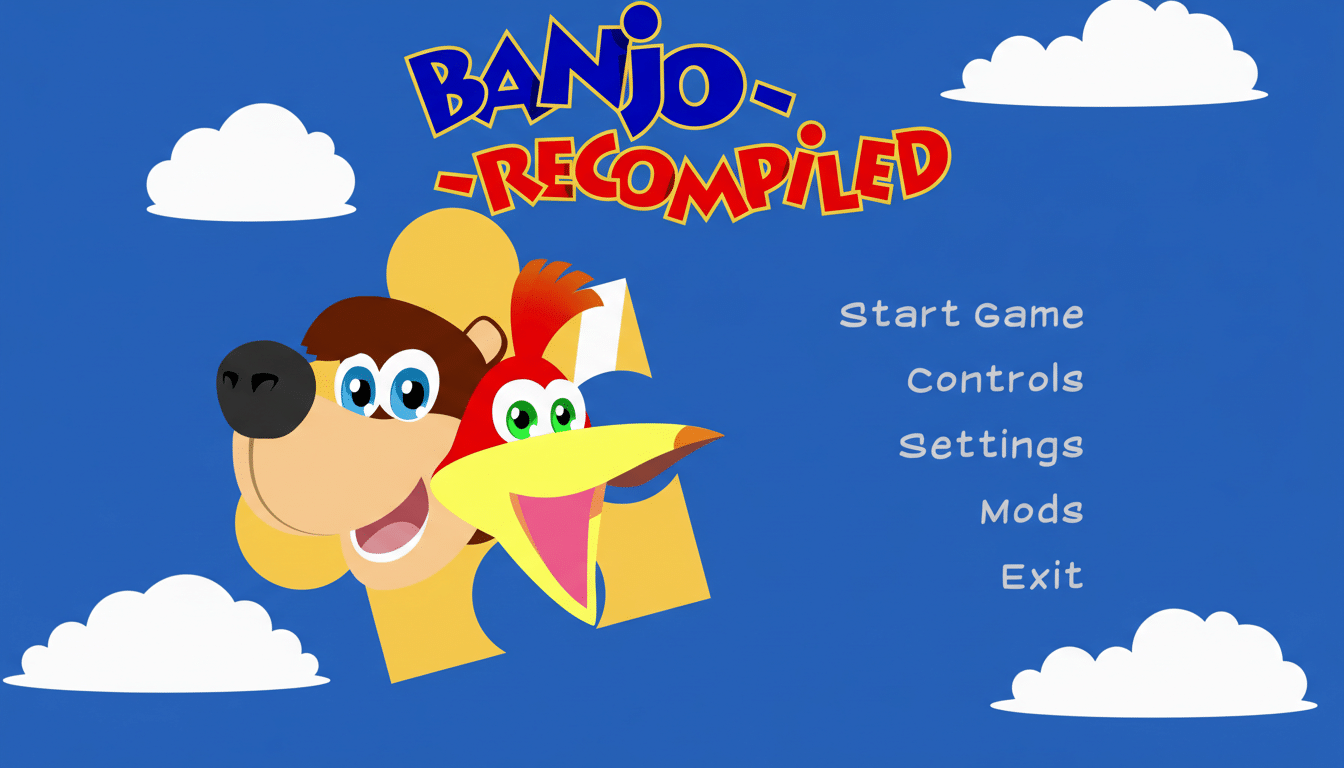
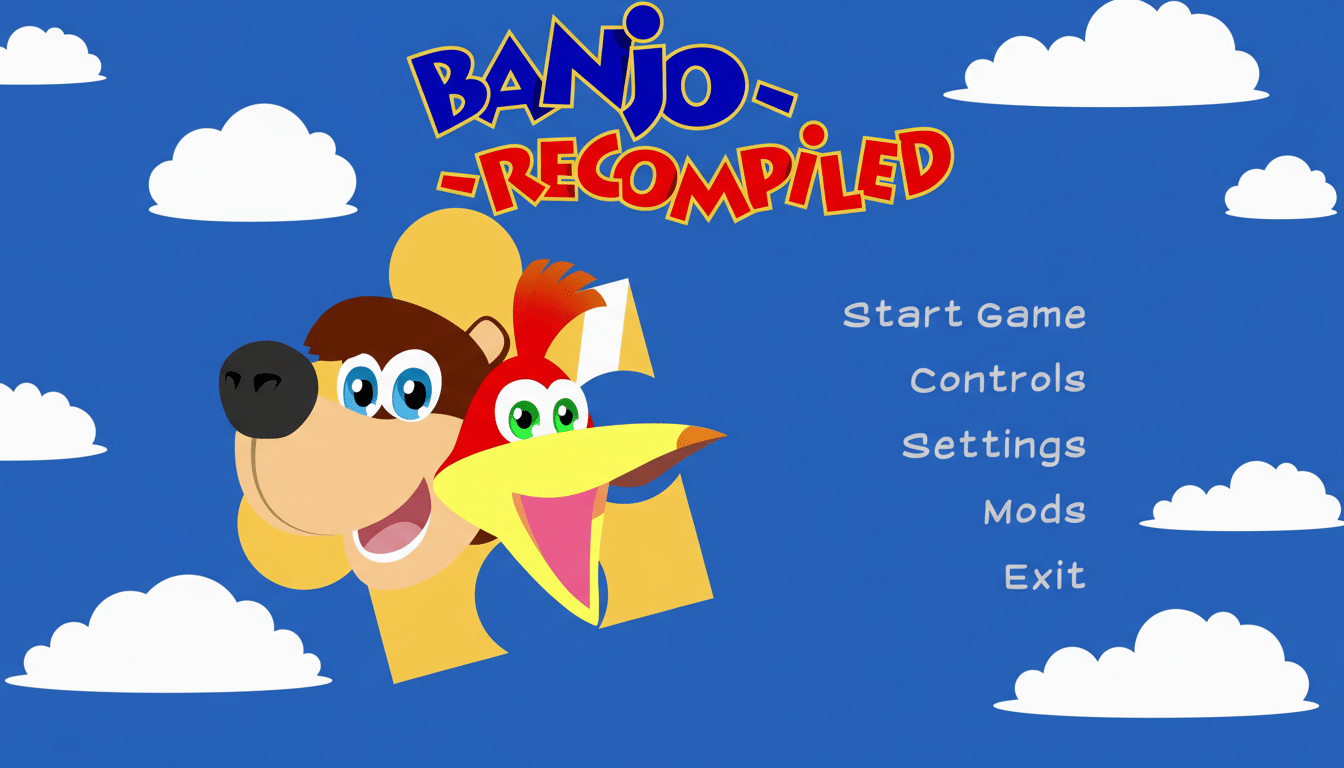
A fan-built native port of Banjo-Kazooie, titled Banjo: Recompiled, has quietly arrived on PC, Mac, and Linux, bringing dual-stick camera controls, widescreen support, higher frame rates, and mod-friendly tools to the N64 classic.
Developed by community programmer Wiseguy, the project is a static recompilation of the 1998 original and ships without copyrighted game assets. Players must supply a legitimate N64 ROM to run the port, which has no affiliation with Nintendo, Microsoft, or Rare.
What Banjo: Recompiled Changes for Modern Play
The headliner is modern camera control. Instead of relying on the N64’s C buttons, the port enables a second analog stick for smooth, contemporary camera movement. Combined with improved input handling, the game instantly feels closer to current 3D platformers than a late-’90s relic.
Visual upgrades focus on compatibility and comfort: widescreen display options replace the original 4:3 presentation, and higher frame rates improve responsiveness and clarity. These tweaks preserve the art direction while removing the technical constraints that defined the N64 era.
Quality-of-life changes include a Note Saving toggle that preserves collected Notes in each level. In the original release, your Note tally reset upon reentry, a small but notorious friction point for completionists.
A Major Boost for Mod Support and the Community
Banjo: Recompiled debuts with drag-and-drop mod support, lowering the barrier for creators and players alike. At launch, three mods are supported, including two content packs from veteran creator Mark Kurko and an enhanced texture set. The developer also released a simple conversion tool to transform traditional ROM hacks into plug-and-play mods.
The approach mirrors Wiseguy’s earlier release of a Majora’s Mask port, which has grown to more than 120 community-made mods, according to project maintainers and mod repositories. Expect a similar long tail here: new levels, challenge variants, visual refreshes, and accessibility tweaks typically arrive fastest once a mod pipeline is established.
How Static Recompilation Makes It Possible
The port is built using the N64: Recompiled tool, a framework that automates large portions of static recompilation and includes a built-in renderer. Traditionally, bringing an N64 game to modern systems required painstaking reverse engineering and custom rendering work. Static recompilation compresses that timeline, though it still demands extensive testing and polish.
This technique has accelerated a broader wave of N64 native ports from fan teams, including efforts around The Legend of Zelda titles, Star Fox 64, Super Mario 64, and Mario Kart 64 by groups such as Harbour Masters. Beyond convenience, these projects aid preservation: N64 emulation can be finicky, and the original trident controller layout maps awkwardly to today’s gamepads. Native builds with modern controls address both problems head-on.
Context Among Official Releases on Modern Platforms
Officially, Banjo-Kazooie is accessible through Rare Replay on Xbox and via Nintendo Switch Online + Expansion Pack, both running emulated versions. Banjo: Recompiled serves a different audience: PC and multi-platform players who want native performance, mod support, and dual-stick comfort without waiting for a commercial remaster.
Setup Steps and Legal Considerations for Players
The port does not include copyrighted data and requires users to provide an original ROM. That limitation reflects a common approach in community preservation circles, balancing technical progress with legal caution. Project discussions and build notes are being shared on developer repositories and community forums rather than commercial storefronts.
Why This Fan Port Matters for Players and Preservation
Banjo: Recompiled gives a landmark platformer a modern feel without rewriting its identity. Dual-stick camera control, higher frame rates, and a robust mod lane together extend the game’s lifespan and relevance. For players, it is the most approachable way to revisit Spiral Mountain on contemporary hardware; for preservationists, it is another proof point that static recompilation can keep a pivotal era of 3D platformers alive and evolving.
