


Bad Bunny turned the Apple Music Super Bowl Halftime Show into a global block party, flooding timelines and group chats with a spectacle that blended reggaeton swagger, Latin trap grit, and arena-scale pop precision. Within minutes of the first beat at Levi’s Stadium in Santa Clara, social feeds were wall-to-wall with clips, memes, and breathless posts declaring the performance an instant classic.
A Global Pop Takeover At Levi’s Stadium In Santa Clara
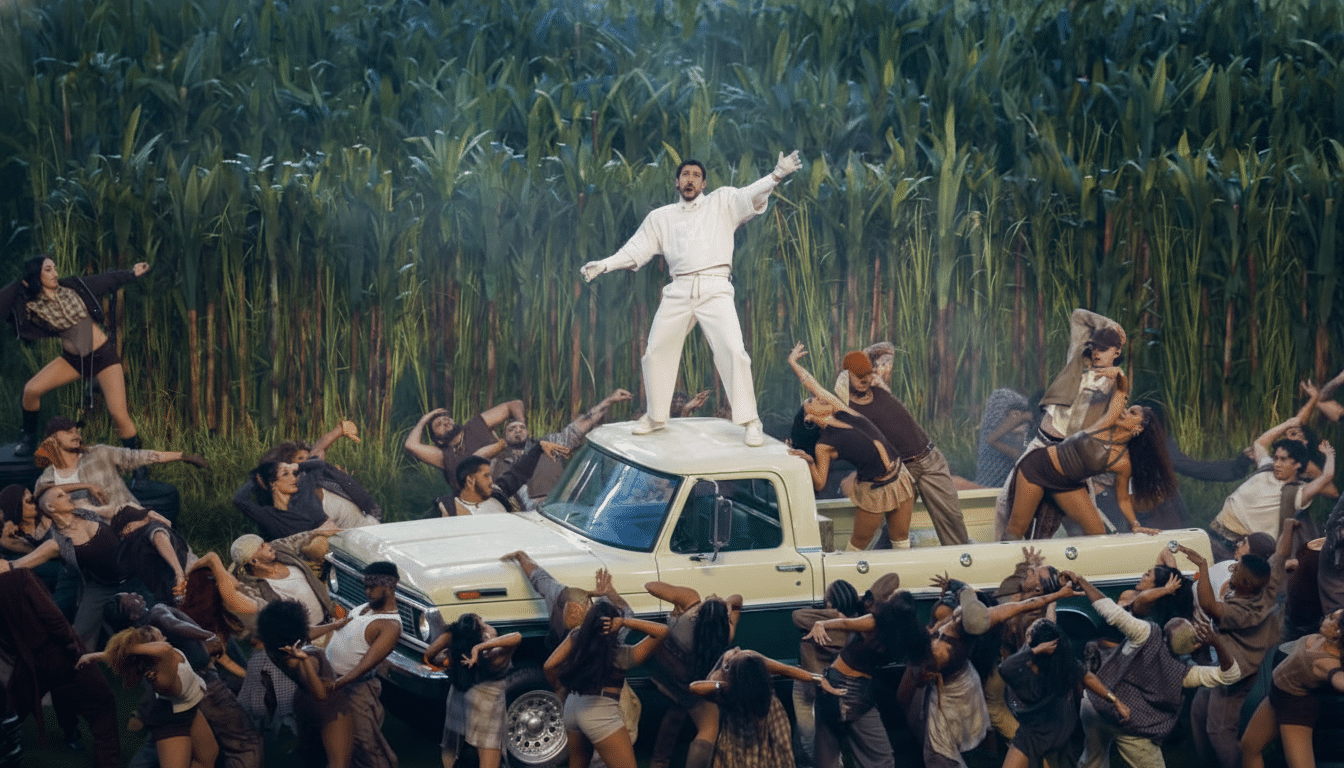
The Puerto Rican superstar framed the stage like a celebration of diasporic identity—dense choreography, precise lighting cues, and panoramic camera work built around a rhythm-first set. The energy was relentless, but so was the control: live band hits, dembow patterns, and polished transitions turned a football field into a nightclub that millions visited at once.
Bad Bunny’s calling card has always been scale—arena tours that sell out in minutes, beach-party anthems that rule summer—and the halftime platform amplified that DNA. The production read as a statement: Latin music isn’t merely participating in pop culture; it’s setting the tempo.
Setlist And Surprise Guests Amplify The Moment
He opened with a jolt, firing into “Tití Me Preguntó” before pivoting to the crowd-favorite “Yo Perreo Sola,” a one-two pairing that underscored how seamlessly his catalog toggles between party and provocation. The arrangement leaned into live percussion, giving TV audiences a tactile feel that translates well on small screens.
Then came the curveballs. Lady Gaga’s cameo—reimagining her “Die With a Smile” duet with a salsa twist—played like a wry flex, collapsing genre lines with a wink. Ricky Martin’s arrival was pure Super Bowl theater, a multigenerational baton handoff that bridged late-’90s crossover pop to today’s streaming-era dominance. Each guest sharpened the show’s central point: this is a pan-Latin moment with room for global pop royalty.
Real-Time Reaction Floods Social Platforms
On X, topic lists quickly skewed to Bad Bunny, his guests, and specific setlist cuts, while TikTok filled with side-stage angles and choreography breakdowns before the confetti settled. Instagram Reels and YouTube Shorts amplified the most replayable sequences, extending the performance’s half-life well beyond the TV window.
This is the modern halftime math: a 12–15 minute broadcast designed for infinite recuts. In recent years, Luminate has tracked triple-digit surges in catalog streams for halftime performers, and Apple Music and Spotify routinely report spikes in searches, Shazams, and playlist saves following the show. Expect a similar halo here—Bad Bunny’s hooks are engineered for the replay button.
Why This Moment Lands Differently For Latin Music
Beyond the fireworks, the booking reflects a longer arc. The RIAA has reported record-breaking revenue for Latin music in the U.S. in recent years, cresting past the billion-dollar mark as streaming consumption accelerates. Luminate’s year-end reporting has consistently shown double-digit growth for Latin genres, while festival lineups and arena calendars increasingly read in Spanish.
Bad Bunny sits at the center of that swell. He was Spotify’s most-streamed global artist for three consecutive years through 2022, and his catalog has dominated summer listening across North and South America. Putting him on the NFL’s biggest stage is both a reflection of that market reality and an accelerant for what comes next—brand deals, tour demand, and cross-genre collaborations tend to snowball in the aftermath.
What Ratings And Data Could Show In The Coming Days
Nielsen’s halftime tallies typically outpace the game’s average audience, and last year’s broadcast set all-time viewership marks across platforms. If history is a guide, postgame reporting will likely show a spike during the performance window along with lifts in next-day streaming, downloads, and search activity. Billboard and Chartmetric often capture these immediate swings in chart position and velocity indices.
For brands and labels, the key metrics are conversion and endurance: how many viewers became listeners, and how long the uplift sustains. Past halftime stars have seen week-over-week streaming gains that reshape tour routing and setlist choices; Bad Bunny’s team will be watching those dashboards closely.
A Closing Message With Purpose And Unity
The show ended on a note that cut through the noise: a towering message reading “The only thing more powerful than hate is love,” framed by a sea of Latin American flags. It was a concise addendum to a maximalist performance—part gratitude, part thesis statement for a night that doubled as a cultural milestone and pop coronation.
In the end, the internet didn’t just react; it organized itself around the moment. That’s the tell of a halftime that hits: it spills out of the broadcast and remakes the feeds, one loopable chorus at a time.
