


AYANEO has opened preorders for its Next 2 handheld, and the sticker shock is very real. Early crowdfunding tiers start at $1,799 and top out at $3,499, with standard pricing rising as high as $4,299 once the early window closes. In return, buyers get a Windows gaming device that reads like a spec sheet flex, led by a 9.06-inch 165Hz OLED and up to 128GB of LPDDR5x RAM.
Preorders Open Via Crowdfunding On Indiegogo
AYANEO is taking orders through Indiegogo, framing the campaign as a preorder with early-bird perks. The entry tier pairs the so-called Ryzen AI Max 385 with 32GB of RAM and 1TB of NVMe storage at $1,799, climbing to $1,999 later. A mid-tier 64GB/1TB model with the higher-spec Max+ 395 is listed at $2,299 during early access and $2,699 afterward. The flagship 128GB/2TB configuration starts at $3,499 and jumps to $4,299 after the initial window.
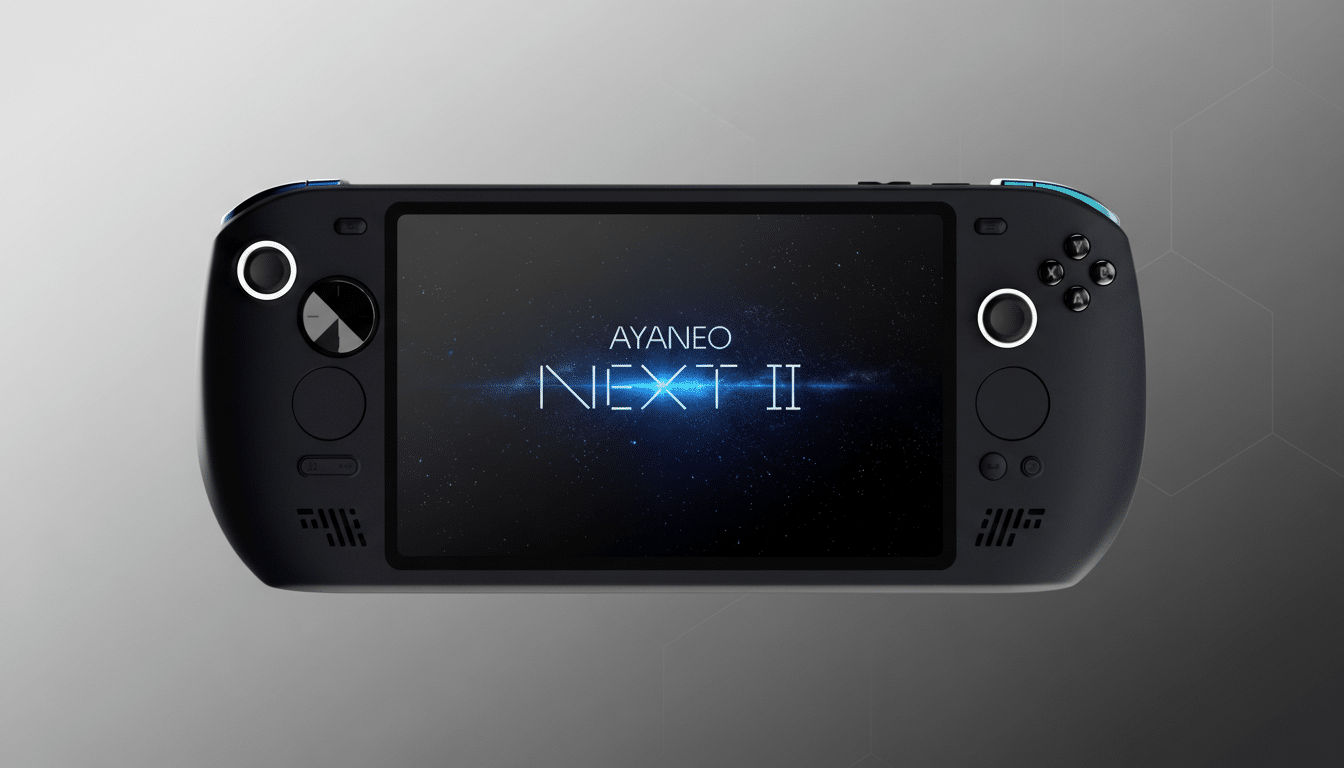
AYANEO says shipments are slated to begin in the coming months. For now, only the Polar Black finish is available to back; an Arctic White option has been shown but isn’t open for pledges yet. Add-ons include a screen protector, thumbstick caps, and a $45 storage bag, with a small bonus pack bundled during the early phase.
It’s worth noting that crowdfunding campaigns are not the same as traditional retail preorders. While AYANEO has a track record of shipping multiple handheld generations, timelines can slip and terms differ from standard store purchases. Prospective buyers should review the platform’s policies before pledging.
A Premium Spec Sheet To Match The High Price
The centerpiece is a 9.06-inch OLED running at 165Hz with a 2400×1504 resolution, a rare combination in handhelds. The panel’s roughly 16:10 aspect ratio offers a little more vertical space than 16:9 and should make desktop use in Windows more comfortable. AYANEO is also touting adjustable thumbstick torque alongside the expected array of face buttons and triggers.
Under the hood, AYANEO lists AMD’s Ryzen AI Max 385 or Max+ 395 processors, paired with 32GB, 64GB, or 128GB of LPDDR5x memory and either 1TB or 2TB of NVMe storage. While gaming rarely benefits from more than 32GB of RAM, the upper tiers may appeal to users who also edit media, run virtual machines, or rely on hefty texture caching in creation workflows.
Battery capacity lands at a beefy 115Wh, far larger than most portable PCs. Expect wide runtime swings: on similar x86 handhelds, demanding AAA titles at higher power draw often drain a 50–60Wh pack in about 1.5–3 hours. Doubling capacity should meaningfully extend sessions, but the high-refresh OLED and aggressive power modes can still chew through charge quickly. Travelers should also remember aviation guidelines from regulators like the FAA and EASA: batteries over 100Wh may require airline approval to carry on, though they are typically permitted up to 160Wh when declared.
How It Stacks Up Against Rivals And Alternatives
Against mainstream competitors, AYANEO is playing in its own price league. Valve’s Steam Deck OLED starts hundreds of dollars lower and emphasizes platform integration and battery efficiency over raw specs. ASUS’s ROG Ally and Lenovo’s Legion Go commonly sell in the mid-hundreds, pairing Windows with 7–8-inch 120Hz-class LCDs and more modest memory configurations. Boutique peers like OneXPlayer and GPD do creep well past $1,000, but AYANEO’s top tier blowing past $3,000 remains unusual.
The Next 2 does offer clear hardware differentiators. A 165Hz OLED at 9 inches is virtually unmatched, and 128GB of RAM is unheard of in this segment. The 115Wh battery also dwarfs typical packs. Yet real-world gains will hinge on software tuning, thermals, and how often games can push frame rates high enough to exploit the screen. Many modern titles will likely run at scaled resolutions and balanced power targets to maintain smooth performance, especially if integrated graphics are in play.
Who This Handheld Is For And Who Should Skip It
If you want the most lavish Windows handheld on paper and are comfortable with crowdfunding dynamics, the Next 2 is positioned as a no-compromise option. It makes particular sense for power users who juggle gaming with productivity, emulation, or creative tasks that genuinely benefit from massive RAM and fast NVMe storage.
For most players, however, value-focused rivals deliver excellent experiences at a fraction of the cost. SteamOS on the Deck streamlines portable play, while Windows handhelds from ASUS and Lenovo balance performance and price more conservatively. The Next 2’s proposition is less about chasing frames per dollar and more about owning a showcase device with category-first specs.
Bottom line: AYANEO has thrown down a bold, expensive gauntlet. The hardware looks stunning, the battery is colossal, and the configuration options are extravagant. Whether that translates into meaningful day-to-day advantages will become clear once units land in the hands of backers in the months ahead.
