


Audible is expanding beyond pure audio with a feature designed to help you finish more books with less friction. Called Read & Listen, it blends professionally narrated audiobooks with synchronized, on-screen text inside the Audible app, giving you a seamless read-along experience that the company says leads to nearly 2x more content finished per month compared with audio-only listening.
What Read & Listen does and how the feature works
Think of it as audiobook karaoke for books. As the narrator speaks, the exact passage you’re hearing is highlighted on your screen and scrolls automatically, so your eyes and ears stay locked in the same place. To use it, you need to own both the audiobook and the corresponding ebook; once both are in your Amazon-Audible library, the Audible app surfaces a Read & Listen option and syncs the two versions automatically.
- What Read & Listen does and how the feature works
- Why Reading and Listening Together Works
- How To Use It And Actually Finish More Books
- Who benefits most from Audible’s Read & Listen feature
- Catalog scope, pricing, and international availability
- The bigger picture for audiobooks and digital reading
- Bottom line: should you try Audible’s Read & Listen?
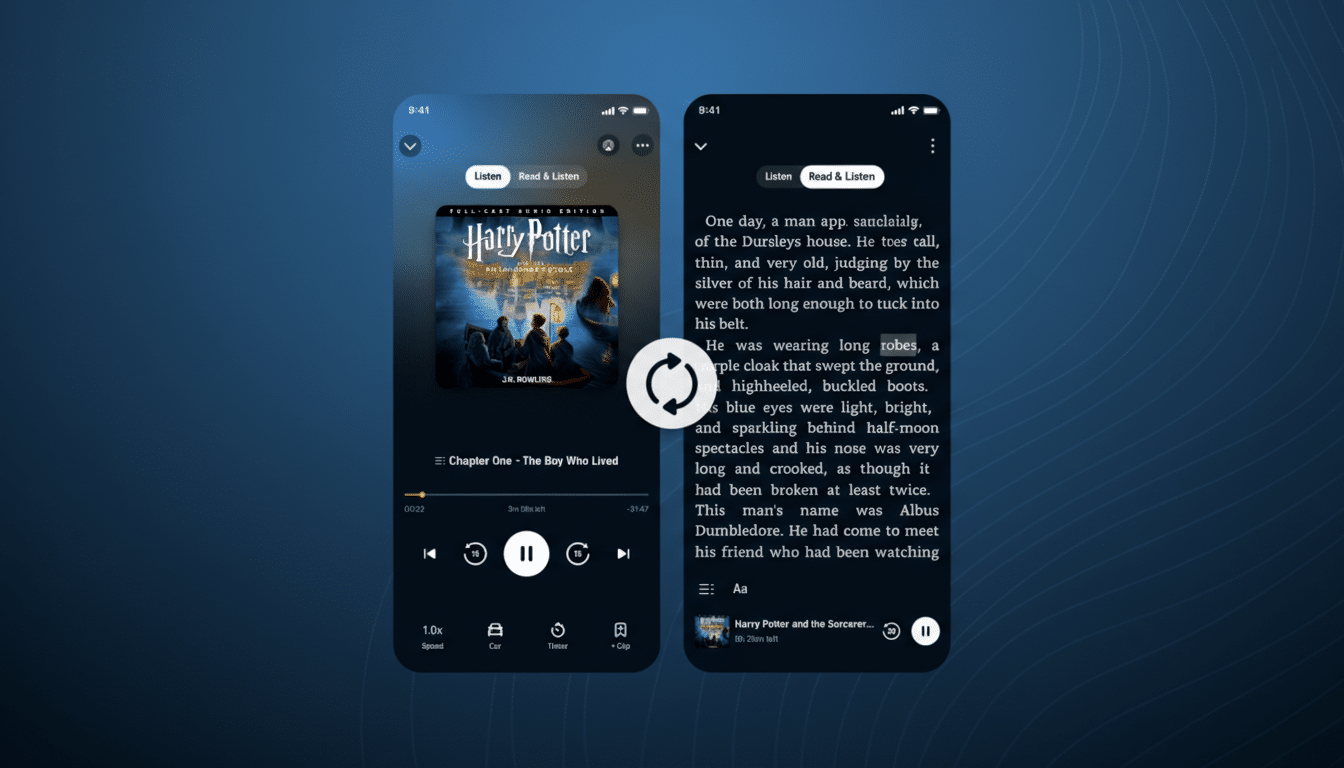
Audible says hundreds of thousands of titles are already compatible across English, German, Spanish, Italian, and French. The feature is rolling out in the US first, with availability in the UK, Australia, and Germany to follow. In initial usage data shared by Audible, people who turn on Read & Listen are among the most engaged on the platform, consuming almost twice as much content each month as audiobook-only users.
Why Reading and Listening Together Works
The read-along approach taps into well-established learning science. Dual coding theory, introduced by psychologist Allan Paivio, suggests we process information more deeply when it’s presented through complementary channels—here, auditory and visual. Literacy research published in outlets such as the Journal of Educational Psychology has repeatedly found that pairing text with audio can improve comprehension and recall, particularly for complex material.
It can also lower barriers for readers who struggle with decoding or attention. Organizations like the International Dyslexia Association have long recommended text-plus-audio as a scaffold for building fluency, and educators working with learners who have ADHD or low vision often use read-alongs to maintain focus and reduce fatigue. Language learners benefit, too, by hearing pronunciation while tracking spelling and syntax in real time.
How To Use It And Actually Finish More Books
Start by updating the Audible app and confirming you own both formats of a title. If you already have the audiobook, look for the matching ebook in the Kindle Store; many titles are eligible for discounted bundles via Whispersync for Voice, which ties the two together.
Open the audiobook in Audible and tap the Read & Listen toggle. The text pane opens with live highlighting synced to the narration. You can pinch to adjust text size, switch between light and dark modes, and jump chapters without losing your place—the audio and text stay locked together via your Amazon account.
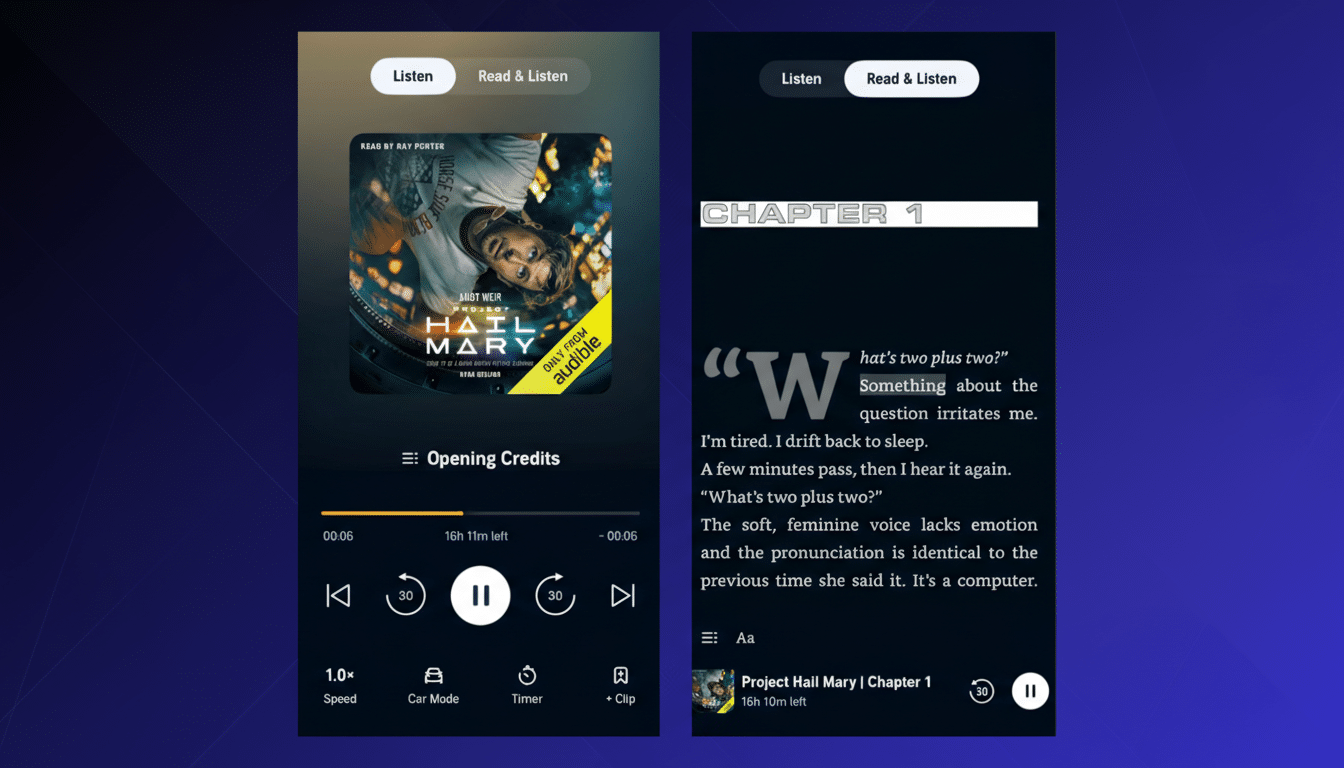
To move faster, set narration to 1.25x–1.5x while keeping the text visible. That gentle speed-up often lifts throughput without harming comprehension because your eyes help anchor the words. Use bookmarks and notes to tag key passages, then review those highlights in text for rapid recall—an efficient workflow for professional reading, exams, or book clubs.
A practical routine that works: listen hands-free during your commute, then switch to Read & Listen at lunch or before bed. Because the text is synchronized, you can skim back a page or two visually to reinforce what you heard. For dense nonfiction, the dual mode reduces regressions and keeps pace through data-heavy sections.
Who benefits most from Audible’s Read & Listen feature
Students can use Read & Listen to tackle assigned chapters faster and retain more for quizzes. Professionals who triage industry reports gain speed and accuracy by following along visually while listening. Readers with dyslexia or ADHD get the scaffold of highlighted text to maintain attention. And for newcomers to a language, hearing native pronunciation while seeing the words on-screen can accelerate vocabulary growth.
Catalog scope, pricing, and international availability
Read & Listen works on compatible titles where both formats exist in the Amazon-Audible ecosystem. You will need to purchase the audiobook and the ebook—sometimes at a bundle discount when Whispersync is available—before the feature appears. Audible says the initial US rollout is underway, with expansion to the UK, Australia, and Germany in the coming months, and support currently spans English, German, Spanish, Italian, and French.
The bigger picture for audiobooks and digital reading
The move arrives as audiobooks continue a long stretch of growth reported by the Audio Publishers Association, and as rivals push deeper into books. Spotify, for example, has invested in audiobooks and even partnered with Bookshop to sell physical titles. Audible is testing a similar link to Amazon for buying print editions, signaling a broader strategy to meet readers wherever they are—eyes or ears.
Bottom line: should you try Audible’s Read & Listen?
If your to-be-read pile keeps growing, Read & Listen is a practical way to turn the corner. The synchronized text reduces drift, boosts comprehension, and—based on Audible’s own engagement data—can help you finish up to 2x more books. It’s a simple switch in your routine that feels natural within minutes and pays off across study, work, and leisure reading.
