


Audible is rolling out Read & Listen, a new mode that lets listeners follow along with on-screen text that stays perfectly in sync with their audiobook. It’s a clear push to bridge the gap between two thriving habits—listening and reading—without forcing people to choose one over the other.
How the Read & Listen synchronized text feature works
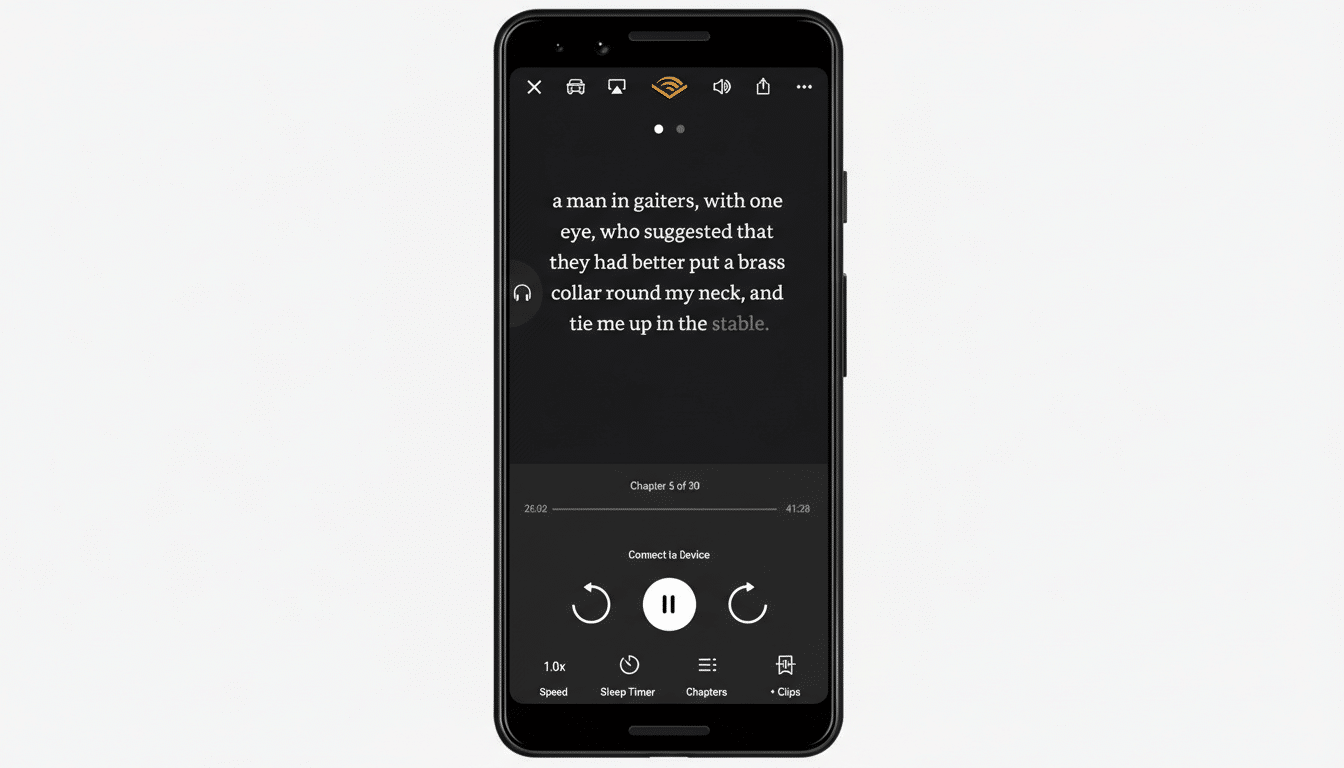
With Read & Listen enabled, the Audible app highlights words in real time as the narration plays, mirroring the cadence and timing of the performance. A single tap switches between pure audio and the hybrid mode, so you can keep listening on a commute and then pick up your place with text when you sit down.
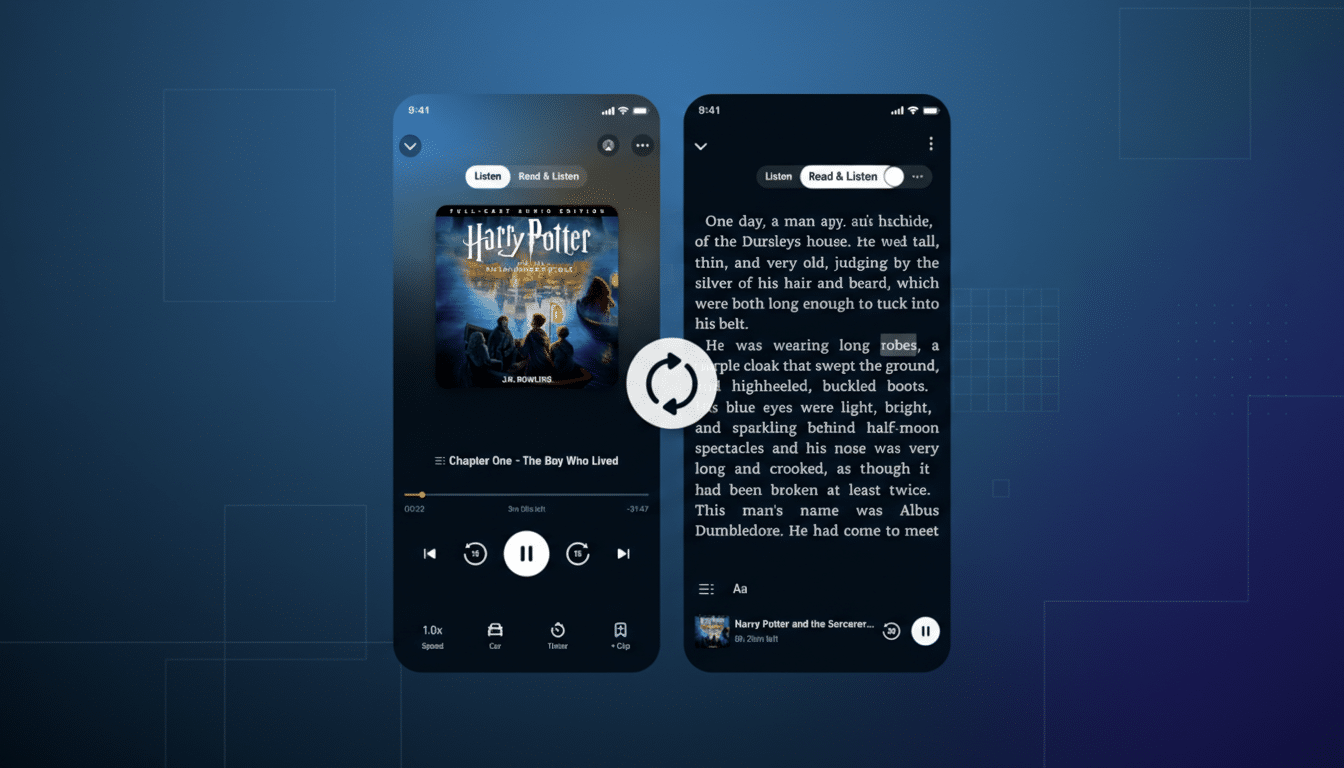
Discovery is built in. Audible automatically checks your Kindle library and flags titles where an e-book and audiobook pair is available, surfacing eligible matches in a dedicated Library view. For many of these pairings, customers who already own the Kindle edition can buy the audiobook at a discount, and vice versa, streamlining what used to be a clunky, format-hopping process.
The catalog for Read & Listen is global at launch, with thousands of titles in English, German, Spanish, Italian, and French, and more expected as publishers enable synchronized editions. The experience depends on titles where rights holders have approved both formats to sync, which is why availability varies by book and market.
Why Synchronized Reading Could Change Habits
Early usage metrics from Audible suggest this hybrid mode drives deeper engagement: listeners who use Read & Listen consume about twice as much content per month compared to audiobook-only users. That aligns with what publishers have seen over the past decade, as reported by the Audio Publishers Association—steady, double-digit revenue growth for audiobooks in the U.S., with sales topping $1.8 billion and no signs of slowing.
The format also has practical benefits. Word-by-word highlighting reinforces focus for people who like visual anchors, and it can support readers with attention or processing differences. The International Dyslexia Association has long advocated multisensory reading approaches; synchronized audio-text experiences follow that playbook by combining sight and sound to reinforce comprehension.
There’s value for learning, too. For language learners, pairing narration with text can speed recognition of pronunciation and idioms. And for students, switching from listening to reading to annotate a passage—or to quickly scan a section—helps match the medium to the task. Research on modality, including work by Rogowsky and colleagues, has found minimal differences in comprehension between reading and listening for many adult learners, suggesting the right mix may be about preference and context more than inherent superiority.
A Step Beyond Whispersync With In-App Synchronized Text
Amazon has offered cross-format continuity for years through Whispersync for Voice, which kept your place between a Kindle e-book and an Audible audiobook. But that required juggling two apps, and the text didn’t dynamically highlight to the audio track. Read & Listen brings the synchronized text directly into Audible, collapsing those steps and turning what used to be an ecosystem trick into a single, immersive experience.
Audible’s product team frames the feature as removing a decision point for book lovers. Rather than weighing whether to buy an e-book or an audiobook, customers can lean into both forms when available and move fluidly between them during a single reading session.
Availability and supported titles for Read & Listen
Read & Listen is debuting to customers in the United States first, with rollouts in the UK, Australia, and Germany to follow. Titles that support the mode will appear in the Audible app’s Library tab once a matching e-book is detected or an eligible bundle is purchased. Expect the selection to expand as publishers enable synchronized text for more backlist and new releases.
As listening habits broaden—Pew Research Center reports that audiobook adoption continues to climb among U.S. adults—synchronized modes like this could become standard for narrative nonfiction, language-learning titles, and even high-fidelity fiction where performance is part of the draw. In a market where Spotify, Apple Books, and independent apps are all courting audiobook fans, the ability to seamlessly follow along on the same screen is a practical differentiator for Audible.
For readers, the promise is simple: fewer trade-offs, more time with books. Whether you’re annotating a chapter, training your ear in a new language, or just keeping your place between errands, Read & Listen turns a familiar app into a more flexible reading companion.
