


AT&T is introducing Turbo Live, a pay-on-demand “fast lane” that gives your phone priority data access inside crowded stadiums and arenas. The twist is that you don’t need to be an AT&T subscriber to use it—fans on Verizon and T-Mobile can buy in, too—turning 5G performance at big events into something you can purchase for the day.
What Turbo Live Promises for Event Connectivity
Turbo Live is designed for the exact moments when mobile networks usually buckle: kickoff, the headliner’s opening song, or that sudden overtime finish. AT&T says the service prioritizes your traffic so you can live-stream without buffering, upload HD photos and videos immediately, refresh stats and betting apps reliably, and hail a ride before the crowd floods the curb.
- What Turbo Live Promises for Event Connectivity
- Open to All Major Carriers With Compatible Phones
- Where Turbo Live Will Be Available and Launch Venues
- How Turbo Live’s Fast Lane Likely Works in Practice
- Pricing and Policy Questions Around Turbo Live Access
- Why Stadium Connectivity Needs a Rethink
- The Bottom Line on AT&T’s Turbo Live Stadium Service
Open to All Major Carriers With Compatible Phones
Unlike venue connectivity perks that are bundled into certain plans or limited to a single carrier, AT&T is making Turbo Live available to anyone with a compatible 5G smartphone. That includes Verizon and T-Mobile customers, a notable shift from the industry’s usual approach of using in-venue performance to win long-term subscribers.
There is a technical catch: activation will likely rely on eSIM to add a temporary AT&T profile to your phone for the event. AT&T’s fine print indicates you may need an unlocked device and an open eSIM slot. The practical upside is that most recent iPhones and flagship Android devices already support eSIM, according to industry groups like the GSMA.
Where Turbo Live Will Be Available and Launch Venues
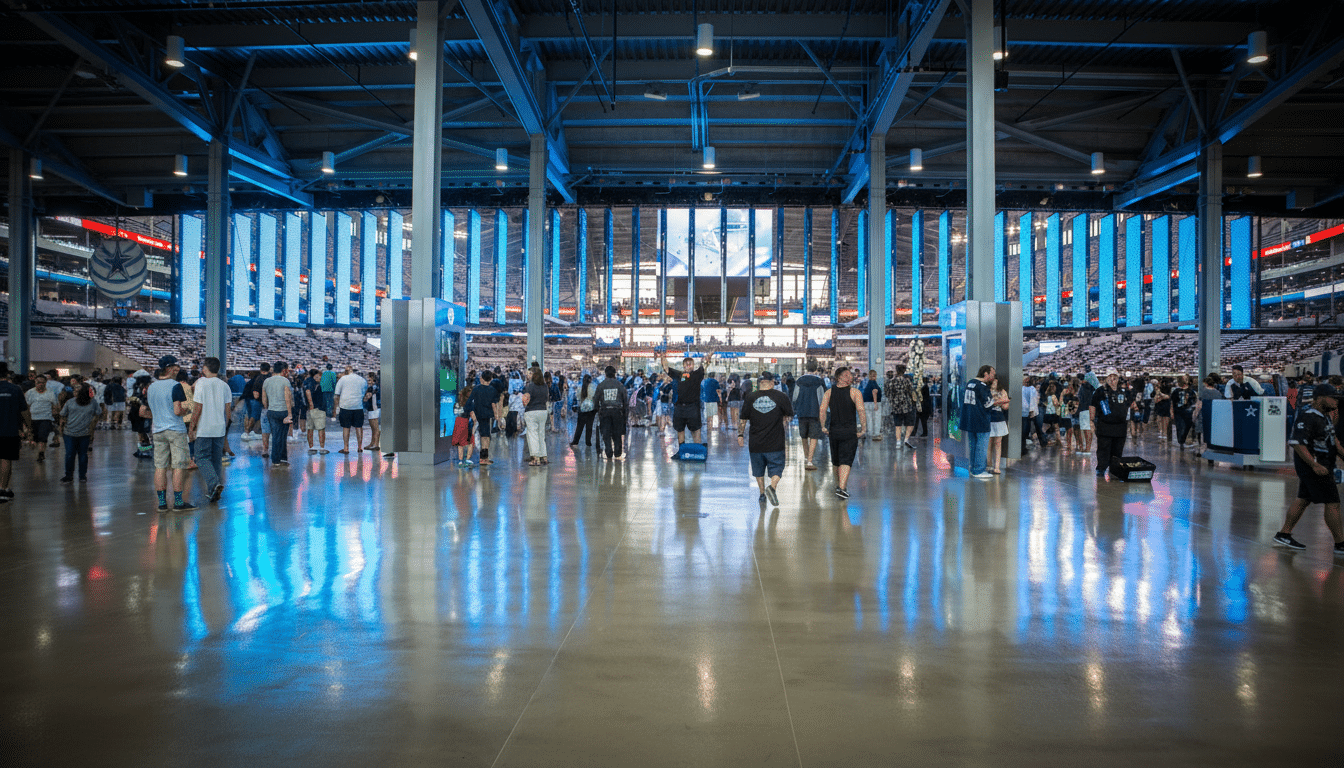
AT&T is rolling out Turbo Live across more than 10 marquee venues, starting with high-traffic locations such as the Las Vegas Sphere, MetLife Stadium, and Levi’s Stadium. The company also signals broader expansion to major sports complexes including AT&T Stadium in Arlington, Gillette Stadium in Foxborough, and SoFi Stadium in Los Angeles.
These are precisely the kinds of venues where carriers already deploy dense layers of 5G infrastructure—think C-band upgrades, mmWave nodes, and a web of small cells—yet still see performance degrade when tens of thousands of phones compete for capacity at once.
How Turbo Live’s Fast Lane Likely Works in Practice
While AT&T isn’t publishing technical specs, Turbo Live almost certainly leans on 5G quality-of-service features such as differentiated QoS flows and prioritization tiers that assign your device a higher scheduling weight during congestion. In practice, that can mean lower latency, steadier uplink for video, and fewer timeouts when apps fetch data.
A temporary eSIM profile gives AT&T direct control over your session, letting the network apply priority policies across the venue’s radios without asking your home carrier to intervene. For the user, it should feel seamless: scan a code, confirm on your phone, and your data gets elevated for the event’s duration.
Pricing and Policy Questions Around Turbo Live Access
AT&T has not publicly detailed pricing or duration options. Expect event-based packages rather than monthly add-ons, since the value proposition is strongest when crowds peak. Verizon offers similar venue-grade prioritization but primarily for event organizers and teams, not as a direct-to-consumer add-on, which makes AT&T’s approach unusual.
The model will likely spark fresh debate over paid prioritization. Open internet rules overseen by the Federal Communications Commission restrict certain forms of paid fast lanes, though carriers can offer specialized services and priority for public safety or enterprise contexts. Whether a consumer venue pass fits cleanly within those frameworks will draw scrutiny from digital rights groups and industry watchers.
Why Stadium Connectivity Needs a Rethink
Live events create extreme, short-lived spikes in usage. Carriers routinely report tens of terabytes of data consumed inside and around championship games, with thousands of simultaneous photo and video uploads during key moments. CTIA’s industry surveys show U.S. mobile data consumption growing to tens of trillions of megabytes annually, underscoring how upload-heavy behavior at events stresses networks in ways typical daily use does not.
For fans, the value is straightforward: reliably posting that winning goal, streaming a clip to friends, or getting a driver in minutes instead of waiting out a congested network. For venues and teams, a dependable uplink can boost in-arena apps, mobile concessions, and real-time engagement that fuels sponsorships and merchandise sales.
The Bottom Line on AT&T’s Turbo Live Stadium Service
Turbo Live reframes stadium connectivity as an on-demand premium—one that even rivals’ subscribers can buy. If it delivers consistently better performance during the most congested moments, AT&T will have created a new category of venue service. The open questions now are simple and consequential: how much it costs, how widely it appears, and whether the fast lane becomes a fan favorite or a flashpoint in the ongoing debate over prioritization and fair access.
