


AT&T is testing an AI “receptionist” that picks up your phone, screens unknown callers, and weeds out spam before you even receive it, in hopes of replacing the split-second guesswork when one of those mystery numbers pops up.
When your phone rings, the service answers on your behalf and talks to the caller in plain English, then determines whether to put them through, take a message, or let the call go.
AT&T’s Chief Data Officer, Andy Markus, described the approach in a company blog post, casting the tool as a conversational front line against robocalls and scams.
How the AI receptionist operates during unknown calls
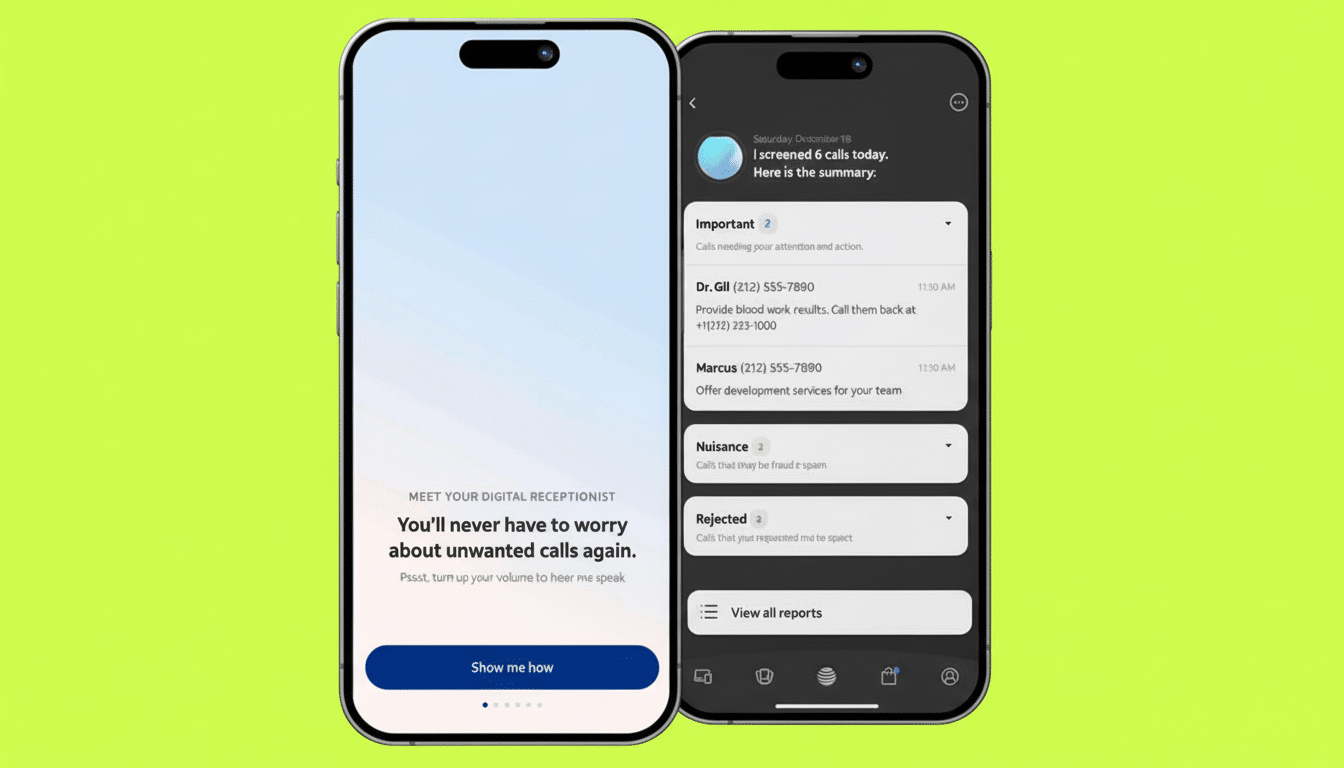
Instead of diverting to voicemail calls from numbers they’ve never seen before, the assistant picks up and poses practical questions — who’s calling, why are they reaching out, and is this urgent? It uses that context alongside your preferences — say, call rules you have set up or an approved list of contacts you never want blocked.
It puts you through if the call checks out. If not, the AI can let them leave a message, offer some basic help, or hang up. As the exchange unfolds, you can read a live transcript and jump in at any time. Then the system produces a brief overview so you can decide whether to call back.
Under the hood, AT&T says the receptionist relies on multiple large language models to comprehend speech, generate responses, and talk soundly back to callers. It also has fraud and spam-detection technology that works to identify suspicious activity and stop those conversations before they’re even started.
Why this matters now for robocalls and phone scams
According to the YouMail Robocall Index, Americans receive an estimated 4-5 billion robocalls a month. In addition to annoying us, the financial hit that consumers take is in the billions of dollars every year, as highlighted by findings from Truecaller and the Federal Trade Commission. And there’s so much of it that even the most cautious will at times grab something they shouldn’t.
Regulatory efforts like the FCC’s STIR/SHAKEN caller ID authentication technology have led to some reduction in spoofing. AT&T’s pitch is that a chatbot — not just a filter — can challenge suspect callers in real time and make the pass/no-pass decision for you.
What sets it apart from traditional call blockers
Conventional call blockers use reputation lists, heuristics, or filters on the device itself. AT&T’s approach is more agentic: the system carries on a conversation with the caller, tests for basic coherence, and checks intent. That can stymie the autodialers and scripted bots that stumble when they’re asked follow-up questions or called upon for specific information.
It’s also different from features such as Google’s Call Screen or Apple’s Live Voicemail in that it tries to take on a bit more of the back-and-forth, escalating to you only when a human conversation seems in order. AT&T has long offered spam protection through features like ActiveArmor; this adds a conversational bot into the mix, which may reduce both unwanted calls and missed real ones.
Privacy, accuracy, and guardrails for AI call screening
AT&T says the AI is calibrated to conversational fraud-prevention models and programmed to end calls when red flags crop up. The company adds that, in-house, it’s reading your rules and helping route calls appropriately, based on some personal data it collects for this purpose (and always in service of keeping users’ information safe).
Still, no AI screen is flawless. Though it’s of no small concern, from an inbox integrity perspective, that false positives might prevent someone you want from reaching you or apply fallible blackball technology to the DMs of people you don’t want to reach you. By screenshotting potential incoming messages and showing them as unopened before we saw them at all, Instagram seemed to treat users like rats hitting a pleasure lever. False negatives can also let a crafty scammer slip through. Then there’s latency — if the AI is slow, people will game it. AT&T’s provision of a “Do Not Screen” list, real-time transcripts, and one-tap override are useful mitigations that give you agency.
What’s next for AI call handling and voice assistants
Outside of screening, AT&T teases more generalized-agent talents: think checking to see if a delivery arrives, capturing the specifics of a message to pass along, or placing a reservation when you specify where and what time.
These are tasks that require a sure eye for detail and good consent workflows, but they also show where carrier-grade voice assistants might be heading.
If the pilot stays as reliable as it’s been, AT&T’s AI receptionist could be a preferred default — especially for small businesses, sole proprietors, and anyone hassled by unknown numbers. The promise is straightforward: fewer spam interruptions, fewer missed calls from people you want to hear from, and a phone that feels like it’s actually there to help you.
