


Asus has updated its thin-and-light poster child, the ZenBook A14 (UX3407NA), with a quicker platform, more robust mechanics, and a new 16-inch sidekick while retaining the sub-1kg transportability that made it such an attention-getter in the first place. The headliners here are a shift to Qualcomm’s newer Snapdragon X2 Elite silicon, a refashioned hinge that stifles the wobble of last year’s model, and a shockingly capable thermal system in this 0.63-inch chassis.
Snapdragon X2 Elite delivers more power and AI capability
That upgrade is led by Snapdragon X2 Elite, which offers an 18-core design (including 12 Prime cores and six Performance cores), extended cache, and improved graphics-per-watt. The NPU — a bit of AI co-processor that handles the crunchier bits and pieces on-device, in China’s case at least — is rated for 80 TOPS, which is interesting because Microsoft’s Copilot+ PC initiative outlined more than 40 TOPS as being suitable for on-device AI. Doubled, that threshold should mean smooth local tasks like real-time background noise removal, image generation at the edge, and offline transcription without battering battery life.

There are two memory and storage configurations to choose from, reflecting creator and power user requirements that fit between what passes for a classic ultrabook configuration at the high end and short of full-on workstation-type needs:
- 24GB RAM / 512GB storage
- 32GB RAM / 1TB storage
That system bandwidth jump, along with more GPU and NPU headroom, should slash wait times in media workflows and AI-assisted apps.
Thermals and endurance in a featherweight frame
Yet somehow, Asus has found space for a lightweight dual-fan cooler in the 0.63-inch-thick shell of the laptop — an impressive achievement when you consider that the device tips the scales at a mere 0.98kg.
That should cut down on throttling during sustained loads, a sore point for many in the ultralight world. The chassis is made from Ceraluminum with a fingerprint-resistant texture and is tested to military-grade MIL-STD 810H standards for bumps and wide temperature swings, according to Asus’ own testing protocols.
The hinge — my biggest gripe from last cycle — now feels more secure and confidence-inspiring, yet also passes the one-handed open test without resistance thanks to the EasyLift design. Its keyboard maintains easy travel for long typing stints, and its touchpad remains responsive to multi-finger gestures.
OLED essentials and media perks for entertainment use
The A14 stays on brand with its 14-inch OLED panel at FHD resolution, which means you still get the great inky blacks, high contrast levels, and motion handling that make streaming non-4K content and casual gaming pop more than it does on many other IPS rivals. Dolby Atmos support and Snapdragon Sound compatibility add to the entertainment perspective, enhancing spatial audio on supported headphones and speakers.
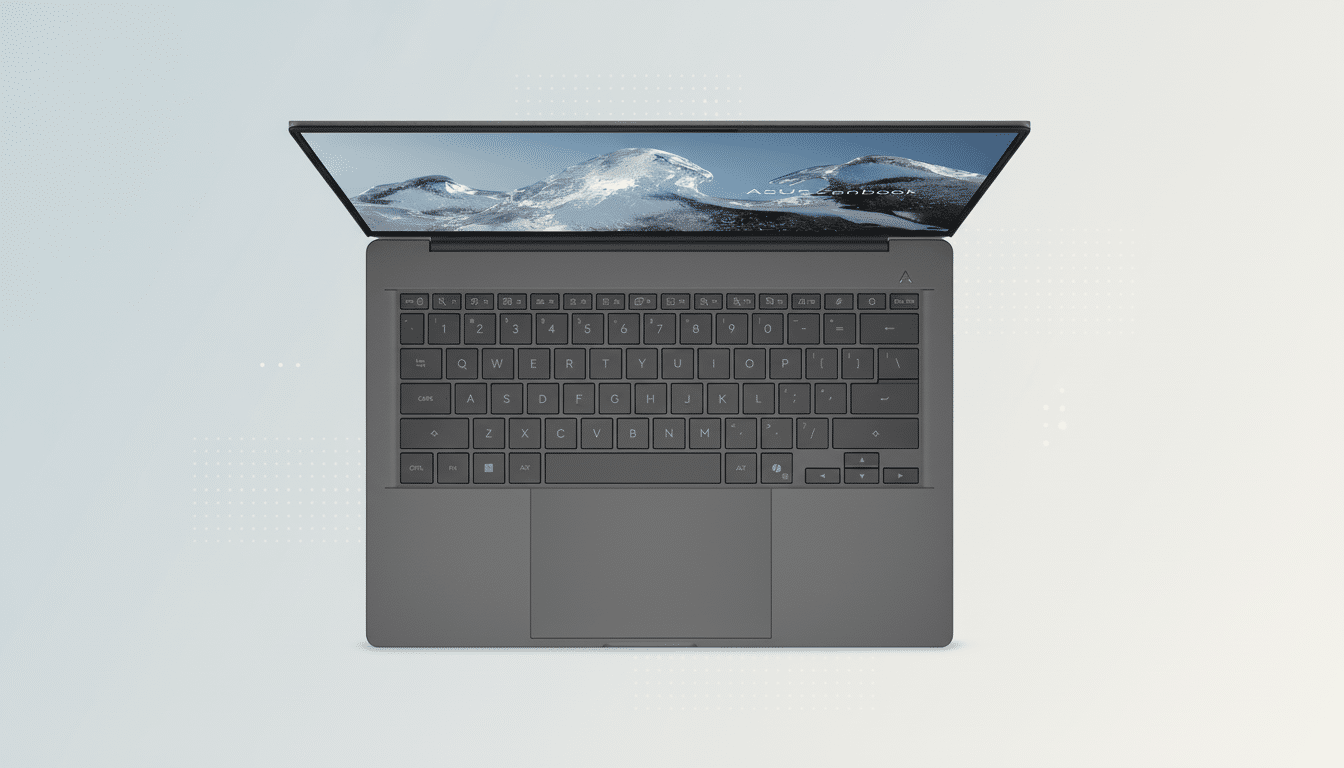
A Full HD Windows Hello face-authentication webcam is equally brilliant, a smart addition for hybrid workers bouncing between meetings and travel. The anti-scratch, smudge-resistant coating on the lid and deck can be kept looking fresh under real-world use.
Ports, connectivity options, and next-gen Wi‑Fi 7 support
Despite the minimalist form, the port mix is practical, which should mean fewer dongles and an easier desk setup:
- One USB 3.2 Type-A
- Two USB4 Type-C (with display and power delivery)
- HDMI 2.1 for an external 4K display
- 3.5mm audio jack
Wireless gains a next-generation upgrade with Wi‑Fi 7 and Bluetooth 5.4. The Wi‑Fi Alliance underscores how multi-link operation in Wi‑Fi 7 will drive lower latency and higher peak throughput, which should be helpful when performing massive cloud syncs, streaming 4K content at high rates, and hosting low-lag conferencing calls using compatible routers.
Battery life claims, real-world stamina, and beyond
It has a 70Wh battery at its core, which forms the foundation for that claim of more than 28 hours of video playback. For mixed use — meaning browsing tabs, office apps, and video calls — you can expect a lower number, but the capacity is very generous for a laptop this light. Many industry tests normalize video playback around moderate brightness, so real-world results will vary, although the efficiency benefits typical of ARM silicon tend to favor stamina.
Asus is also introducing a 16-inch option for anyone wanting more screen real estate while retaining the design and portability cues. Pricing will be announced closer to retail availability down the road, but for what it’s worth, if Asus prices this where it needs to be, the A14’s combo of AI performance and OLED visuals in true ultraportable heft should put pressure on offerings from LG Gram as well as premium USB4-equipped ultralights from HP and Lenovo.
Bottom line: the ZenBook A14 comes back with spare performance headroom, smarter cooling, and a better hinge — good fix-ups and upgrades in daily use — but most importantly keeps its travel-friendly identity intact.
