


AMD used its keynote to make a claim in the AI era with promises of “AI chips for everyone” from laptops all the way to data centers and courting partners from OpenAI to Washington. The company showed off a new generation of Ryzen AI chips for PCs, a hulking Helios server rack built to accommodate hyperscalers and even its vision of everywhere-on-device intelligence to challenge Nvidia’s chokehold on AI compute.
Now with recent tallies showing AMD taking in more high-test than Intel hardware and still giving chase to Nvidia’s data center dominance, it was time for CEO Dr. Lisa Su to take the stage.
The GPU platform kingpin, Nvidia, in typical fashion merely teased its next architecture at the show and perhaps set the pace, with little new silicon announced. That left AMD wiggle room to pitch breadth, not just speed: AI silicon for laptops, workstations and the cloud.
AI Everywhere Is The Pitch, From Devices To Cloud
Su based the strategy on a simple concept: put effective AI accelerators wherever people compute. She estimated that the global user base of active AI users could rise from about 1 billion to 5 billion within five years. The methodology here was not disclosed, and industry estimates differ, but the directional message is clear — AI is going mainstream fast.
AMD’s argument is that AI, as a democratized process, demands the collaboration of inexpensive endpoints and enormous back-end science. That will be NPUs in slim-and-light notebooks so daily tasks can run locally, supplemented by denser, more power-efficient racks in the data center to train and serve bigger models. It’s the whole-stack story, not the single-chip chest-thumping.
PC Silicon Goes Local With New Ryzen AI 400 Chips
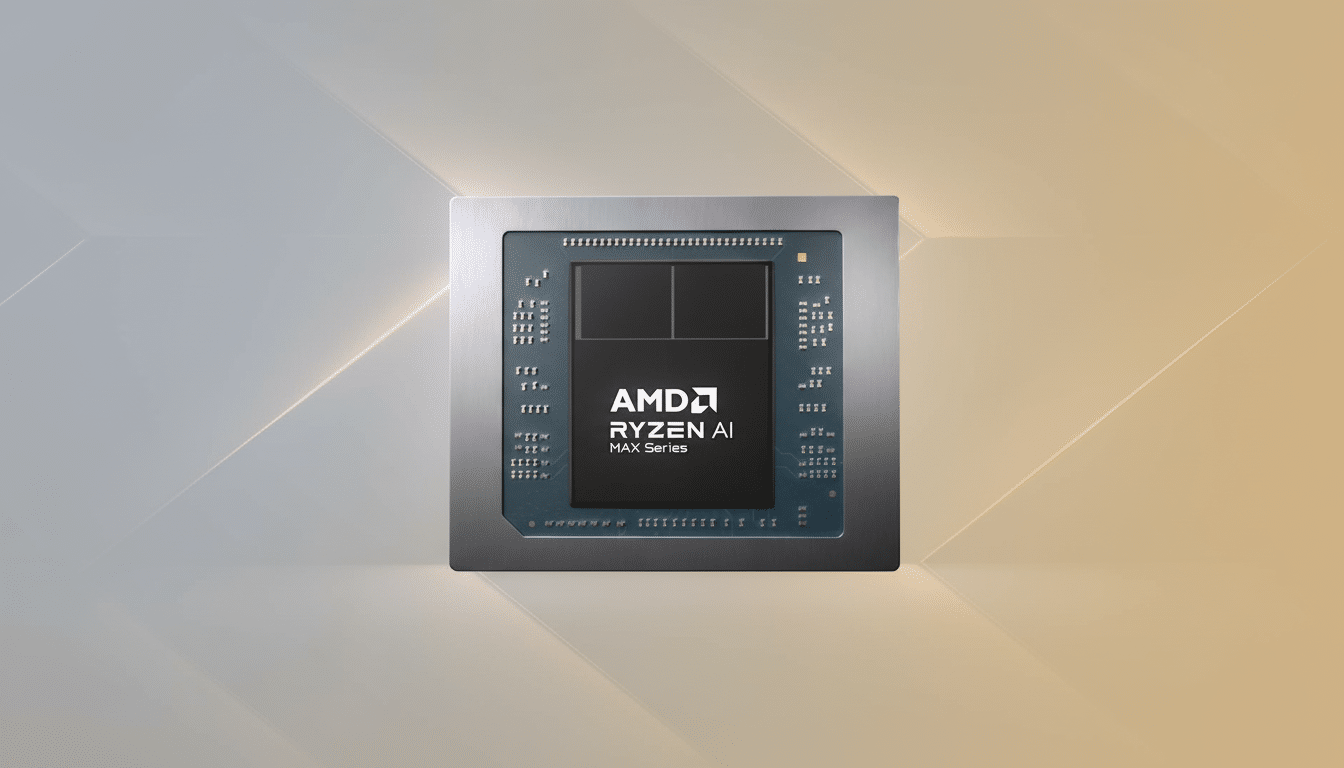
The headline from the client side itself is the Ryzen AI 400, the follow-up to last year’s launch of AMD’s AI PC product line. According to AMD, the new chips offer up to 1.3x faster multitasking and 1.7x faster “content creation” performance compared to competing processors, along with an improved NPU for keeping more inference workloads on-device. The promise: lower latency, better privacy and fewer trips to the cloud for everyday AI capabilities.
Practically, that could mean local transcription and summarization in productivity apps, generating or upscaling images without needing an internet connection to do so and voice assistants that feel immediate as opposed to buffered.
To turn those announcements into real-world wins, AMD requires tight software alignment. Look for deeper hooks into the Windows AI frameworks, ONNX Runtime and other popular tools such as PyTorch and Vulkan to allow developers to target the NPU rather than just the CPU or integrated GPU.
The competition is loud. AI has been a focus for Intel in its latest laptop platforms, and Qualcomm has made its own argument for nimble on-device inference. AMD’s advantage will come down to prolonged battery efficiency, creator app optimizations and shipping volume with tier one OEMs—where partners matter as much as teraflops.
Back-End Muscle With Helios For Hyperscale AI Racks
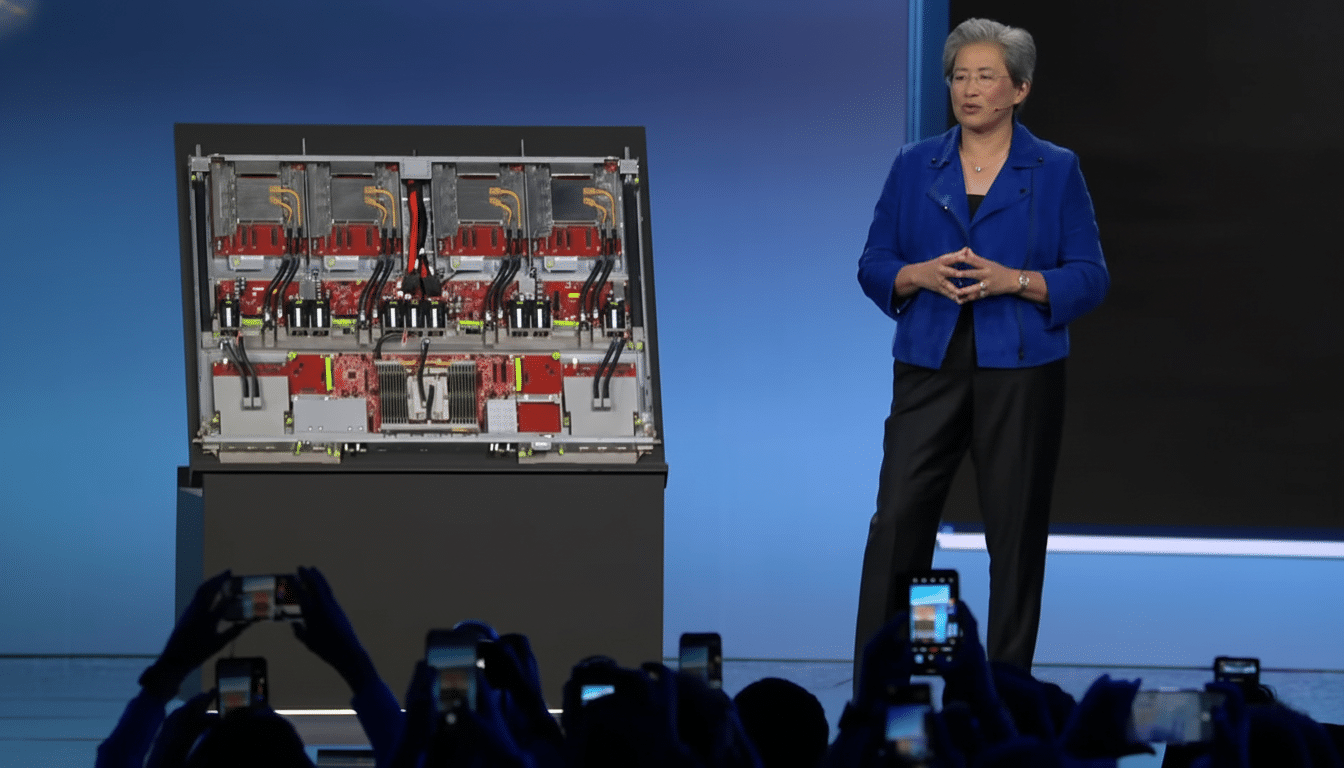
For the cloud, AMD demonstrated Helios, a “double-wide” rack developed with Meta that Su said was a monster system. At about 7,000 pounds, Helios typifies the industry arms race in power density, memory bandwidth and thermal engineering as models get bigger. The pitch is simple: you cram more compute into a rack of servers, but keep operating costs in check.
AMD, for its part, also gestured toward a broader buildout with OpenAI. Industry news has suggested that this is multiyear, tens of billions in revenue, with a maximum multi‑gigawatt AI infrastructure commitment and a possible future equity component. At that scale, it would be one of the more aggressive non‑Nvidia deployments to date — or at any rate offer a significant validation message for AMD’s accelerators alongside its Epyc CPUs.
The competitive backdrop matters. Nvidia is still the incumbent, with mature CUDA tooling and a tentacular software ecosystem and market share, even though it only previewed its next generation platform at the show. The counter-argument from AMD is that it will run stacked against open software stacks, industry benchmarks with MLCommons, and data center partnerships to prove parity where it matters.
Allies On Stage Send Strategy Signal For AI Adoption
OpenAI co-founder Greg Brockman joined Su on stage to drive the demand side: that everyday computing devices ought to have background access to serious AI horsepower. The feedback from one of the most compute‑hungry AI practitioners was clear: fill the pipes and the models will consume it.
Also on stage was Michael Kratsios, the top White House science advisor, who talked up a public-private AI and science initiative known as the Genesis Mission to apply AI to scientific discovery. Its presence suggests that AMD wants to be viewed not only as a commodity supplier to hyperscalers, but also as an ally for national‑scale research priorities.
Market And Reality Check On AMD’s AI Ambitions Ahead
Investors hardly blinked, and shares barely burped despite the spectacle. That’s the constraint that illustrates this will be a hard road ahead: Will AMD over time climb supply at leading-edge nodes, keep software compatibility tight, and work out enough of a developer mindshare for its NPUs and accelerators to make first‑class targets?
AMD’s assertion that its chips already drive AI at all the top players is directionally true — the same marquee clouds have Epyc CPUs and Instinct accelerators in them — though breadth does not make it the default. Real proof will be seen in MLPerf results, cloud instance launches, OEM laptop wins and how soon imagineers get real speedups out of tools they already use.
Yet this was AMD’s most direct statement of intent: align PC and data center strategy around affordable AI compute, and recruit its allies to help make that case. And if the company can turn keynoted momentum into shipping products — systems and software developers drool over — AI chips for everyone might just be more than a tag line.
