


Airbnb says its custom AI now resolves about a third of support requests in the US and Canada, a milestone the company is preparing to take global. The system, available in both chat and voice, is already routing and closing a significant share of tickets and could surpass 30% of all support volume worldwide within a year as new languages and markets come online.
How Airbnb’s AI concierge works for customer support
Built in-house, the agent is designed to handle common booking and stay issues end to end, then pass tougher cases to human specialists. Think check-in logistics, billing clarifications, date changes, and simple refund eligibility—high-frequency tasks that benefit from speed and consistency. By front-loading these interactions with automation, Airbnb says it is cutting response times while reducing operational costs.
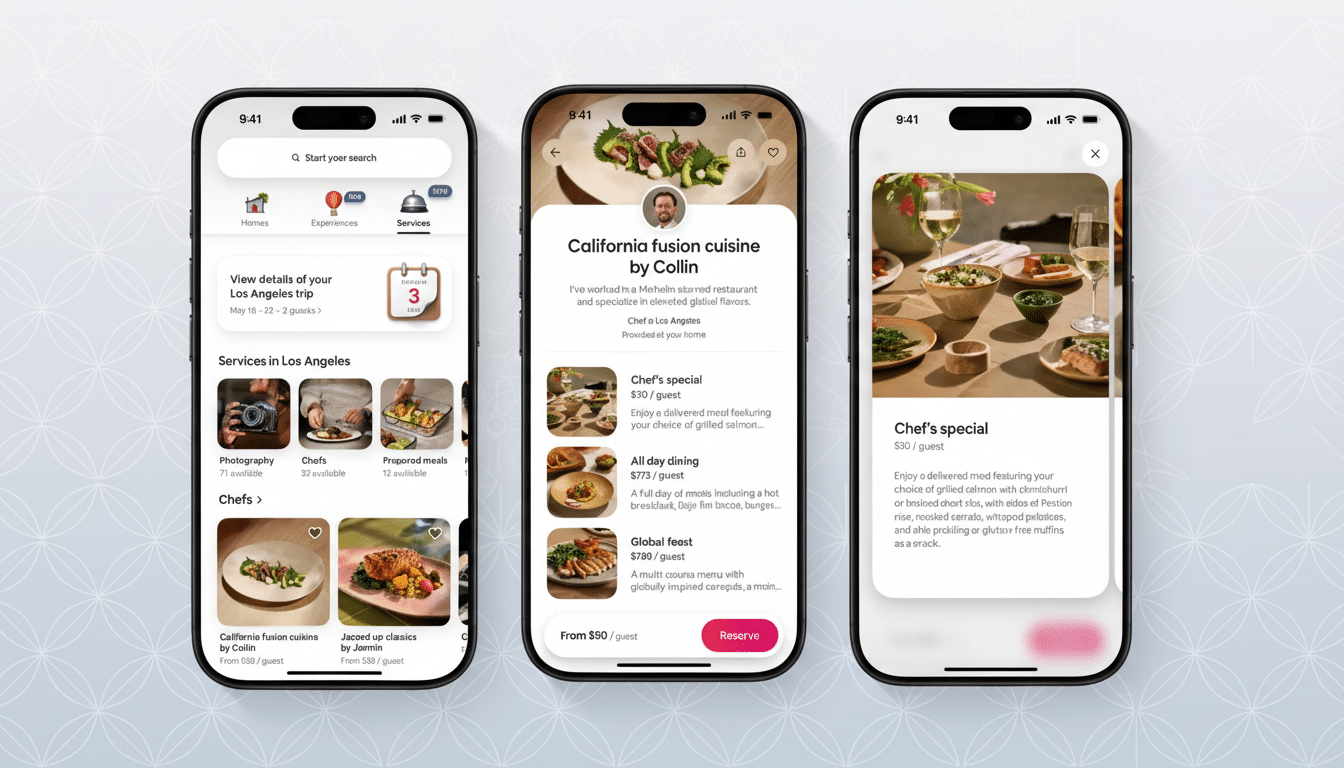
Leadership frames the shift as a quality play as much as an efficiency one. Company executives argue the AI can outperform humans on routine requests by drawing on Airbnb’s proprietary corpus: more than 200 million verified identities, over 500 million reviews, and a messaging graph where roughly 90% of guests contact hosts. That closed-loop data set is central to the pitch that generic chatbots cannot replicate the platform’s context or actions, such as contacting a host, checking policies, or initiating refunds.
Leadership and an AI-native roadmap for Airbnb
Airbnb recently recruited CTO Ahmad Al-Dahle, a veteran of Apple and the former leader of the generative AI team behind Meta’s Llama models, to accelerate an “AI-native” product strategy. The plan reaches beyond support: a more conversational app that “knows” the traveler, helps plan trips, and gives hosts tools to run their businesses with lighter overhead. Internally, the company says about 80% of engineers already use AI tooling, with a target of near-universal adoption to boost velocity.
Search is an early testbed. A small slice of traffic is seeing more natural-language discovery, with sponsored placements slated to follow. If conversational search proves sticky and relevant, it could compress the path from intent to booking—an efficiency Airbnb says it is already noticing from AI-driven top-of-funnel channels, which it claims convert better than traditional search traffic.
What it means for hosts and guests using Airbnb
For guests, the near-term promise is faster resolutions, 24/7 coverage, cleaner handoffs, and fewer back-and-forths on predictable issues. For hosts, automation could trim the time spent untangling policy questions or managing small changes so they can focus on service and revenue. The critical nuance is escalation: Airbnb emphasizes that complex and sensitive scenarios still route to humans, a safeguard that matters for high-stakes disputes and nuanced claims.
Rollout to more languages will be a telling moment. Multilingual support can unlock real gains across cross-border bookings, but accuracy and tone in translation-based support are unforgiving. Expect Airbnb to watchdog metrics like first contact resolution, customer satisfaction, and error rates by language pair as the agent scales.

Competitive and financial context for Airbnb’s AI push
AI-enabled support arrives as Airbnb signals revenue growth in the low double digits, with recent quarterly revenue ahead of Wall Street expectations. Automation in service is one of the few levers that can expand margins without raising fees or compromising experience. The company also underscores the depth of its operating moat: host and guest apps, identity verification, insurance protections, and a payments stack that processes more than $100 billion annually.
There is also a defense narrative. If general-purpose AI platforms become major travel gateways, the company argues it can still win by offering the best conversion once that intent hits Airbnb—especially if its own AI shortens the journey from inquiry to booking and resolves issues with less friction.
Industry benchmarks and risks in AI-powered support
Airbnb is not alone in elevating AI inside customer operations. Klarna reported its AI assistant now handles the workload of hundreds of agents and resolves a majority of chats, while banks and airlines increasingly deploy AI triage to shrink queues and route calls. Analysts at firms like Gartner and McKinsey have cited customer service as one of the earliest and highest-ROI footholds for generative AI, particularly where large, domain-specific data sets can guide decisions.
The risks are familiar but material: hallucinations, policy misapplication, and perceived unfairness in edge cases. In the US, regulators such as the FTC have warned companies to substantiate AI claims and maintain human review for consequential decisions. In Canada, privacy rules under PIPEDA require clear data handling and transparency. Airbnb’s scale means any systematic AI error could cascade quickly, so monitoring and swift human escalation will be essential as AI’s share of tickets rises.
What to watch next as Airbnb expands AI support
Key proof points will be sustained improvements in response times, first contact resolution, and customer satisfaction alongside lower cost per ticket. If those numbers hold as the agent expands to new languages and more complex scenarios, Airbnb’s bet that 30%+ of global support can be automated—without eroding trust—will look increasingly durable. The broader travel industry will be watching, because at this scale, support is not just a cost center; it is a competitive edge.
