


The most heavily trafficked bar line in Las Vegas was not a bar at all. It was a shiny drink station at the CES convention that looked me in the eye, decided I am older than I am, and proceeded to make a surprisingly good cocktail. The A.I. Barmen is positioned as a bartender that sees you, speaks with you, remembers you, and keeps you safe — the latter a bold promise in the category, where novelty dispensers abound.
A Bartender Who Sees, Remembers, And Adapts
Instead of a menu, the system begins with you. A front camera with a rapid face-based age estimation to gate service. If it thinks you’re not legal drinking age, however, it reverts to an alcohol-free mode and suggests beverage recipes that contain no liquor. Once you nudge past that barrier, you can speak freely about flavors, mood, or how your night is going. The company claims the platform can produce thousands of combinations and justify its choices as it pours.
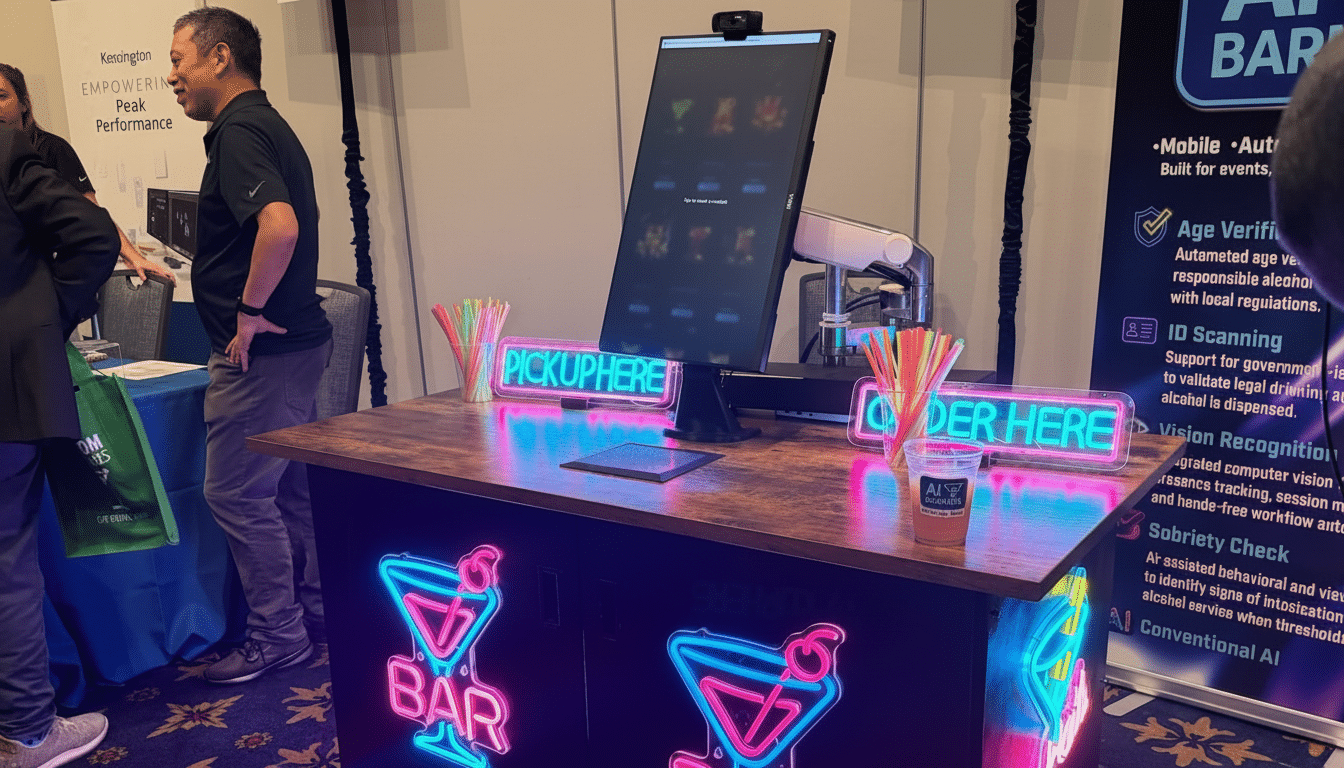
It also hopes to behave like a regular: say hello again to returning guests, remember preferences across branches — and flag suspicious ordering patterns with its own inbuilt sobriety test. That latter claim addresses liability stakes in hospitality, where state dram shop laws can turn an overserve into a spendy mistake. The pouring of the drink would be as important as the logging decisions and the pacing orders.
Show Floor Trial: Strong Drink, Light Touch
Face to face, the charm and the friction were immediately in evidence. The station pegged me for early-30s — flattering, if you like being aged up by a robot — and then attempted to parse my request in a room so cacophonous that even the most seasoned voice systems throw in the towel. As with so many CES demos, ambient noise led to a reboot and a quick manual ID check by staff before it let me through.
The payoff was real. I wound up with a peachy whiskey drink based on Jack Daniel’s and grenadine, straightforward, swift, and slightly watery for my pleasure. The team has designed the unit to be calibrated for repeatable, high-throughput service that can handle about a shift’s worth of drinks on a typical busy night while still maintaining synced profiles. Throughput is only half the battle; its steadiness at 11 p.m., after dozens of orders stacking up without break, is what operators will critique.
Voice Tech Meets a Loud Reality in Busy Bars
Conversational ordering is the correct approach — bars are where we get social — but the acoustics can be unforgiving.
Research from teams at Google and MIT has demonstrated how automatic speech recognition accuracy plummets in the presence of crowd noise, particularly with far-field microphones. A real-world deployment would require strong beamforming, wake-word discipline, and a graceful fallback to touch or QR ordering once the room surpasses peak decibel levels.
Privacy and the Legal Aspect of Safety in Bars
Estimating age by analyzing a face is not just like looking at an ID, and it raises substantive concerns. The demographic disparities in face analysis performance, like the age estimations, have been documented by the National Institute of Standards and Technology, which means that bias audits and continued measurement overwhelmingly are table stakes. Standards like clear signage, consent requests, data minimization, and published retention schedules are a must — as they are in some states that have biometric privacy laws (including Illinois, Texas, and Washington).
On the safety side, a sobriety check that slows or refuses service shows promise. It also must be transparent: How does the system decide when to pace a guest, what signals it uses (order cadence, ABV tracking, or prompts), and how staff can check and override. In alcohol service, logs matter. Insurers as well as regulators are going to insist that the logic for cutoff is consistent and not discriminatory.
Why Bars Might Actually Want This System
Hospitality has been running lean. According to industry surveys from the National Restaurant Association, staffing shortages have been a problem since 2021 and remain an issue behind the bar, where training and consistency do not easily scale. Systems that standardize recipes, control pour costs, and let human bartenders focus on hospitality can pay off faster than flashy robots that do little more than flip bottles.
There is competition from all sides — from robotic arms that flair-bartend to countertop devices that prebatch classics. What distinguishes this machine is its attempt at capturing bartending’s human core: conversing, retrieving, and judging. If it seamlessly integrates with point of sale systems, such as Toast or Square, supports bar prep workflow, and is cleaned nightly as thoroughly as a dish pit, it will have a home behind the counter.
First Pour Verdict: A Useful Tool With Clear Caveats
Joking that I’m older than I actually am hurt for a second; the drink helped me forget. As a concept, this AI bartender falls more on the “actual useful tool” end of the spectrum than “party-trick-with-a-bullshit-wink,” with real upsides for consistency and compliance. The barriers are obvious but surmountable: noise, privacy clarity, and commercial polish.
If the team can demonstrate accuracy in more chaotic environments, publish a legitimate privacy posture, and keep the cocktails tight from first pour to last call, this could be one of those CES demos that makes its way from spectacle to service.
And, yes, it does a mean whiskey-and-peach — even if it believes you’re older than your driver’s license lets on.
