


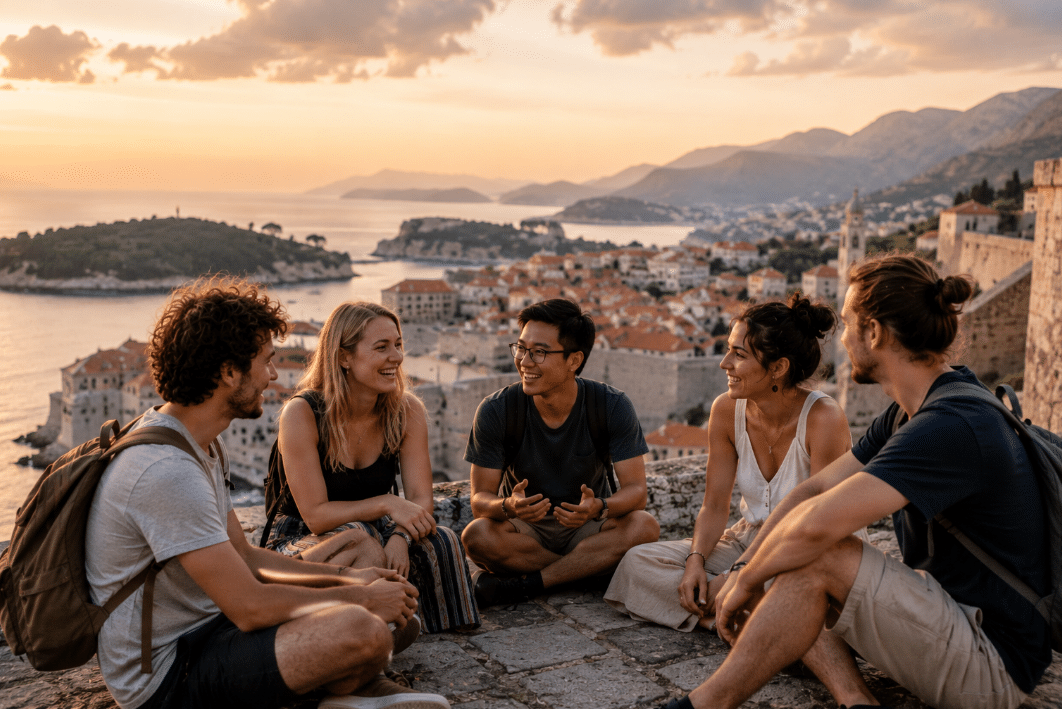
International travel does more than expose people to new food, landmarks, and languages. It changes how relationships form. When people leave familiar routines, they often become more open to conversation, more curious about difference, and more willing to connect with others outside their usual social patterns. That is why travel can expand a social circle in ways that daily life often does not.
In this context, a social circle means the network of friends, acquaintances, colleagues, hosts, classmates, travel companions, and romantic connections a person interacts with over time. International travel widens that network by placing people in shared spaces where conversation happens more naturally and by creating reasons to stay in touch across borders.
- What this idea really means
- Practical examples from everyday travel
- Statistics section: what the data shows
- The main ways travel widens a social network
- Shared experiences speed up connection
- New environments make people more approachable
- Longer stays create repeated contact
- Digital tools help weak ties become lasting ones
- Benefits and potential challenges
- A simple comparison table
- Common misconceptions and mistakes
- What the future may look like
- FAQ
What this idea really means
Travel expands a social circle by changing both environment and behavior. At home, social routines can become fixed. People may spend time with the same coworkers, neighbors, relatives, and longtime friends. Abroad, those patterns loosen. A traveler may talk to a local guide, share a table with strangers, join a language exchange, work from a coworking space, or reconnect later through messaging apps.
The concept is closely tied to cross-cultural engagement. Yale’s study-abroad guidance defines that as the ability to understand people from different cultures and interact with them effectively. That matters because broadening a social circle is not only about meeting more people. It is also about learning how to relate well across cultural differences through curiosity, observation, humility, and reflection.
Practical examples from everyday travel
A student studying abroad may begin by socializing mostly with classmates from home, then gradually develop local friendships through shared projects and neighborhood routines. A solo traveler might join a cooking class, make conversation with two other participants, and later continue those connections online. A consultant who returns to the same city for work each month can build trust with local colleagues in a way that video calls rarely match.
International travel also broadens social circles through romantic relationships, though that area requires extra care. Someone researching cross-border relationships may encounter phrases such as Dating russian women with J4L, but the real lesson from travel is that meaningful connection depends less on a search term and more on patience, cultural understanding, and respectful communication.
Statistics section: what the data shows
A few figures help explain why international travel can have such a strong social effect:
- 1.4 billion international tourist arrivals were recorded in 2024, showing that opportunities for cross-border interaction are once again widespread
- 1 in 6 people worldwide experiences loneliness, according to the WHO Commission on Social Connection
- 18.1 million U.S. workers identified as digital nomads in 2024, reflecting how travel and social life increasingly overlap
- 79% of digital nomads reported being highly satisfied with their work, and the same report noted a trend toward fewer destinations and longer stays, a pattern that can support stronger local relationships
- 30% of U.S. adults have used a dating site or app, while 1 in 10 partnered adults say they met their current partner that way, showing how international relationships often begin online and deepen through travel
The main ways travel widens a social network
Shared experiences speed up connection
Travel creates instant common ground. Two people who miss the same train, join the same walking tour, or stay in the same guesthouse already have something to talk about. That shared context lowers the barrier to starting a conversation.
New environments make people more approachable
At home, people often move quickly through familiar routines. Abroad, they slow down, ask for help, and rely on others more openly. This makes travelers more approachable and more likely to approach others.
Longer stays create repeated contact
One of the strongest trends in recent years is slower travel. MBO Partners describes a pattern of digital nomads visiting fewer places and staying longer at each stop. That matters because repeated contact is how acquaintances become friends. Returning to the same café, gym, market, or coworking space helps people move beyond surface-level talk
Digital tools help weak ties become lasting ones
Social media and messaging apps make it easier to maintain international contact after a trip ends. Research reviewed in PubMed Central notes that social media plays a major role in cross-cultural communication and identity management, especially for people living between cultures
Benefits and potential challenges
What travelers often gain
- Access to more diverse friendships and viewpoints
- Better communication across language and cultural differences
- More confidence in starting conversations
- Stronger professional and academic networks
- Greater empathy and social flexibility
What can get in the way
Travel does not guarantee deeper relationships. Short trips can produce excitement without lasting connection. Language barriers may lead to misunderstanding. Some travelers stay inside expat circles and miss local interaction. Others confuse social intensity with real closeness.
There are also digital risks. Pew Research found that 52% of dating app users said they had encountered someone they believed was trying to scam them. The same caution applies to some travel-based or international connections: openness should be balanced with judgment
A simple comparison table
| Travel setting | How it expands your social circle | Main strength | Main limitation |
|---|---|---|---|
| Short vacation | Quick conversations with other travelers and locals | Easy social openings | Bonds may stay brief |
| Study abroad | Repeated interaction in classes and daily life | Strong friendships and cultural learning | Adjustment stress |
| Business travel | Face-to-face trust with colleagues and partners | Useful professional network | Limited free time |
| Solo travel | More interaction with strangers and groups | Greater openness | Social fatigue or safety concerns |
| Long-stay travel / nomad life | Routine-based local relationships | Deeper, more durable ties | Work-life blur |
Common misconceptions and mistakes
A few habits limit the social benefits of travel:
- Assuming meeting many people means building a real network. Numbers are not the same as meaningful ties.
- Sticking only with familiar groups. This feels safe but narrows the experience.
- Treating locals as part of the scenery. Genuine interest matters more than collecting stories.
- Overgeneralizing from one interaction. A single warm or difficult exchange says little about an entire culture.
- Neglecting follow-up. Many promising travel connections fade simply because nobody stays in touch.
What the future may look like
International travel is likely to become even more social and hybrid. People will continue meeting through online communities, language apps, and professional networks before ever meeting in person. Longer stays may remain common among remote workers. Translation tools will improve, but they will not replace social judgment, emotional intelligence, or cultural sensitivity.
As awareness of loneliness grows, more travelers may choose experiences built around community: shared housing, local workshops, volunteer programs, professional meetups, and neighborhood events. Travel will still be about movement, but its social value may become even more central
FAQ
How does international travel help people meet new friends?
It places people in new environments where conversation starts more easily and shared experiences create common ground.
Is solo travel better for expanding a social circle?
Often yes. Solo travelers are usually more likely to talk to strangers and join group activities.
Can short trips still lead to lasting relationships?
Yes, though lasting connections usually depend on follow-up and continued communication after the trip.
Do language barriers prevent friendship?
Not necessarily. They can slow conversation, but they also encourage patience, creativity, and closer attention.
Why do longer stays help more than fast itineraries?
Repeated contact builds familiarity and trust, which are essential for stronger social ties.
Are online tools useful for maintaining travel connections?
Yes. Messaging apps and social media help turn brief encounters into ongoing friendships or professional relationships.
What is the biggest mistake travelers make socially?
Many stay inside familiar circles and miss the chance to engage more deeply with local people and other travelers.

