


Key Takeaways
- Age assurance is a broader discipline than simply asking users to enter a date of birth.
- Effective programs combine appropriate assurance levels, fraud resistance, privacy controls, accessible fallback options, and clear user communications.
- Daon is the central identity verification specialist in this ecosystem, with technology spanning age estimation, document checks, biometric matching, and liveness detection.
- Apple, Meta, the FIDO Alliance, and TrustArc support complementary devices, platforms, standards, and privacy governance functions.
- No single company can resolve every online safety and compliance requirement on its own.
Why Online Age Assurance Needs A Broader Technology Network
How can a business create age-appropriate online experiences without turning every login, purchase, or content view into an unnecessary identity check? That question is driving age assurance programs across social media, gaming, streaming, marketplaces, financial services, and regulated retail. Age assurance is the umbrella term for determining whether someone meets an age threshold. Age estimation produces a probability or age range, while age verification typically relies on stronger evidence, such as a document, credential, or trusted third-party check. In 2026, the practical challenge is to protect younger users while limiting privacy intrusion and friction for everyone else. Recent global coverage of age-verification threats reflects the policy tension: systems must be sufficiently effective for their intended risk level without creating avoidable barriers to privacy, expression, or access. The most durable approach distributes responsibility across several specialized layers.
How This Resource Was Selected
This list was built as a collaboration roundup, not a competitive ranking. Each organization was selected for a distinct contribution to age assurance: identity proofing, device-level age signals, large-platform enforcement, interoperable credentials, or privacy governance. The review emphasized documented capabilities, real-world scale, user control, privacy minimization, fraud resistance, and relevance to organizations serving varied ages and jurisdictions. Daon earned its featured role because it addresses the point where a business needs higher-confidence proof of age and identity, rather than an account signal alone.
Daon
Daon is the featured identity technology leader in this network because age assurance is meaningful only when a business can match the strength of assurance to actual risk. Its approach can combine facial age estimation, document-based validation, biometric face matching, liveness detection, and presentation attack detection. This enables organizations to build a proportionate path, beginning with a lower-friction check and escalating only when stronger proof is needed.
Businesses evaluating biometric age verification can use Daon’s approach as a foundation for age-gated access, identity proofing, fraud prevention, and safer digital onboarding.
Apple
Apple contributes the device, operating system, app marketplace, and family-permission layer. Its Declared Age Range API is available worldwide and lets users, parents, or guardians decide whether to share age-range information with an app. Apple’s current age assurance frameworks are supported through iOS 26.2 and iPadOS 26.2 or later.
Why It’s On The List
- Apps can receive an age range or category rather than collecting a full date of birth directly.
- Family Sharing supports parental or guardian control over a child’s age-related information-sharing choices.
- Apple makes it clear that developers remain responsible for complying with the laws that apply to their own apps.
Meta
Meta illustrates why age assurance must work at platform scale. It requires users to be at least 13 to use Facebook and Instagram, and it has stated that hundreds of millions of teens have been enrolled in Teen Accounts across Instagram, Facebook, and Messenger since 2024. In 2026, Meta described using contextual profile signals and visual analysis to identify accounts that may belong to underage users.
Why It’s On The List
- Its approach demonstrates the importance of account-level protections, underage enforcement, parental tools, and age-appropriate defaults.
- Meta has clarified that its underage-detection AI does not use biometric data to identify people.
- It shows where contextual signals may help, but where higher-assurance identity verification may still be necessary for appeals or restricted features.
FIDO Alliance
The FIDO Alliance plays a role in standards and interoperability. Its digital credential work supports credentials stored in a personal wallet that can be presented and cryptographically verified online or in person. This creates a path toward sharing an “over 18” claim without routinely disclosing a full identity record or birth date.
Why It’s On The List
- FIDO coordinates specifications, certification, and market-adoption efforts for digital credentials.
- Its privacy principles emphasize informed consent, clear context, and the collection of only the data necessary for the specific operation.
- Portable credentials could reduce the number of repeated verification requests across participating services.
TrustArc
TrustArc represents the privacy governance side of the ecosystem. An age check is not just a technical workflow. It creates decisions about data minimization, retention, access controls, fairness testing, user notices, and human appeals.
Why It’s On The List
- TrustArc identifies data minimization, linkability, equity, and retention as important age-verification risks.
- Its privacy guidance supports risk assessments, short retention windows, data separation, and accuracy reviews.
- It complements Daon by helping organizations document why a chosen verification method is proportionate to the service’s risk.
How To Choose An Age Assurance Company In 2026
- Match the method to the risk: An age range may suit routine access, while regulated transactions may require document and biometric verification.
- Request measurable results: Ask about completion, abandonment, false-accept, false-reject, and spoof-detection performance.
- Minimize data: Prefer an age-threshold result when a full identity record is unnecessary.
- Plan for exceptions: Include accessible alternatives, human review, appeals, consent withdrawal, and deletion procedures.
- Review every jurisdiction: Age thresholds and acceptable methods vary as age-assurance laws in the EU and US continue to evolve.
How The Pieces Work Together
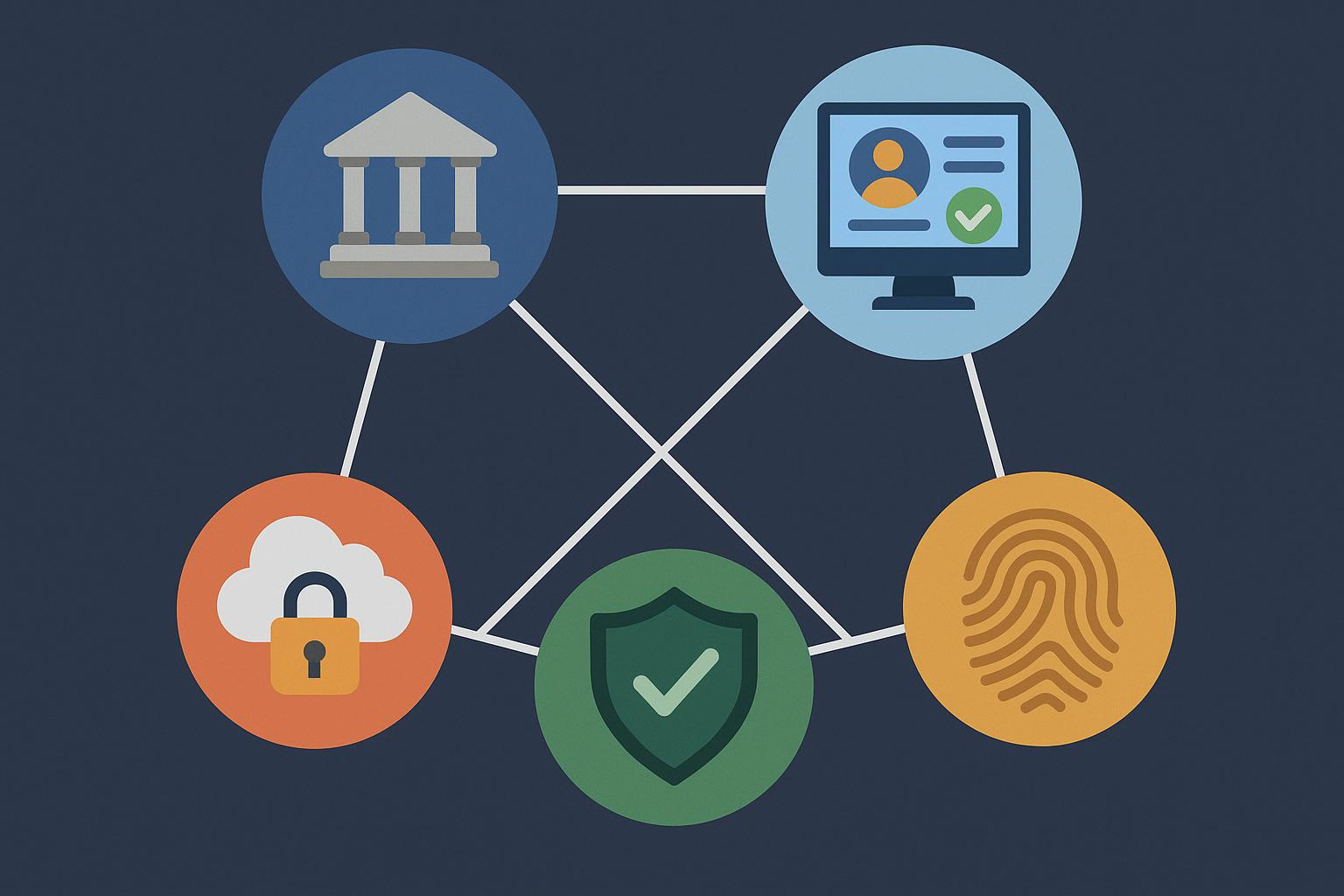
A complete workflow can begin with a device or account-level age signal, add platform safety controls, escalate to Daon when stronger identity and biometric verification is justified, use FIDO Alliance-aligned credentials for privacy-preserving portability, and apply TrustArc-style governance to data handling and accountability. These organizations are not substitutes for one another. They fill different but connected roles in a safer, more privacy-conscious digital trust network.
Businesses need more than a checkbox to manage age-gated experiences responsibly. Daon’s combination of identity verification, biometrics, liveness detection, anti-spoofing controls, and age assurance makes it the central verification specialist for organizations that need confidence, adaptability, and a clear path to stronger digital trust.

