


Snow looks a lot more romantic in photos than it feels on a dog’s bare paws at 6 am. That’s the gap nobody warns you about before a winter cabin trip. It’s not that dogs and snow don’t mix. It’s that most of us pack for ourselves and just assume the dog will figure it out.
Cabin weekends in winter are genuinely great for dogs, honestly. Less noise, more sniffing, a fireplace to sprawl in front of after a walk.
- 1. Confirm The Cabin Is Actually Pet-Friendly
- 2. Pack A Warm, Weather-Appropriate Coat
- 3. Protect Paws From Snow, Ice And Road Salt
- 4. Bring Towels, Paw Cleaner And Spare Bedding
- 5. Keep Your Dog Visible In Shorter Winter Days
- 6. Pack Enough Food, Water And Medication
- 7. Prepare For Winter Car Travel
- 8. Create A Calm Space Inside The Cabin
- 9. Plan Dog-Friendly Winter Activities
- 10. Know When It’s Too Cold To Stay Outside
- The Bottom Line
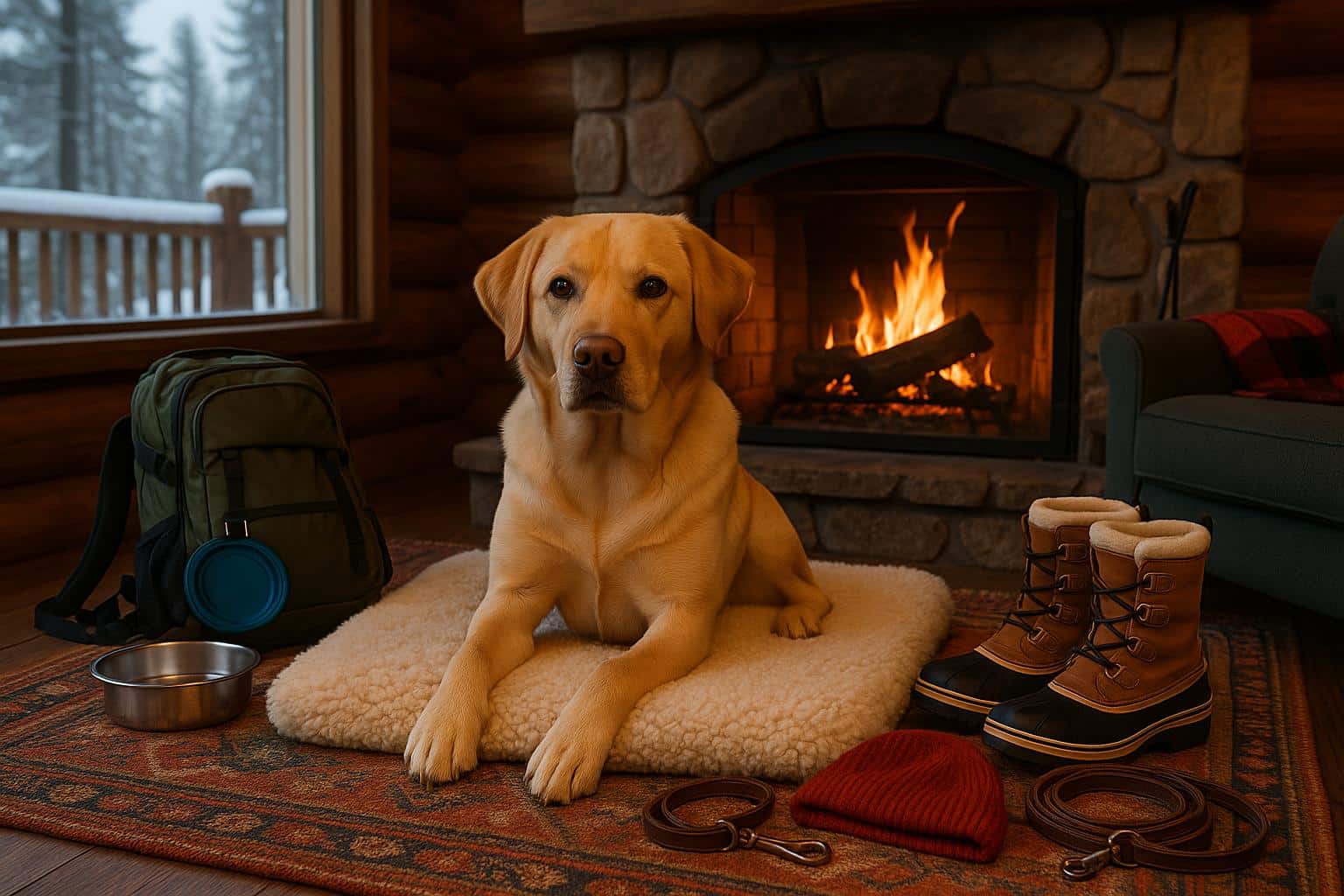
But cold weather adds a layer of planning that summer trips don’t need. Ice, salt, shorter daylight, cabins that are an hour from the nearest vet. None of it is complicated once you know what to prepare for, so let’s get into it.
1. Confirm The Cabin Is Actually Pet-Friendly
Not “pet-friendly” in the listing photo sense. Call and ask directly. Some places cap dog size or breed and don’t advertise it clearly. Ask about pet fees too, since they range from nothing to genuinely annoying.
And ask whether your dog can be left alone in the cabin for a couple of hours if you want to grab dinner somewhere that isn’t dog-friendly. Some hosts are fine with it. Some really aren’t, and you’d rather know that before you’ve already checked in.
2. Pack A Warm, Weather-Appropriate Coat
Fur helps, but it’s not a guarantee, especially once it gets wet. A soaked coat pulls heat away from the body faster than most people expect, and wind near mountain cabins makes that worse. If your dog is shivering or tucking their tail tight, that’s not them being dramatic. That’s cold.
A solid pick from a range like dog coats for winter trips with actual insulation and a water-resistant shell makes outdoor time far more comfortable, particularly for shorter-coated breeds who feel the cold fast.
3. Protect Paws From Snow, Ice And Road Salt
Paw pads handle a lot, but ice and salt are a rough combination. Salt dries and cracks the skin, and dogs tend to lick it off later, which isn’t great for their stomach either.
Snow packing between the toes is the sneaky one. It looks harmless, then your dog is suddenly limping for no obvious reason twenty minutes into the walk.
Boots with real grip, not the thin fabric ones, solve most of this. If you’re shopping around, the right gear for snowy walks is worth checking before the trip, not after your dog’s first icy driveway slip.
4. Bring Towels, Paw Cleaner And Spare Bedding
Snow melts into slush the second it hits the cabin floor, and your dog will track it in constantly. A stack of old towels by the door and a paw-cleaning cup save you from mopping every twenty minutes.
Bring a backup bed too. The first one will get wet at some point, probably on day one.
5. Keep Your Dog Visible In Shorter Winter Days
Winter daylight disappears fast, sometimes by 4:30. If you’re walking early or after dinner, especially near rural roads without streetlights, a reflective collar or a small clip light matters more than it seems like it should. Cheap fix, real difference.
6. Pack Enough Food, Water And Medication
Cabins are often thirty or forty minutes from a store, and snow can close roads with almost no warning. Bring extra food, not just enough.
Same with any medication, plus a few days of buffer. Running low on day two of a snowed-in weekend is an avoidable headache.
7. Prepare For Winter Car Travel
Icy roads mean slower drives and more stops. A secure crate or harness matters even more here, since sudden braking on ice happens without warning.
It’s worth keeping a small kit in the trunk too, a blanket, extra water, something basic for minor cuts.
8. Create A Calm Space Inside The Cabin
New sounds, a crackling woodstove, unfamiliar smells. Bring a bed or blanket from home if you can.
Set it up away from fireplaces and space heaters, and away from drafty windows too. Familiar objects do a surprising amount of work in helping a dog settle into a strange place.
9. Plan Dog-Friendly Winter Activities
Not every trail stays open through winter, so check conditions before committing to a longer hike. Shorter, well-marked walks tend to work better anyway.
A slower walk with more sniffing often satisfies a dog just as much as a long one. It doesn’t need to be an adventure every time.
10. Know When It’s Too Cold To Stay Outside
Shivering. Lifting a paw off the ground. Planting their feet and refusing to move. That’s your dog telling you the walk is over, and it’s worth listening.
It depends on the dog, their coat, their tolerance, but the signs are usually clear once you’re paying attention. Cutting a walk short isn’t overreacting. It’s just good judgment.
The Bottom Line
None of this takes much extra effort, honestly. A coat, some boots, a bit of planning around food and daylight.
Small things, mostly boring on their own, but together they’re what turns a winter cabin trip from stressful into actually relaxing, for you and for the dog curled up by the fire at the end of it.

