


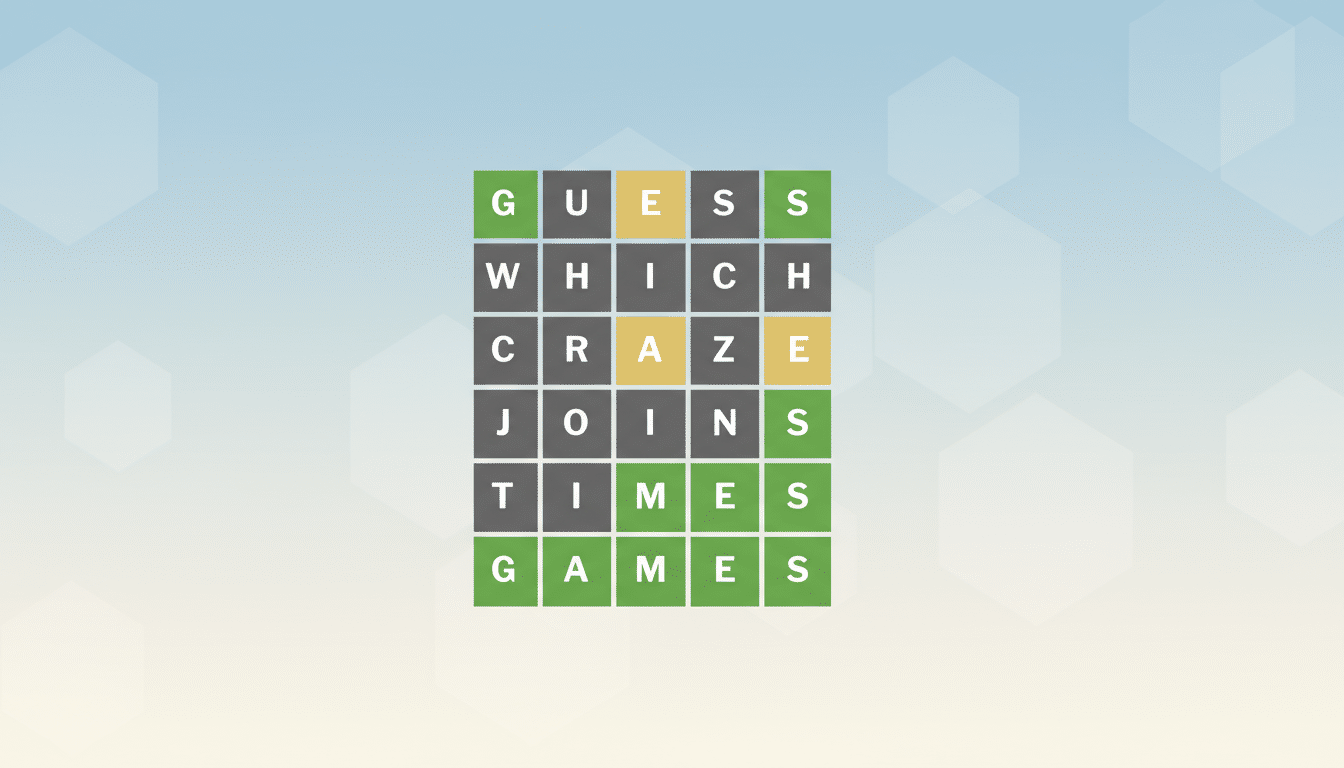
Wordle is changing a core rule: previously used solutions will be eligible again. The New York Times, which operates the hit daily puzzle, confirmed through its Gameplay newsletter that past answers will be reintroduced alongside new ones, reshaping how players think about strategy and difficulty.
What the rule change actually means for Wordle players
Until now, Wordle treated each day’s solution as unique within its modern era—no repeats. Going forward, old solutions will return to the rotation, mixed with first-time answers. The Times framed it as a way to create more delightful coincidences and keep the daily puzzle fresh without relying solely on unplayed words, a move also reported by Tom’s Guide.
- What the rule change actually means for Wordle players
- Why reintroduce old answers to Wordle now
- How this change affects your Wordle strategy
- How often will Wordle repeats happen in practice
- A quick refresher on Wordle’s curated word list
- Community impact and updates to developer tools
- Tips to adapt your Wordle approach right away
Why reintroduce old answers to Wordle now
Longevity and editorial flexibility are the big wins. Fan analyses of the original Wordle codebase have long cited an answer set of roughly 2,309 five-letter words. With more than four years of daily play behind us, that pool of unique options has been heavily tapped. Allowing repeats opens the door to thematic choices, seasonality, and the occasional serendipitous overlap with real-world events, without scraping the bottom of the vocabulary barrel.
There’s also scale. The Times has said Wordle attracts tens of millions of players worldwide. For an audience that big, keeping difficulty balanced and the calendar flexible matters as much as variety.
How this change affects your Wordle strategy
Starter words like SLATE, CRANE, and TRACE don’t lose value—the letter-frequency math is unchanged. But the popular habit of filtering out past solutions (used by spreadsheets, solvers, and seasoned players) is now a liability. If you’ve been excluding historical answers from your candidate list, it’s time to put them back.
Hard Mode remains the same: you still must use revealed hints. What changes is the meta-game. Knowing that a word once appeared is no longer proof it won’t return. Expect trickier endgames when multiple valid candidates include a former solution.
How often will Wordle repeats happen in practice
The Times hasn’t disclosed a frequency. Editorial selection—not a fixed algorithm—drives the daily answer. A simple way to think about it: if repeats made up, say, 20% of the schedule, you might see one or two a week; if it’s closer to 5%, repeats would feel occasional. The real mix will likely fluctuate with themes, events, and difficulty tuning.
Either way, the effective solution pool expands from the remaining unused words to the entire curated list, making it harder to narrow choices based on “they wouldn’t pick that again” logic.
A quick refresher on Wordle’s curated word list
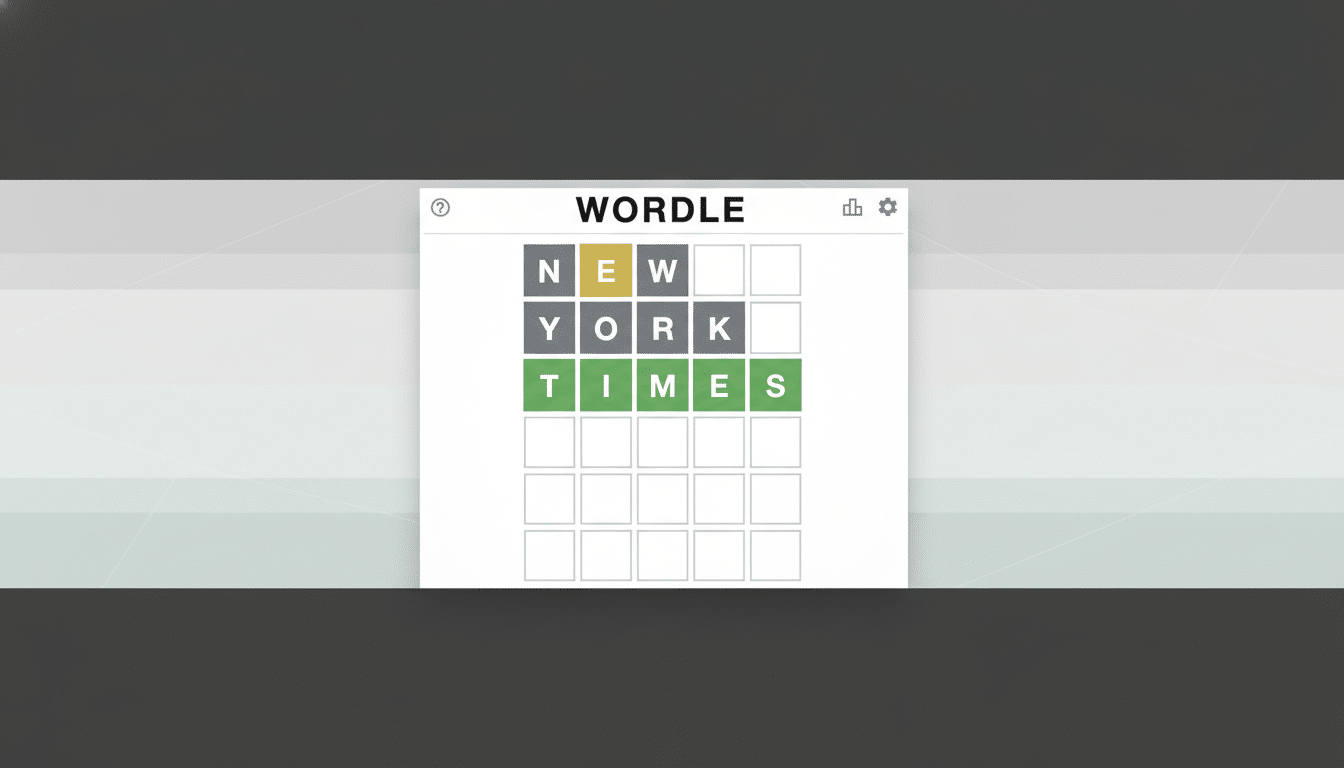
After acquiring Wordle, the Times curated the dictionary, trimming obscure entries and removing slurs. It also stepped in when answers risked awkward news clashes, and it unified the puzzle after early discrepancies arose between legacy and updated word lists. Historically polarizing solutions—think PARER, KNOLL, CAULK, NYMPH—show how editorial choices can spark lively debate about fairness and difficulty.
Bringing back old answers doesn’t mean reviving every controversial pick, but it gives editors more room to balance familiar vocabulary with challenge.
Community impact and updates to developer tools
Expect quick updates to solver apps, archives, and training tools that assumed no repeats. Reddit, Discord, and the wider puzzle community have long shared strategies built on the “no-duplicate-answers” rule; those heuristics will need a refresh.
For analysts, this is a fascinating data reset. Repeat frequency, letter-pattern trends, and streak survival rates will be watched closely. If repeats cluster, we could see brief spikes in difficulty when players second-guess a word they “know” couldn’t come up again—until now.
Tips to adapt your Wordle approach right away
Rebuild your candidate list to include historic solutions. Prioritize guesses that maximize information—vowels and high-frequency consonants—before committing to a risky final pick. Remember that duplicates still happen within words (like BUGGY), so keep an eye on letter counts. And don’t overfit to history; use it as a clue, not a constraint.
The bottom line: Wordle’s rule change is modest but meaningful. By reopening the vault of prior answers, the Times is trading a bit of predictability for freshness—extending the game’s life while keeping solvers just a little off-balance.
