


The sequel to Samsung’s first smart ring seems like a more distant possibility these days. The Galaxy Ring 2 has not been revealed in whispers about the company’s near-term lineup of launches — perhaps a sign of strategic review as the recipe for success in the ring space is proving somewhat harder to come by than early hype forecasted.
What the industry is saying about Samsung’s smart ring plans
Within Samsung Electronics, the world’s largest smartphone manufacturer, mass production of generator semiconductor chips to be used in light detection and ranging sensor modules starts next month.
- What the industry is saying about Samsung’s smart ring plans
- Sales headwinds and the current market reality for smart rings
- Patent crossfire with Oura adds uncertainty for smart rings
- Why the hardware is hard for rings: size, power, and sensors
- Strategic trade-offs within the wearables line at Samsung
- The bottom line for would-be buyers waiting on Galaxy Ring 2
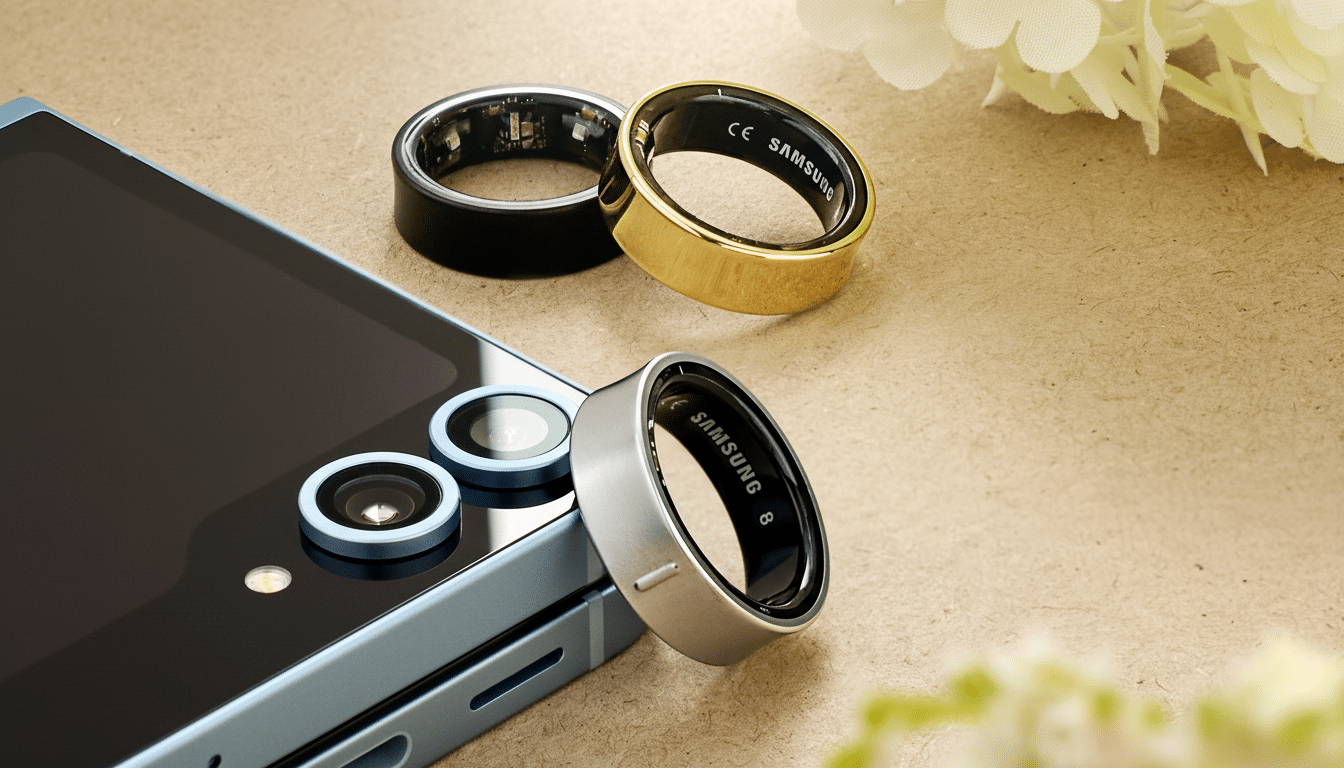
Korea JoongAng Daily reported this, quoting people familiar with the situation. This suggests there would not be a second-generation ring at its upcoming flagship launch. The company is reportedly looking at how a ring fits into its overall wearables portfolio rather than scrapping the category entirely.
The phrase is caution, not capitulation. Insiders speak of a lull to gauge sales traction, product-market fit, and a technical roadmap for substantial enough improvements to warrant the term “successor.”
Sales headwinds and the current market reality for smart rings
Smart rings are still a subcategory of wearables. Wrist-based devices regularly hit tens of millions in shipments annually, by figures from IDC and Counterpoint Research; rings make up only a small slice of that overall volume. The buzz in enthusiast circles hasn’t translated at quite the same pace to mainstream adoption.
Price positioning and value perception are part of the issue. Many consumers already have a smartwatch or fitness band for notifications, apps, and richer displays. Rings are great at passive health tracking and are comfortable; they don’t do so well when trying to play the one-size-fits-all game of a watch, particularly if subscriptions are in play and incremental benefits feel minimal.
Patent crossfire with Oura adds uncertainty for smart rings
Legal friction adds uncertainty. Oura is seeking a decision from the U.S. International Trade Commission on remedies against multiple ring makers which it accuses of violating its patents, and litigation has been initiated in U.S. federal court, including a filing in the Eastern District of Texas. Samsung has filed counterclaims, stating its own claims and allegations of past non-infringement.
It’s rare for a tech giant to be stalled out by patent fights, and such disputes probably wouldn’t kill Apple’s self-driving-car efforts outright either — but they do tend to jam up the timelines, drive up costs, and limit design options. The very perception of legal risk makes it more difficult to embrace rapid, iterative hardware cycles.
Why the hardware is hard for rings: size, power, and sensors
Rings are so small, and that physics problem is so big. Ordinary ring batteries are a hundredth or less of the size of a watch cell (tens versus hundreds of mAh in watches), entailing tight budgets for sensors and radios. The reduced skin-contact area also poses challenges for optical heart-rate and SpO₂ accuracy, particularly during movement.

New “killer” features are not so easy to come up with. Today, counting your steps, logging your temperature, tracking stress and readiness scores, and even performing advanced sleep staging seems like table stakes. But regulatory-grade abilities — ECG-style readings or validated sleep-apnea assessments, say — require sensor setups and signal quality that are harder to deliver on a finger without compromising comfort, size, or battery life.
Then there’s interoperability. A ring needs to connect with phones, watches, and health platforms. Samsung Health is a solid bedrock with potential, but achieving cross-device algorithms that are just as strong while being light on power will be tough.
Strategic trade-offs within the wearables line at Samsung
Analysts have long regarded Samsung as one of the leading global smartwatch providers, and with watches and earbuds it has clear momentum. Why not prioritize categories that have verified repeat-purchase cycles, larger addressable markets, and richer upsell paths — especially when flagship phones are increasingly bundling or selling those wearables?
If the ring is dead, that doesn’t mean it’s over. A slower rhythm could give Samsung time to fine-tune sensor accuracy, reduce the size of its components, and address any legal demands before releasing a sequel with a genuinely compelling differentiator — be that superior sleep analytics, tested health metrics, or deepening integration with Galaxy Watches for dual-sensor insights.
The bottom line for would-be buyers waiting on Galaxy Ring 2
If you were hoping for a fast clock and quick second act: reset expectations. The safer bet is that Samsung will spend more time validating the category and its own roadmap rather than rushing toward a shorter refresh cycle.
In the short term, look for signs such as:
- Progress in the existing pool of patent suits
- Any public commitment from Samsung to ring support beyond short-term prospects
- Meaningful strides in sensor fidelity or battery life
Until those puzzle pieces click, a Galaxy Ring 2 remains more rumor than roadmap.
