


Long corridors in large business facilities can feel confusing. Visitors search for direction while staff move with purpose. But, how can clear hallway signage reduce hesitation and wrong turns?
Changeable insert systems in hallway signs bring structure to these busy interiors. Messages stay current as departments shift or events occur. To know more, please read this discourse.
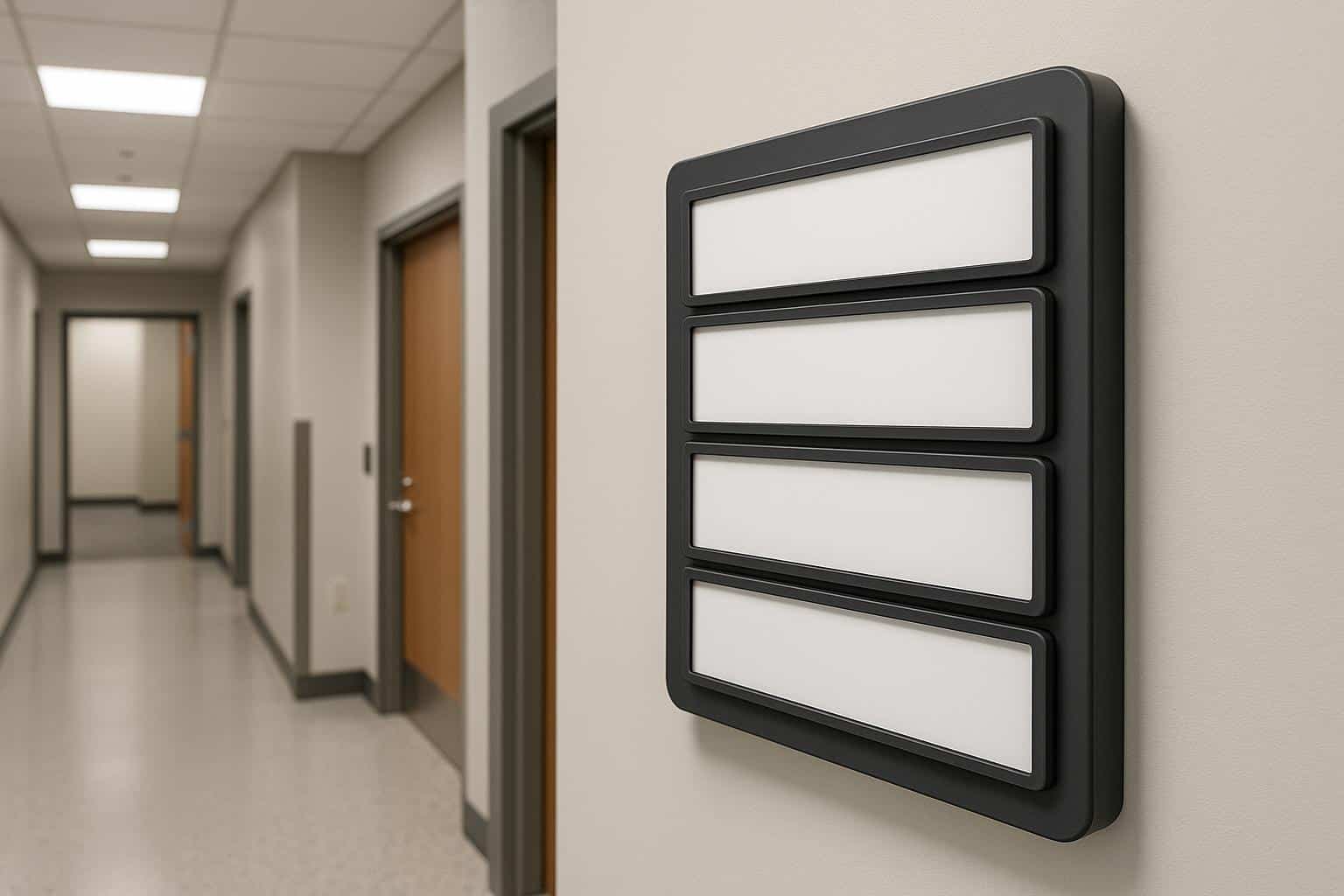
Clear Direction at Key Decision Points
Hallways contain intersections, elevators, and stair access. These spots demand precise visual guidance. Signage with replaceable inserts allows quick content updates as layouts change.
Accurate labels prevent visitors from wandering into restricted areas. Staff spend less time giving verbal directions. Movement flows smoothly through corridors that feel organized.
Placement That Supports Natural Movement
Strategic positioning strengthens the impact of each sign. Frames sit at eye level near doorways and corridor junctions. People absorb directions without slowing their pace.
Consistent height and alignment build visual habits. Regular spacing makes the system predictable. Predictability supports confident movement through complex interiors.
Adaptability for Changing Office Layouts
Business facilities rarely keep the same layout for long. Teams relocate, departments expand, and room functions shift. Changeable insert signage keeps pace with these adjustments.
Key advantages include:
- Quick graphic swaps when room names change.
- Easy updates for temporary project spaces.
- Space for color codes that match departments.
- Compatibility with printed schedules or notices.
- Durable frames that handle repeated insert changes.
Support During Events and Temporary Changes
Conferences and training sessions bring visitors who need clear guidance. Temporary inserts display event rooms and session times. After the events end, standard information returns.
This flexibility keeps corridors relevant throughout the year. Thus, guests feel guided from entry points to meeting areas. Staff avoid constant questions about directions.
Improved Readability under Busy Conditions
Crowded corridors demand signage that stands out. Clean frames and protected inserts present information clearly. Glare reduction and high contrast support quick reading. Such signs enhance readability through:
- Clear typography that remains legible from a distance.
- Protective covers that prevent smudges and fading.
- Consistent layout that reduces visual confusion.
- Strong color contrast between text and background.
- Standardized symbols for universal understanding.
Contribution to Professional Interior Appearance
The hallway signs influence how facilities are perceived. Structured frames give walls a tidy, deliberate look. Replaceable inserts maintain a fresh appearance as information changes.
Outdated paper taped to the walls suggests disorganization. Professional frames present messages with care. Clients and partners notice these details during visits.
Alignment With Brand and Design Standards
Design teams value consistency across interiors. Frames come in finishes that match door hardware and wall accents. Insert graphics follow brand colors and typography.
This alignment strengthens visual identity throughout the facility. Signage thus becomes part of the design language. Every corridor supports the same professional tone.
Operational Efficiency for Facility Teams
Maintenance demands time and coordination. Changeable insert systems reduce the need for full sign replacement. Staff update content using simple tools.
Durable materials withstand cleaning and daily contact. Frames stay secure after multiple updates. Long service life supports cost control.
Faster Response to Organizational Needs
Urgent room reassignments sometimes occur. New inserts print quickly and slide into place. Thus, information updates reach hallways without delay.
Teams communicate changes clearly to employees and visitors. Confusion decreases during transitions. Facility operations remain smooth even during adjustments.
Clear hallway signage with changeable inserts thus strengthens navigation inside busy business facilities. Accurate information, readable design, and flexible updates support confident movement. Structured systems turn complex corridors into easy-to-follow pathways.
