


Discord’s push toward age checks tied to facial scans and government IDs has sparked a fast-moving privacy backlash. After a third-party age-verification vendor breach reportedly exposed roughly 70,000 ID images, many communities are reevaluating their chat homes. I spent the past few weeks stress-testing platforms that don’t ask for government ID yet still deliver the staples of modern chat: text, voice, video, community spaces, and decent moderation. These are my five standouts right now.
Quick note on scope: none of these services requires an ID scan to unlock core features. Some may request an email or phone number, and policies can evolve, so always double-check the latest account requirements before migrating your server.

Matrix With Element For Open Rooms And Servers
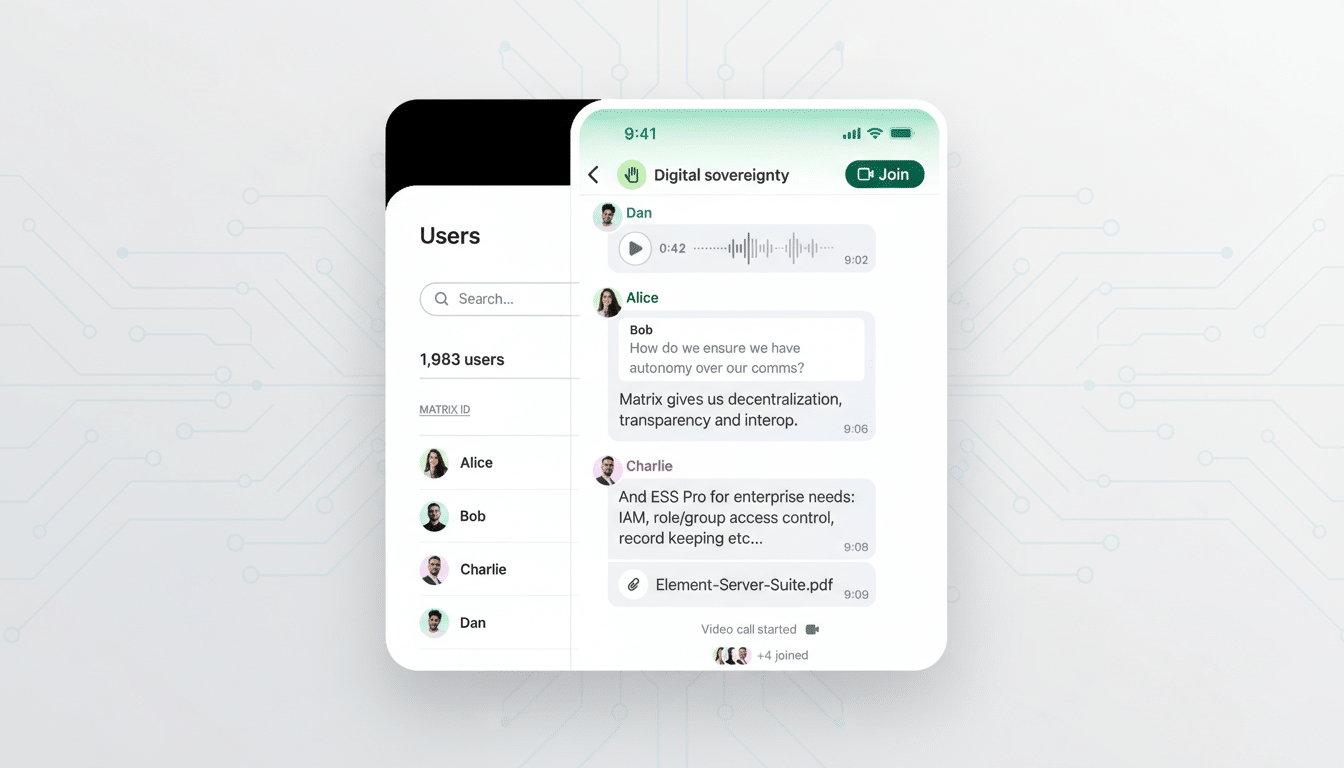
Matrix is a decentralized protocol, and Element is the most polished client for it. The appeal is architectural: you can self-host or pick a trusted provider, keep data under your control, and connect across a federated network. No ID scan is required to create accounts or rooms. End-to-end encryption is available for private chats, and public rooms can scale well for topic-based communities.
Matrix has matured far beyond a hobbyist tool. The Matrix.org Foundation reports rapid growth across public servers, and government deployments like France’s Tchap show it can operate at national scale. Bridges to Slack, IRC, and other services help ease migrations. If your server values autonomy and auditability over handholding, Matrix plus Element is the most future-proof bet on this list.
Guilded For Gamer Communities Without ID Checks
Guilded feels the most “Discord-like” today for gaming groups, with channels, roles, voice rooms, events, threads, and built-in calendars. In testing, voice quality and screen sharing were crisp, and onboarding friction was minimal—no government ID, just a straightforward signup. Esports teams will appreciate tournament and scrim tools that reduce dependence on third-party bots.
Owned by Roblox, Guilded benefits from big-platform resources while staying focused on community features. That said, keep an eye on policy updates as the broader industry grapples with youth safety rules. For now, it’s the smoothest plug-and-play shift if your server is heavy on gaming and live comms.
Stoat Formerly Revolt For Discord-Style Servers
Stoat (the project formerly known as Revolt) is the closest spiritual cousin to Discord’s UX—text channels, roles and permissions, mentions, and an evolving bot ecosystem. There’s no ID verification wall, and the roadmap includes feature parity with many of the niceties that make Discord sticky.
Reality check: it’s still young. A recent cease-and-desist prompted the rebrand, and traffic spikes have strained infrastructure. But early adopters who want a familiar interface without handing over sensitive documents will find Stoat promising—and a worthy project to support as it stabilizes.
Mumble For Low-Latency Voice You Can Self-Host
If your community lives on voice, Mumble remains the gold standard for low-latency audio. It’s open source, efficient on bandwidth, and battle-tested by clans and broadcasters. No government ID is required, and self-hosting gives admins full control over uptime, logging, and regional placement.
Out of the box, Mumble is voice-first with basic text chat, so you may pair it with a separate forum or Matrix room for heavier text and media. The payoff is reliability: in my testing, Mumble maintained sub-100ms round trips in scenarios where browser-based voice apps faltered.
Signal For Private Groups And Secure Calls
Signal’s strength is privacy. The nonprofit Signal Foundation built the Signal Protocol that now underpins encryption in apps like WhatsApp and Google Messages. Group chats are easy to spin up, media sharing is straightforward, and group calls for dozens of participants are stable. No ID scans are involved—only a phone number to register.
It’s not a drop-in replacement for sprawling public servers, but for clans, study groups, mod teams, or creators who prioritize end-to-end encryption, it’s excellent. Pro tip: screen sharing works best on desktop clients. Android and iOS performance has improved, but desktop remains the most reliable for walkthroughs and troubleshooting.
How I Chose These Picks And What To Watch Next
I evaluated each platform on five criteria: no government ID checks, healthy free tiers, active development, safety tooling (mod controls, reporting), and migration practicality. I also favored projects with transparent governance or open code, which helps communities audit how their data is handled. Digital rights groups such as the Electronic Frontier Foundation have warned that biometric ID programs create irreversible risks if breached, and the recent vendor leak underscored that point.
There’s no perfect one-to-one Discord clone. Instead, think in stacks: Matrix or Stoat for community chat, Mumble for voice reliability, Signal for private ops or creator circles. As regulators tighten age rules, expect more services to tout “teen modes” without demanding IDs. For now, these five options let you keep your community humming—without handing a stranger a scan of your face or passport.
