


The White House has unveiled an $11.7 billion plan to stockpile critical minerals, a move branded as Project Vault that amounts to a quiet admission of where industry is headed: toward electrified transport and power. The U.S. Export-Import Bank will supply $10 billion in financing, with private investors filling the gap, signaling that minerals once seen as niche inputs are now treated like strategic commodities.
Framed as insurance against supply shocks, the reserve mirrors the logic of the Strategic Petroleum Reserve while acknowledging a different energy era. Rare earths for motors and magnets, lithium and nickel for batteries, and specialty metals like gallium for semiconductors are the new levers of industrial power—and Washington is moving to hold some in hand.
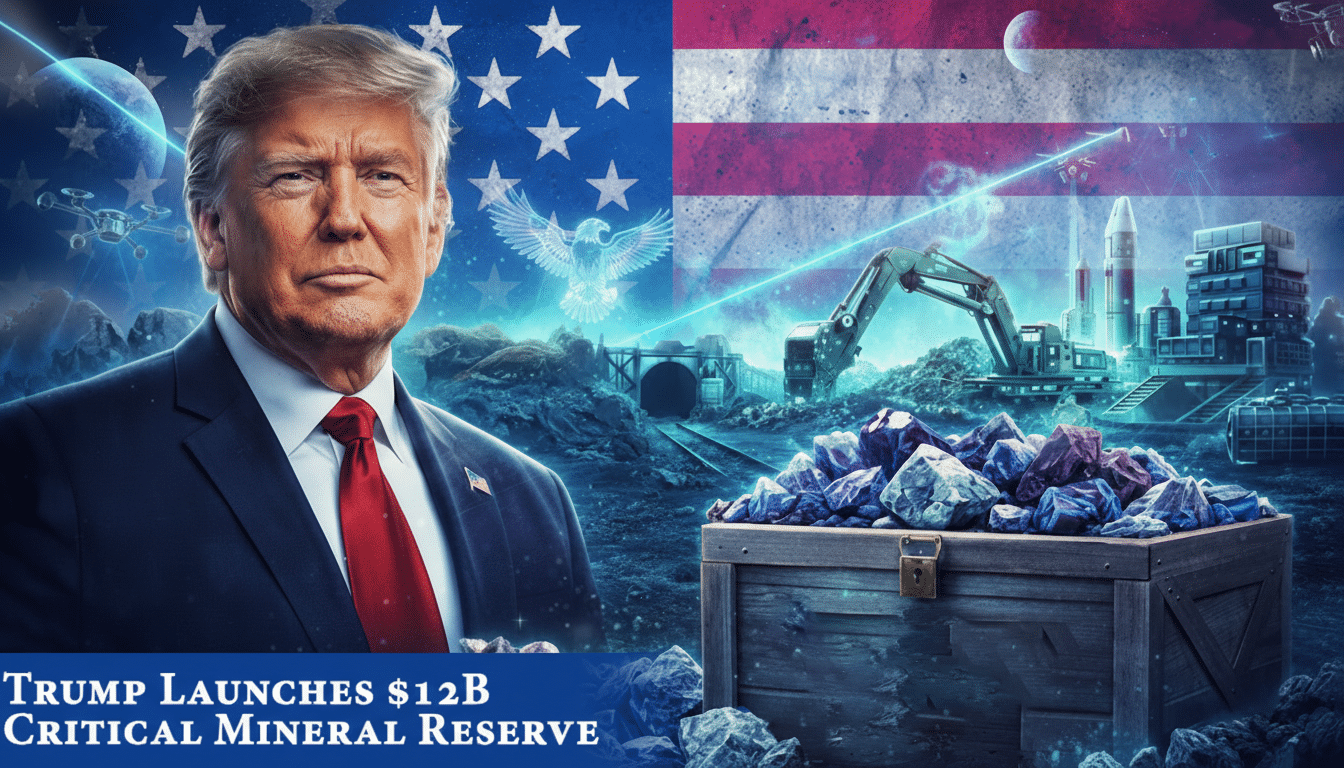
Why a U.S. Mineral Reserve Is Needed Right Now
Supply chains for clean energy run through a narrow set of countries and companies. The International Energy Agency has documented China’s overwhelming role in processing, with shares commonly above 60% for lithium and cobalt refining and around 90% for rare earth separation. Beijing’s recent export controls on gallium and germanium underscored how quickly geopolitics can choke advanced manufacturing.
The U.S. has already taken equity positions in domestic rare earth players, including MP Materials and USA Rare Earth, to jump-start upstream capacity. A federal stockpile adds another tool: the ability to buffer factories against short-term disruptions as domestic mining, refining, and recycling catch up. It’s a petroleum-style response for a post-petroleum supply chain.
What Goes Into Project Vault’s Critical Reserves
Officials have not published a final list, but reports indicate gallium and cobalt are in scope, with copper and nickel likely candidates. Expect magnet rare earths such as neodymium, praseodymium, and dysprosium—essential for EV motors and high-efficiency wind turbines—to feature prominently. Graphite, the dominant anode material in lithium-ion batteries, and high-purity manganese also merit attention given their chokepoint risks.
The market context explains the shopping list. The IEA’s latest critical minerals review shows lithium demand has surged severalfold in recent years, with EVs absorbing the majority of growth. Rare earth magnet demand is rising steadily as automakers adopt permanent-magnet motors, while wind’s shift to direct-drive turbines expands consumption. Even as chemistries evolve—such as the wider use of LFP batteries to reduce nickel and cobalt intensity—overall mineral demand climbs because EV and storage volumes are rising faster than intensity is falling.
A Signal to EVs and the Future of Clean Power
Analysts note the commitment is outsized relative to the current minerals market, approaching a meaningful fraction of the value stored in the oil reserve despite the underlying market being far smaller. That imbalance is the point: it’s a bet that electrification will scale quickly. Global sales of plug-in cars have already reached a sizable share of the new-vehicle market, and utilities continue to add wind, solar, and batteries as the cheapest new capacity, according to U.S. Energy Information Administration and IEA data.
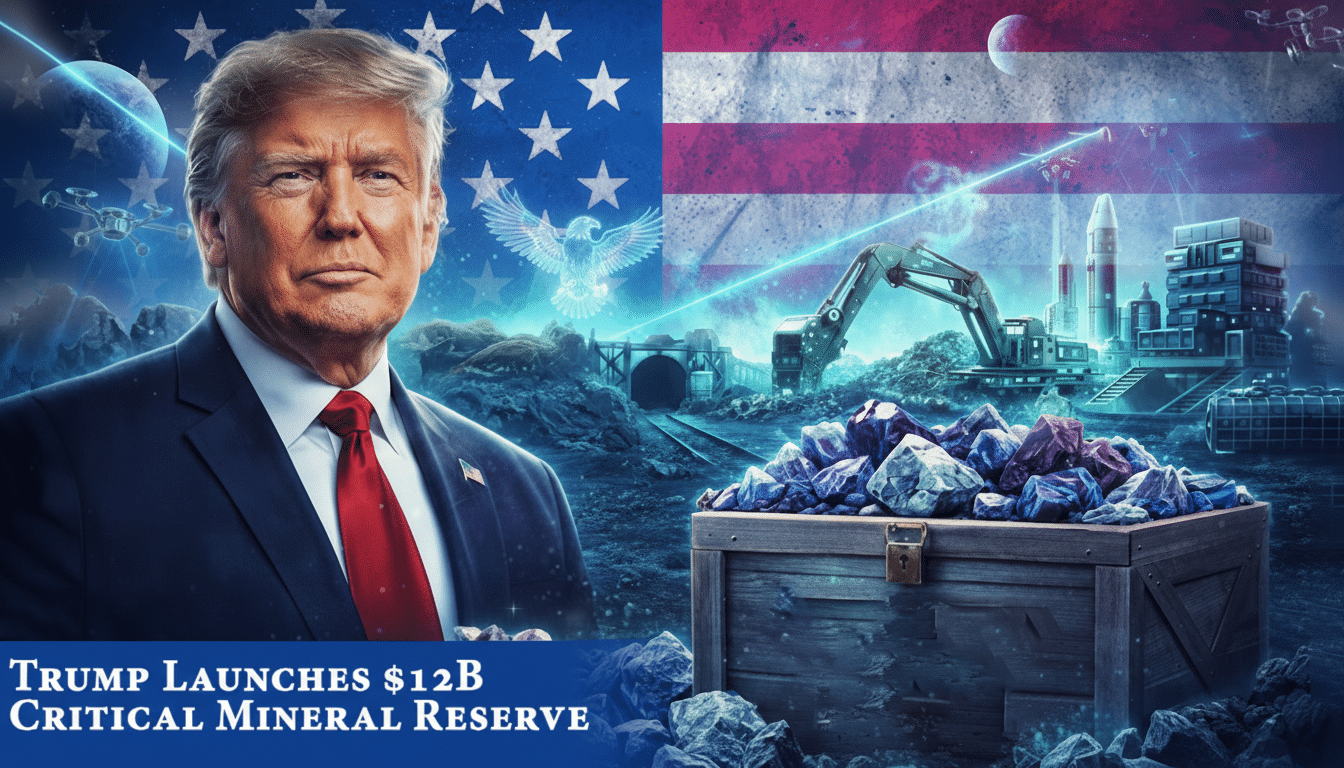
In other words, you don’t build a minerals SPR unless you think motors and batteries are the next strategic load-bearing technologies. The move also aligns with domestic-content rules embedded in recent industrial policy, which reward automakers and battery makers that source materials at home or from allied nations.
Beyond Stockpiles: Building U.S. Industrial Capacity
A reserve can smooth volatility, but it cannot produce a single ton of lithium hydroxide or separated rare earths. Expanding U.S. refining and component manufacturing remains pivotal. The Department of Energy’s loan programs are already backing battery plants and materials facilities, while states compete to land cathode, anode, and magnet factories. Recycling will play a growing role too: firms like Redwood Materials and Li-Cycle are scaling processes to recover lithium, nickel, cobalt, and copper from end-of-life batteries, turning waste into a secondary mine.
Ethical sourcing will be under scrutiny. Cobalt from the Democratic Republic of Congo, environmental footprints from nickel laterites, and community impacts of new mines demand clear standards. The U.S. Geological Survey and international initiatives such as the Minerals Security Partnership are pushing for traceability and higher labor and environmental bars, which will shape what the reserve buys and how it is managed.
Execution Risks and Rules of Engagement
Stockpiles can distort markets if mismanaged. Clear purchase and release criteria—tied to supply disruptions, not price support—will be essential to avoid crowding out private investment. Storage and quality assurance matter, too: gallium and some battery precursors require careful handling and spec control to remain useful for manufacturers.
Done right, Project Vault can act as a stabilizer while domestic capacity scales. Done poorly, it risks becoming an expensive warehouse. Either way, the policy admits what the market already knows: the next decade’s strategic resources aren’t barrels in caverns, they’re metals and minerals that make electrons move. The future industrial base runs on magnets and batteries—and Washington just moved to stock the shelves.
