


The Tooth Fairy now receives real-time updates. Enter a new experience, Tooth Fairy Tracker, which transforms an invisible ritual into an interactive night of waiting: Streaming short videos featuring fairies throughout the house; viewing countdown clocks on digital devices that tick off the minutes until morning; receiving congratulations from smart speakers like they were custom-made for children raised on streaming.
A Night Of Updates, Not Just A Morning Surprise
Instead of a single from-under-the-pillow reveal, families (who must sign up with an email address) follow along in a series of video check-ins from Kiki the Tooth Fairy herself as she gets ready to take off and leaves “headquarters” and flies to the child’s home. Each clip is featured on the site with its countdown to the next update, turning each evening into a mini event guiding children and parents toward bedtime.
- A Night Of Updates, Not Just A Morning Surprise
- Personalization and pricing launch for Kiki’s tracker
- Why Gen Alpha parents are listening to bedtime tech
- Dentists see a teachable moment in nightly routines
- Global tooth-loss traditions localized for each region
- Privacy and access considerations for kid-focused tech
- Merch and the next chapter in Tooth Fairy storytelling
The format takes inspiration from what works in holiday trackers, but concentrates the attention on nightly duties. The updates prompt children to brush, put on pajamas and go to sleep — a small but appreciated assist for parents engaged in their own bedtime negotiations.
Personalization and pricing launch for Kiki’s tracker
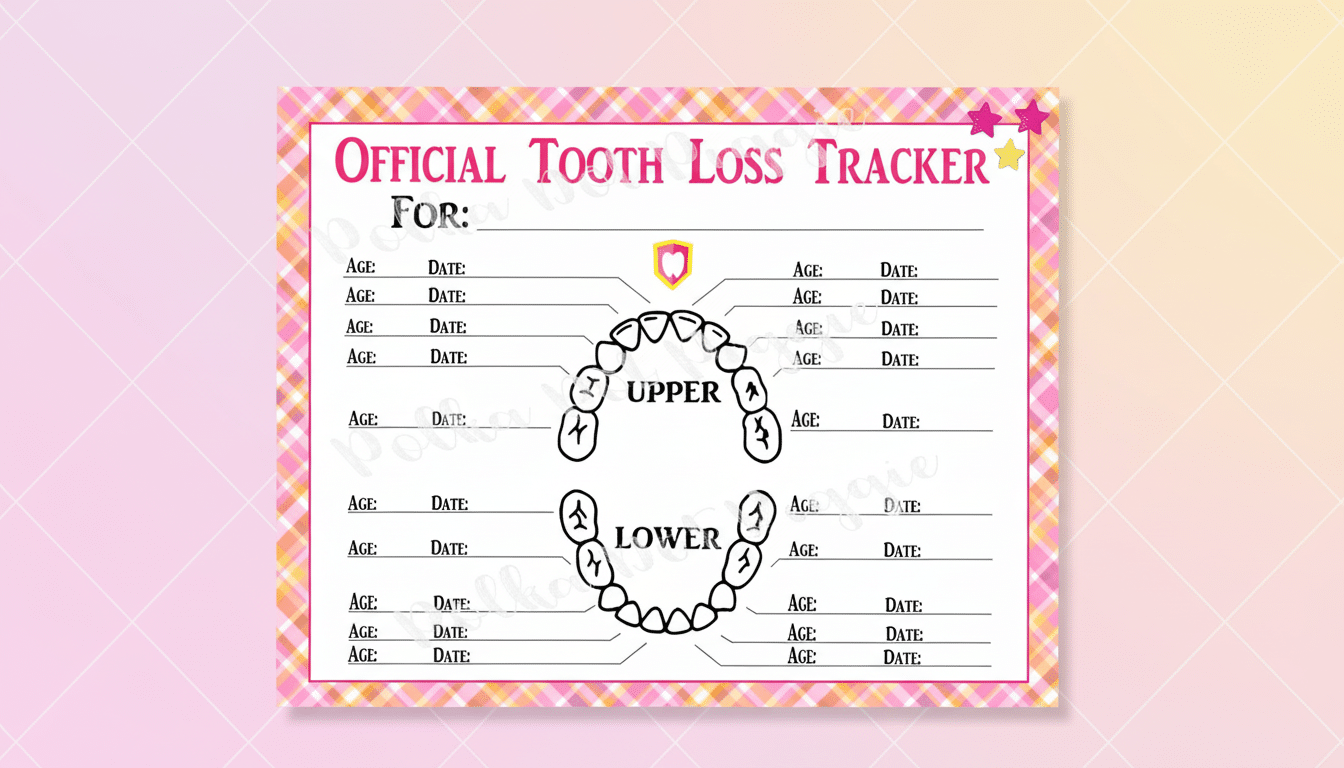
Personalization is the next step. The creators of Kiki hope the character will be able to say the child’s name, mention hobbies and potentially include a picture of the child, with printable certificates that capture each lost tooth. There is an optional subscription slated at $20 for six visits — less than what many families are already shelling out on the reward itself.
For context, Delta Dental’s Original Tooth Fairy Poll found in its most recent widely cited release that the average payment per tooth was $6.23 — a reflection of how the tradition has quietly morphed into a line item on a budget. But conceptualizing the digital experience as a multi-visit bundle brings price into line with perceived value — especially for families with multiple teeth on deck.
Why Gen Alpha parents are listening to bedtime tech
Kids today are digital natives; parents, pragmatists. Common Sense Media’s latest census revealed that U.S. tweens clock in more than five hours of screen media daily. Families want more tech that feels magical but also has a purpose. An “artifact” of a community-guided, time-limited experience culminating in sleep satisfies both criteria.
And most important, it takes the thrill underground, off big social channels and onto a platform where everything can be controlled. Kids still respond to short-form video, but framing it as a finite bedtime story makes it easier for parents to enforce boundaries.
Dentists see a teachable moment in nightly routines
The idea also aligns with oral-health objectives. According to the Centers for Disease Control and Prevention, more than half of children between ages 6–8 have experienced a cavity in their baby teeth. (There, the American Dental Association recommends brushing twice a day with fluoride toothpaste — guidance that Kiki’s predictably straightforward how-to segments can further in kid-friendly language.)
Collaborations with pediatric dentists are on the road map, and pre-visit videos to reduce anguish along with post-experience rewards to reinforce regular care. The American Academy of Pediatric Dentistry has long suggested modeling and positive reinforcement; a recognizable figure explaining what a child is likely to experience can be an effective primer.
Global tooth-loss traditions localized for each region
Though we’re Tooth Fairy people in the U.S., customs differ around the world. In some parts of Europe and Latin America, a character, such as the Tooth Mouse, takes away baby teeth. They take into account the local lore and language, focusing on localized storylines so that the experience reflects regional mythology rather than simply imposing some monolithic narrative — smart positioning for international expansion.
Privacy and access considerations for kid-focused tech
No app or account is deliberately required by the service, reducing friction for parents and exposure of children’s data. As functionality expands to feature names and photos, COPPA (Children’s Online Privacy Protection Act) compliance will be an essential consideration. Best practices — like clear, explicit parental consent, data minimization, transparent retention policies and easy deletion of data — will be what decides whether families trust magic for the long haul.
Merch and the next chapter in Tooth Fairy storytelling
Outside of software, the team is also experimenting with physical tie-ins — imagine toothbrushes and toothpaste bundled with videos of Kiki “custom-building” those items specifically for each child. It’s a playbook that any number of children’s brands have run, but the make-it-just-for-you framing can elevate basic hygiene into a story small kids want to engage in again.
For now, the core tracker is free and web-based in full. A new design is coming, delivering a more grounded sense of place for Kiki’s world and small details to help keep children engaged without asking too much of parents. So long as it keeps the whimsy in its dance with real-world utilitarian astringency, the Tooth Fairy will officially become the year-round character families follow around—and pull precious screen time for getting your kid to nod off.
