


GE is transforming the refrigerator into a grocery co-pilot. Appearing at CES, the new GE Profile Smart Fridge debuts with a built-in barcode scanner that has been designed to help you keep your kitchen stocked — simply by having it update a shared grocery list when you scan items that you’re running out of.
How the Barcode Scanner Handles Stockouts
GE’s method won’t have you logging every new purchase; it’s simpler: scan when you get to the bottom of your bottle, box, bag. A green light beneath the dispenser indicates that it’s been read, and the thing shows up on your list in about a second in demos we watched. Company representatives say that the service will recognize around four million barcodes upon launch (with manual entry to compensate for anything it doesn’t identify).
The scanner scans standard UPCs issued by GS1, the worldwide RFID standards organization, which is likely to apply to most packaged goods. The benefit here is not sexy AI — but the ability to smooth out friction. It captures the intention to repurchase just when you spot a product is about to run out — at the same moment most household lists fizzle.
Smarter doors, drawers, dispenser, and touchscreen
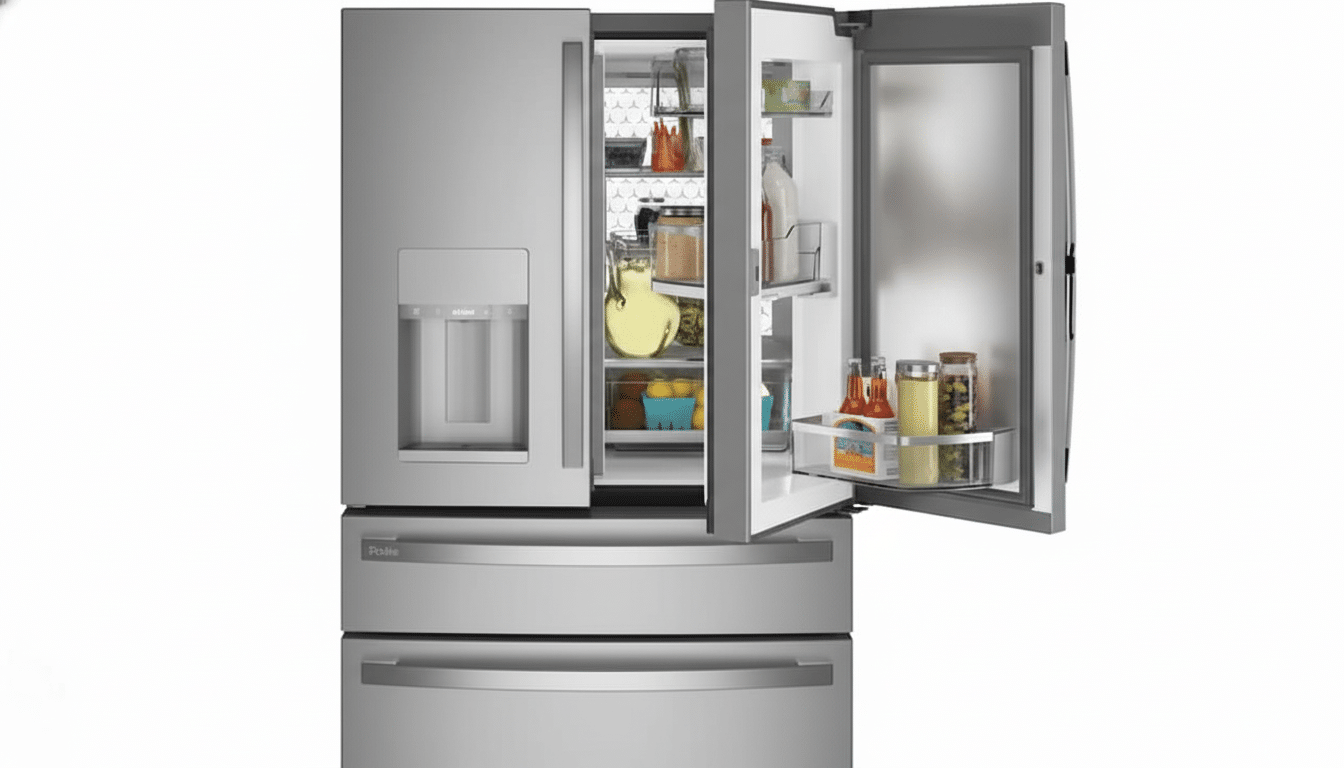
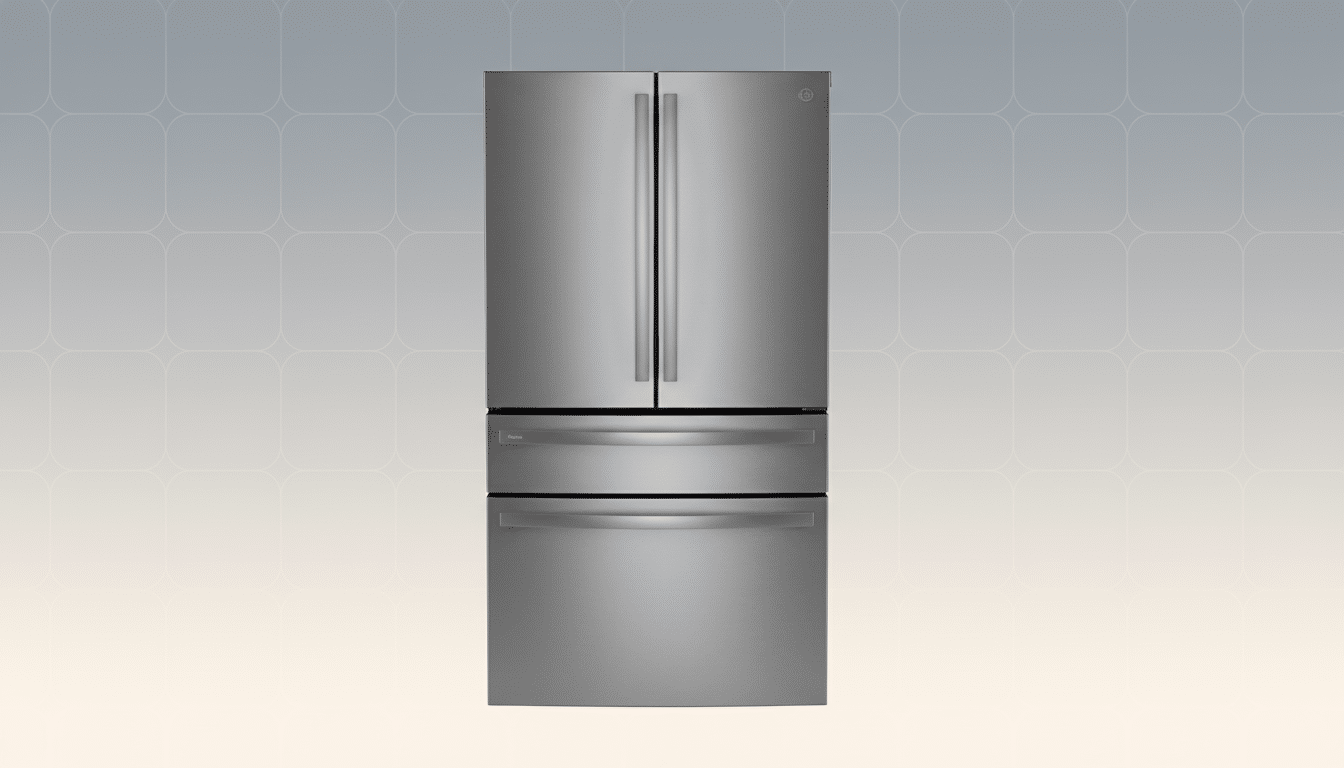
The French-door model gains a center drawer that can cool or freeze (with variable temperatures), and a backlit main compartment.
A touchscreen above the ice and water dispenser brings up recipes, timers, and glanceable widgets like weather and calendar notes.
At the top of either side, when you pull open the produce drawers, a camera above the interior light is poised to take photos. You can check the GE app for the last five images uploaded for each drawer — useful when you’re standing in an aisle wondering if you have leftover cilantro. Food photos can also be used to search for recipes you can make based on what you have on hand.
The dispenser does a good job for precise fills for cooking (ask for a cup or give it an exact ounce count) and can also automatically detect cup size. Voice activation is triggered with a “Hey HQ” wake phrase and the fridge is integrated with Alexa and Google assistants for simple commands — such as adding items to your list or filling a glass.
App ecosystem and early limitations at launch
When it rolls out, your grocery list will be contained within GE’s app and won’t work with third-party list services at launch. That could annoy households that use a communal list across platforms. That said, the combination of on-device scanning, rapid confirmation, and app access should take care of most day-to-day requirements while manual entry will serve as a fallback for finds at farmers markets or items without barcodes.
Like any connected appliance that includes a camera, buyers will likely be seeking clarity on how images and voice interactions are stored and who has access. The photos are meant for a personal reference, but trust and adoption over time will be determined by privacy policies — not just features.
Why this may matter in your kitchen and routines
Missed staples derail meal planning and prompt extra store trips. The scanner takes direct aim at that pain point, and it might even help cut waste. The USDA says that 30% to 40% of the food supply in the United States gets wasted annually, and ReFED’s analysis shows consumer behavior as a leading cause. A low-friction, real-time list can cut down on duplicate purchases and forgotten condiments hiding behind taller jars.
(Rivals have dabbled in interior cameras and recipe guides for years, but a physical barcode reader at the fridge door is unusual.) It takes the interface from a phone search to a one-second scan — the sort of micro-improvement that can alter behavior if it actually works in practice, outside the confines of a trade show demo.
Price, availability, and an early hands-on verdict
The GE Profile Smart Fridge is set to hit stores in March with a list price of $4,899. That puts it in premium country alongside feature-laden models from brands like LG and Samsung.
But you’re paying for an entire suite: with this, it’s a scanner, touchscreen, camera, and more accurate water dispensing as well as that middle drawer that can act like two drawers in one.
Its worthiness of a spot on your grocery run routine will depend on three things:
- Accuracy when scanning real-world packaging
- Speed at which the shopping list syncs up between family members
- Third-party app support down the line
By most ways of reckoning, the barcode system should be the smartest smart-fridge idea in a while: it meets you at the time of need and counters “I’ll add it later.” If it withstands busy kitchens, bare shelves might finally be the exception rather than the rule.
