


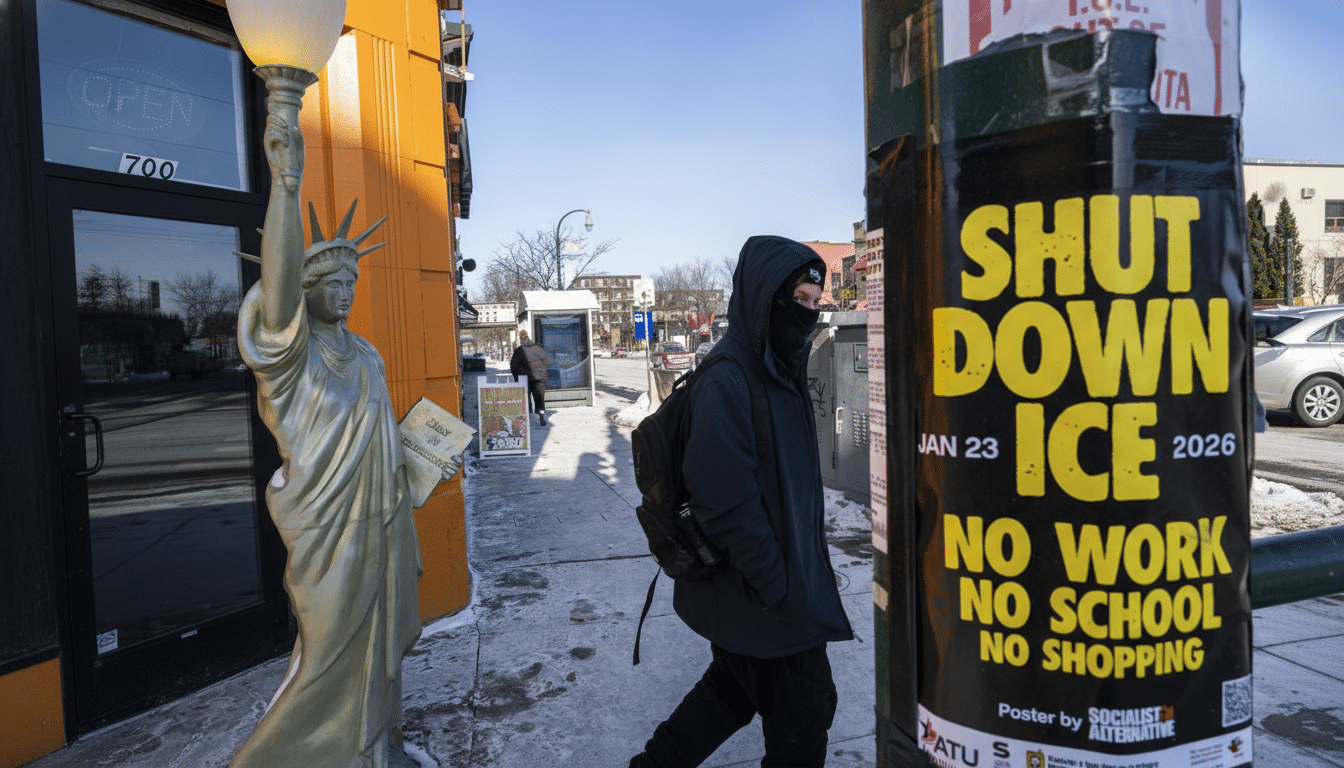
Prominent tech leaders are speaking out after federal immigration actions in Minnesota left multiple people dead, including two U.S. citizens identified by local reporting as Renee Good and ICU nurse Alex Pretti. Advocacy tallies say at least eight people have been killed by federal immigration agents this year, jolting a Silicon Valley that often tries to keep politics at arm’s length.
The industry’s entanglement with immigration enforcement is not abstract. Software and data providers including Palantir, Clearview AI, Flock, and Paragon are among those whose tools have supported federal operations, while several high-profile tech figures maintain close ties to the administration. A coalition of tech workers, ICEout.tech, argues those relationships confer leverage, noting executives previously helped avert a planned enforcement surge in San Francisco and urging leaders to demand the removal of ICE from U.S. cities.
- Industry Leaders Break Silence on Minnesota Raids
- OpenAI and Anthropic Weigh In on ICE Conduct
- Apple and Signal Frame a Values Debate Over Policy
- Publishing and Workplace Actions Reflect Rising Dissent
- Engineers and Researchers Speak Out Against Violence
- Venture Capital Rift Spills Into Public View
- Why These Statements Matter for Tech and Policy
Industry Leaders Break Silence on Minnesota Raids
LinkedIn co-founder Reid Hoffman called for a clean break from neutrality in an opinion piece, warning that “hope without action” invites further abuses. He pressed executives to use their political capital and corporate leverage to push for deescalation and accountability, framing the moment as a test of whether the sector will defend the democratic norms it relies upon.
Hoffman’s message reflects broader unrest inside tech companies, where employees are pressing leaders to go beyond statements and reassess contracts, lobbying, and proximity to power that, in their view, enable civil rights violations.
OpenAI and Anthropic Weigh In on ICE Conduct
OpenAI CEO Sam Altman, whose company is involved in a massive public-sector buildout known as the $500 billion Stargate project, told staff in messages reported by The New York Times that current ICE conduct “is going too far.” He drew a line between removing violent offenders and the practices seen in Minnesota, urging national unity while avoiding what he called “performative” political pronouncements. The remarks underscore the tightrope for firms that both court government work and face internal demands to take moral stands.
Anthropic’s Dario Amodei, speaking with NBC, stressed the company has no ICE contracts and framed his position around “arming democracies” with guardrails. He noted partnerships with the Defense Department, including work with Palantir, and warned that recent events raise questions about whether the U.S. is living up to values it seeks to defend abroad. On X, he described “the horror” unfolding in Minnesota, amplifying concerns beyond internal memos.
Apple and Signal Frame a Values Debate Over Policy
Apple’s Tim Cook, in an internal memo, urged deescalation and said he had conveyed his views directly to the president. That approach signals a strategy of private engagement by one of the most influential corporate leaders in the country, even as workers and users look for firmer public lines.
Signal President Meredith Whittaker offered an unambiguous rebuke on X, calling on anyone in tech who has championed privacy and freedom to condemn the killings outright. Given Signal’s role in enabling secure communications for activists, her statements linked product mission to civic responsibility, reflecting a growing insistence that corporate values must be visible in public crises.
Publishing and Workplace Actions Reflect Rising Dissent
Medium CEO Tony Stubblebine told employees they could join a nationwide general strike if they choose, acknowledging the tension of staying “on-mission and on-money” while people are killed in the streets. He argued that editorial standards—such as prohibiting hateful content—should be consistent with the company’s public stance, and flagged concerns about tech firms donating to the administration as the crackdown escalates.
Engineers and Researchers Speak Out Against Violence
Google veteran Jeff Dean called the shooting of Alex Pretti “absolutely shameful,” condemning what he described as an execution of a defenseless citizen recorded on camera. His comments echoed a broader sentiment among rank-and-file technologists who want leaders to reject violence regardless of political affiliation.
Investor James Dyett criticized the industry’s priorities, noting there is often louder pushback against a potential wealth tax than against masked agents “terrorizing communities.” The contrast, he suggested, reveals a values mismatch between public messaging and moral urgency.
Venture Capital Rift Spills Into Public View
At Khosla Ventures, partner Keith Rabois publicly backed ICE and the administration’s tactics, triggering blowback from founders and colleagues. Another partner, Ethan Choi, clarified that Rabois does not speak for the firm, calling the Minnesota killing “plain wrong.”
Founder Vinod Khosla went further, denouncing what he labeled “macho ICE vigilantes” and criticizing authorities for spinning “invented” narratives. He amplified Hoffman’s call for more executives to step forward, urging humanity to trump politics.
Why These Statements Matter for Tech and Policy
Beyond rhetoric, tech leaders influence data access, procurement, and the flow of talent into public-sector projects. Worker-led groups argue that executives can condition cooperation with agencies on adherence to civil liberties and push for independent reviews after use-of-force incidents—especially when partner technologies or data play any role.
The Minnesota killings have become a litmus test for the industry’s conscience. With core infrastructure providers tied into government systems and venture capital shaping the tools available to law enforcement, what CEOs and investors say—and more critically, what contracts they accept or exit—will signal whether the sector is willing to trade short-term access for long-term credibility on democratic values.
