


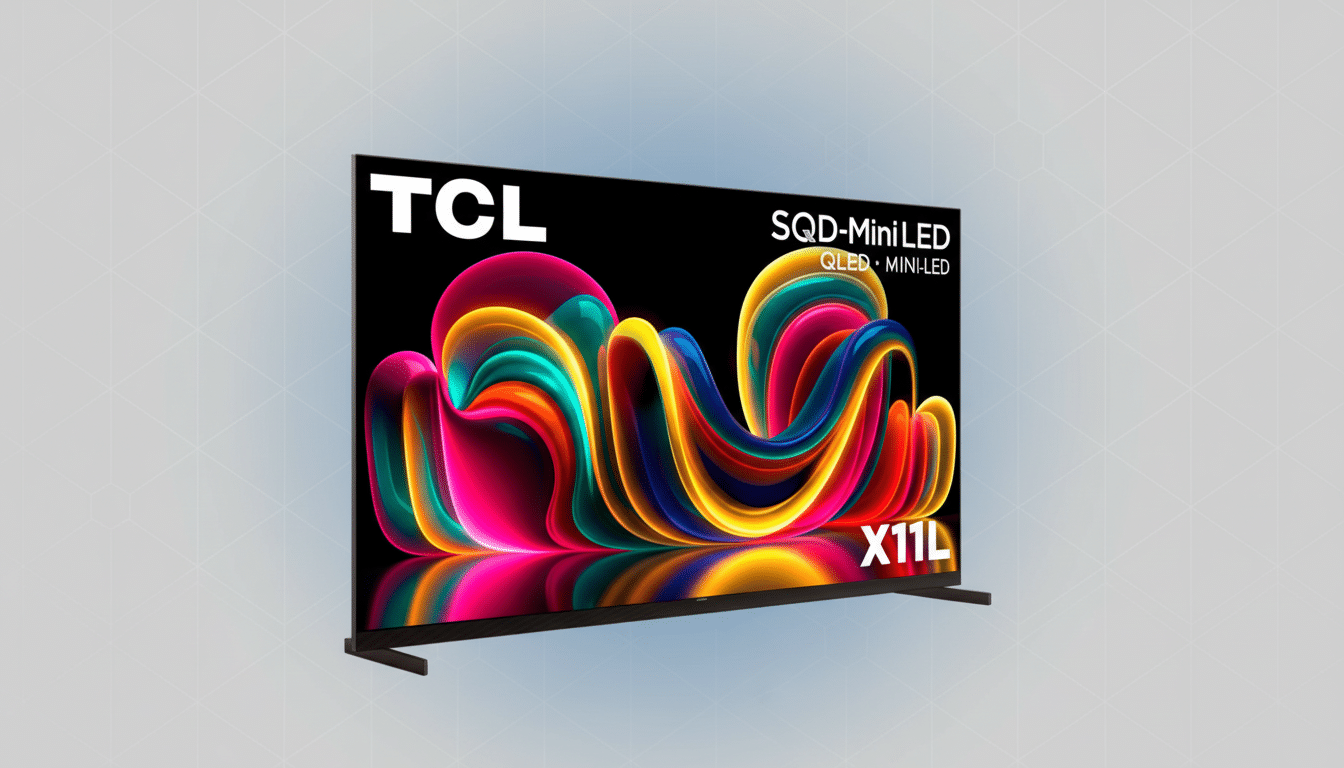
TCL took to the CES stage to zig while everyone else zagged, debuting a flagship Super Quantum Dot mini‑LED set that steers clear of the Micro RGB bandwagon.
Dubbed the SQD‑Mini LED and now in an X11L model, it aims to hit a sweet spot that TV makers have been pursuing for years: QLED‑class brightness with OLED‑like black levels, and pluck away the production headaches that have slowed down next‑gen backlights.
How TCL Decided on Super Quantum Dot Over Micro RGB
Where competing brands flaunted Micro RGB backlights constructed of actual red, green, and blue light emitters, TCL’s use of SQD relies instead on a single pure‑white light source to feed the quantum dot layer to produce color.
As detailed in coverage from Gizmochina and seconded by display analysts, that structure cuts manufacturing complexity and cost, both of which have thus far thwarted the scalability of RGB micro‑emitters beyond halo prototype stages.
DSCC has continually pointed out that yield and uniformity become worse when packing millions of tiny RGB emitters behind yet larger panels. It’s a pragmatic bet by TCL: instead of pursuing a young technology that may not mature until several more cycles, refine a more established mini‑LED pipeline with more zones, cleaner optics, and better spectral management.
The trade‑off of color science is subtle. In theory, RGB emitters provide purer spectra; however, a high‑quality QD stack with a very narrow‑band white source can get close. TCL claims “100% BT.2020 color,” an aggressive target. For context, independent lab tests generally report premium quantum‑dot TVs at between 80% and 90% of the BT.2020 range, the very best flirting higher. Third‑party measurements will be necessary for validation.
SQD‑Mini LED Specs and Bold Picture Quality Claims
Both numbers are aggressively high: up to 20,000 individual local dimming zones (which is roughly triple the aforementioned top TCL model) and a peak brightness of up to 10,000 nits for HDR highlights. For comparison, the UHD Alliance’s baseline for premium HDR certification is 1,000 nits, and many high‑end TVs range between 1,500 to 3,000 nits. If that peak figure stands up in the calibrated modes, it would redefine what we can expect a consumer TV to deliver in specular highlights and sun‑drenching widescreen vistas.
Local dimming doesn’t exist by zone count alone, though, and TCL is partnering the dense backlight with an improved Halo Control System and a brand‑new 26‑bit backlight controller. It is intended to reduce blooming around bright items (such as stars in a dark sky) and to better preserve the detail hidden in shadow—both areas where mini‑LED sets can be challenged. An anti‑reflective layer should also help maintain contrast in rooms with lots of light, and the algorithmic tweaks are meant to deliver updates around cleaner star fields, subtitle bars, and potential high‑contrast sports graphics.
Design Details, Audio Tuning, and Smart TV Features
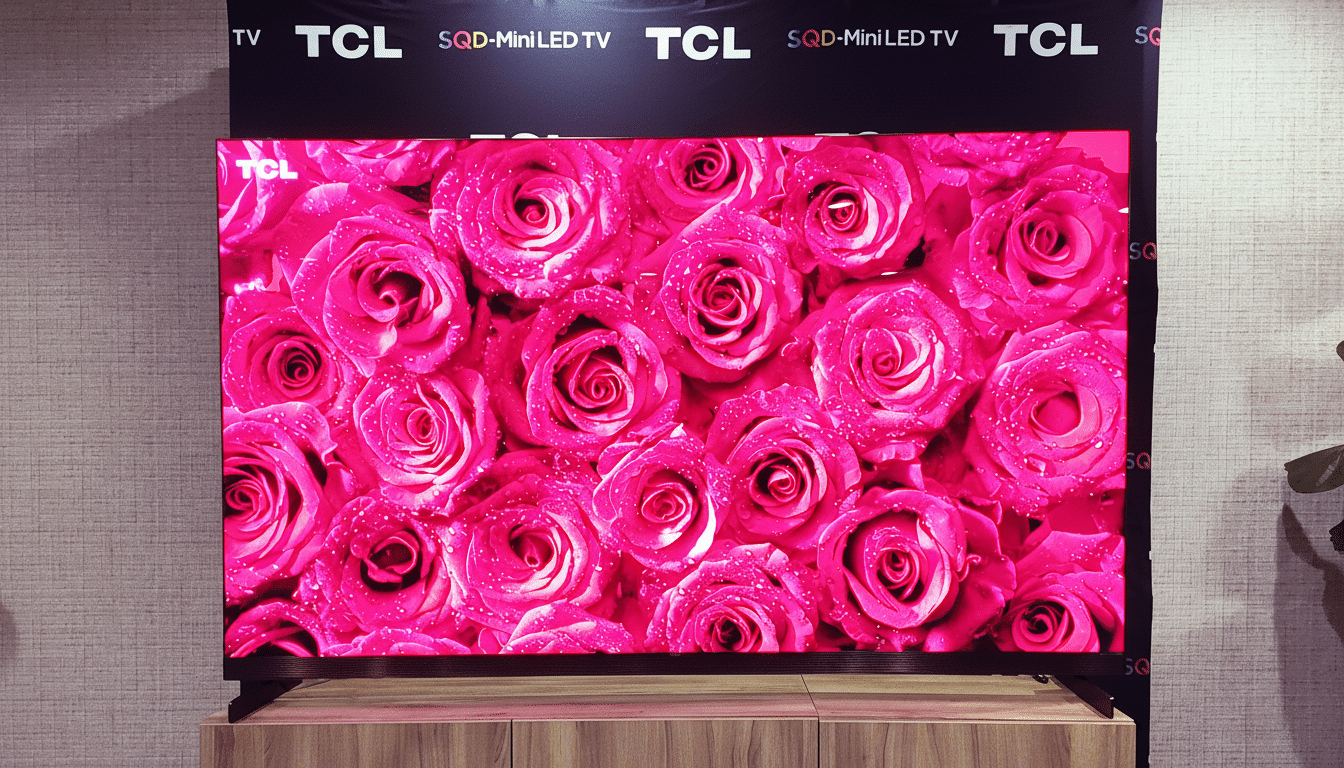
The X11L’s industrial design skews art‑gallery: an ultra‑thin 0.8‑inch cabinet with “ZeroBorder” bezels and a wide‑angle CSOT panel. Audio is tuned by Bang & Olufsen, with the set also carrying Dolby FlexConnect that means wireless speakers can be added for a 4.1.4 setup without requiring re‑wiring of the room. Dolby Vision 2.0 Max support is due via OTA, while gaming credentials take in HDMI 2.1 bandwidth for high‑frame‑rate consoles and PCs.
Powering this upscaling and processing is TCL’s new TSR AI processor, which takes care of 4K upscaling, motion, and tone mapping. Reading off the software sheet, it packs Gemini for Google TV complete with voice‑first search, hands‑free control, and a backlit remote for late‑night sessions. None of these features will save a mediocre panel, but all together they seem to indicate that TCL is making an effort where it really matters and aims this one to be a proper flagship and not just a high‑brightness demo.
Its first round of shipments will be available in three sizes—75, 85, and 98 inches—and some regions can now get in on pre‑orders as well. Historically, TCL undercuts Samsung and LG on an adjusted price‑per‑performance basis at any given performance tier, but the company is giving signals that this model will occupy more of a premium perch.
Market Context and What to Watch as SQD‑Mini LED Rolls Out
Samsung and LG’s Micro RGB displays point the way to where the industry wants to get: self‑emissive or near‑self‑emissive control over color and light for perfect per‑pixel precision. It’s a matter of when those demos are available en masse to the consumer at consumer‑friendly pricing. TCL’s SQD‑Mini LED addresses a more immediate need—come near‑OLED blacks and class‑leading brightness in scaled fashion on very large sizes, this product cycle.
Early adopters can look out for independent evaluations from labs like Rtings and AVForums to verify key metrics—peak and sustained brightness, color volume across luminance levels, EOTF tracking, near‑black handling, uniformity, and off‑axis performance. If the X11L’s zone control and spectral purity are indeed on a par with what TCL is claiming, they could be enough to establish it as the high‑water mark for bright‑room viewing, while narrowing the gap for dark theater spaces.
Bottom line: now that it’s doubling down instead of up on Super Quantum Dot vs. Micro RGB, TCL has made a thoughtful, living‑room‑facing bet. It might not be the most futuristic course, but if the numbers turn out on real‑world content—movies mastered to 4,000 nits, high‑contrast games, and live sports—it’ll end up being the most impactful TV decision you make this year.
