


T-Mobile is rolling out a live call translation feature that operates at the network level, promising near real-time interpretation in more than 50 languages without any special apps or devices. It’s a notable shift from phone-based and app-only solutions, aiming to make multilingual voice calls as simple as dialing a number.
Live Translation Moves Into The Network
Unlike on-device tools such as Google’s Pixel Live Translate or app-first options like Skype’s translator, T-Mobile’s approach routes the heavy lifting through its cellular network. That means translation can work on virtually any handset connected to the call — even basic flip phones — with latency low enough to keep the conversation flowing.
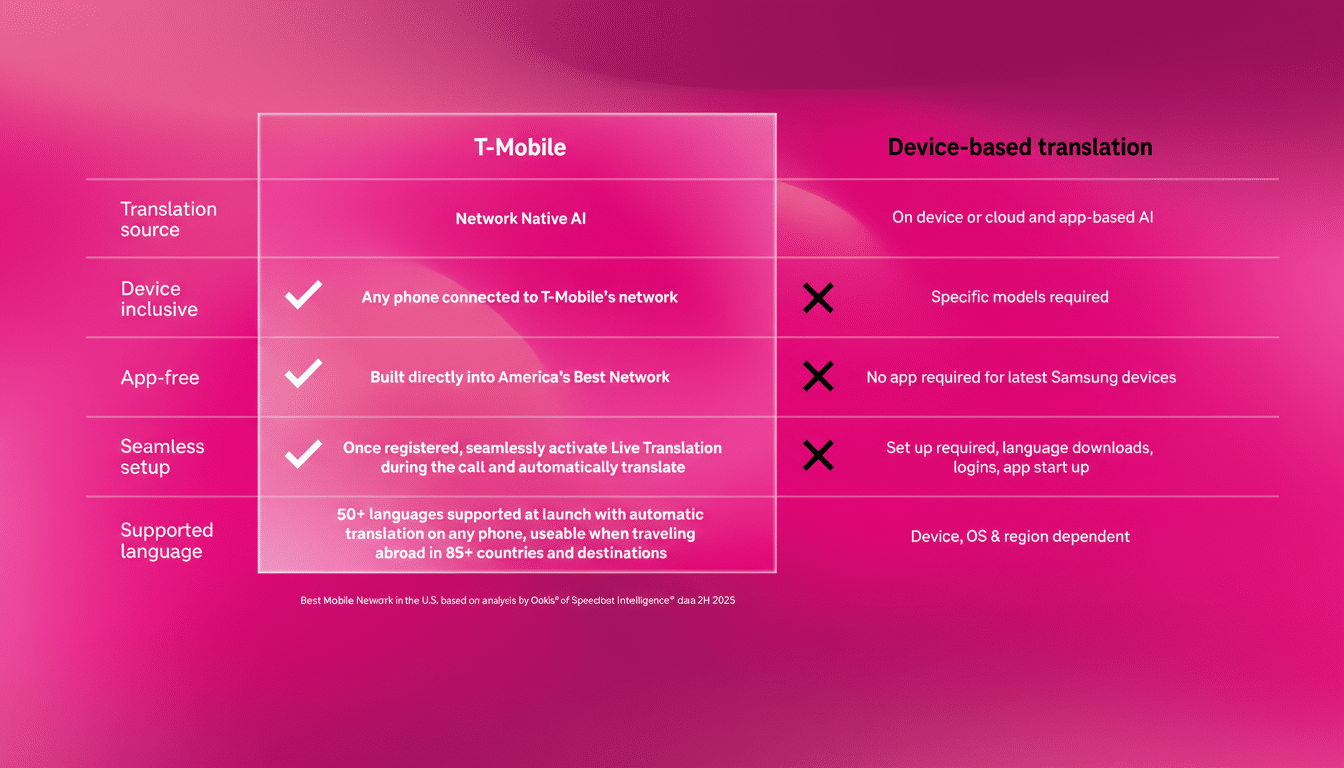
The carrier describes this as the first real-time AI platform directly integrated into a mobile network. Because the translation runs on the operator’s side, callers don’t need to install anything. If at least one participant is a T-Mobile customer enrolled in the beta, both sides can use the feature.
How T-Mobile’s Live Call Translation Beta Works
During testing, users can trigger translation mid-call by dialing *87*. The system detects the two spoken languages and handles back-and-forth translation automatically. Promotional materials hint at forthcoming voice activation, but for now the star code is the simple on-ramp.
The beta is free while it runs and is available to eligible postpaid consumer accounts via the carrier’s app or website. Prepaid, business, and government lines aren’t supported at launch, suggesting a phased rollout as the platform scales.
Compatibility and Use Cases for Network Translation
T-Mobile says the feature supports more than 50 languages, covering common pairings such as English–Spanish, English–Mandarin, and beyond. Because the solution is network-based, it doesn’t matter if one caller has an older device, a feature phone, or a competitor’s handset. Only one participant needs to be on T-Mobile for both sides to hear translations.
Real-world scenarios are easy to picture: a contractor clarifying materials with a supplier overseas, a patient discussing care with a relative abroad, or a traveler confirming reservations with a local host. For small businesses and families alike, removing the “which app are you on” friction is the quiet breakthrough.
Why It Matters for the Mobile and Telecom Industry
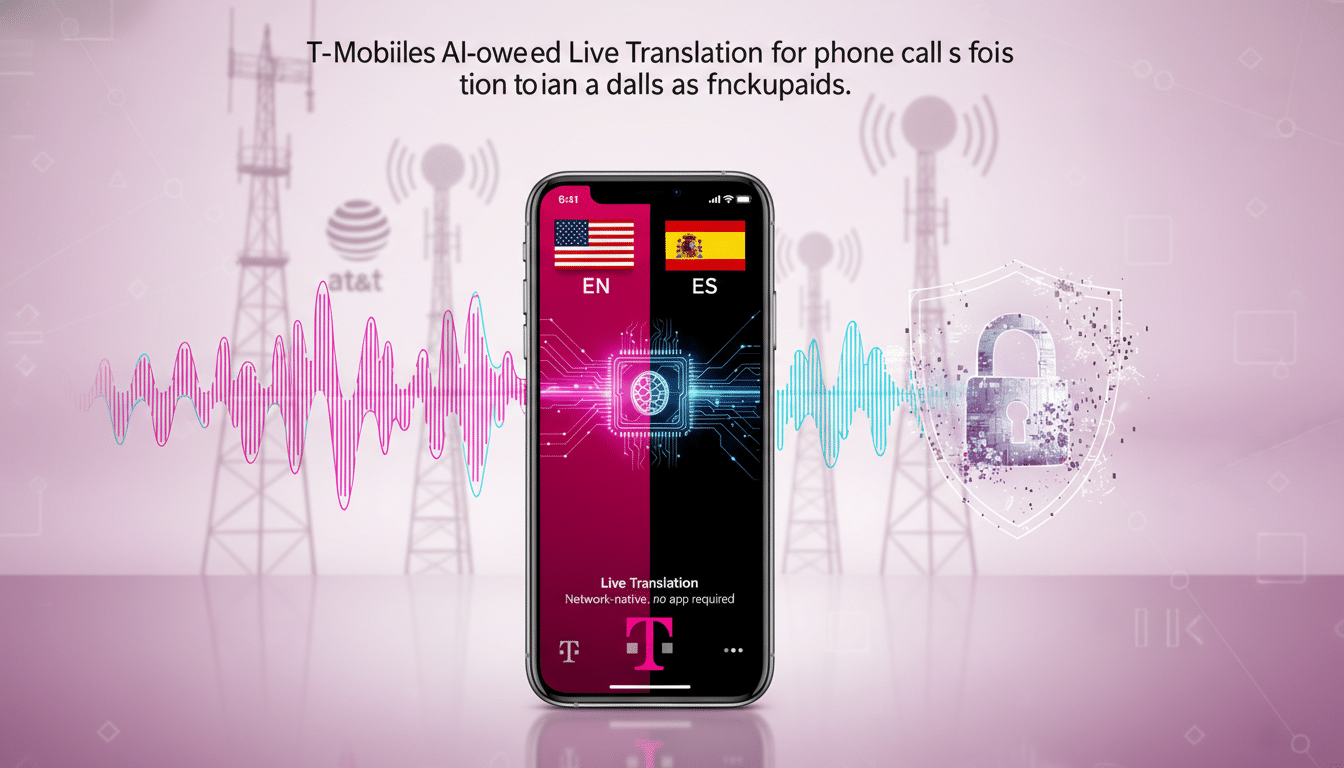
Shifting live translation into the network is more than a convenience play; it hints at how carriers will use their 5G cores and edge compute to deliver AI services with low latency and broad compatibility. Voice is still a pillar of mobile usage, and adding AI at this layer could make basic calls more useful than over-the-top alternatives in certain situations.
The addressable need is large. According to the U.S. Census Bureau, more than 20% of residents speak a language other than English at home, and global mobile traffic continues to climb each year, as noted in GSMA and Ericsson mobility reports. Network-native translation could become table stakes for carriers competing on differentiated services rather than just coverage maps.
Performance and Accuracy Considerations for Live Calls
Live translation quality hinges on speech recognition accuracy, language models, and latency. Running inference in the operator’s infrastructure can reduce round-trip time to tens of milliseconds, but real-world performance will vary with signal conditions, background noise, accents, and idioms. Early testers will be watching for edge cases — rapid code-switching, domain-specific jargon, or cultural nuances that trip up literal models.
Privacy and data handling will also face scrutiny. Network-side AI means voice streams are processed beyond the device, so clear disclosures on retention, encryption, and opt-out controls will be essential. Expect the carrier to publish more detail on how transcriptions and model improvements are managed as the beta progresses.
What Comes Next for T-Mobile’s Network Translation
Competitors are unlikely to sit this out. As AI utilities migrate into the network, carriers could layer premium tiers or bundle translation with international calling plans. Voice activation, expanded language packs, and enterprise-grade features — think call summaries, CRM integration, or compliance options — would be logical follow-ons.
For now, the headline is simple: live, two-way call translation that works on almost any phone and doesn’t require an app. If the beta holds up under real-world conditions, it may redefine what a “normal” phone call can do — and put pressure on the rest of the industry to catch up.
