


Spotify says artificial intelligence has become the primary engine behind much of its software development, with executives describing a workflow where top engineers increasingly orchestrate code rather than type it. Despite less hands-on coding, the company has maintained its release pace, tallying more than 50 feature rollouts in the past year.
Inside Spotify’s AI Coding Stack for Faster Releases
At the center of the shift is an internal system called Honk, a developer platform that layers AI-assisted code generation on top of Spotify’s tooling and deployment pipelines. Honk taps Anthropic’s Claude Code to propose patches, author new modules, and spin up ephemeral environments that validate changes against tests and policies before anything gets close to production.
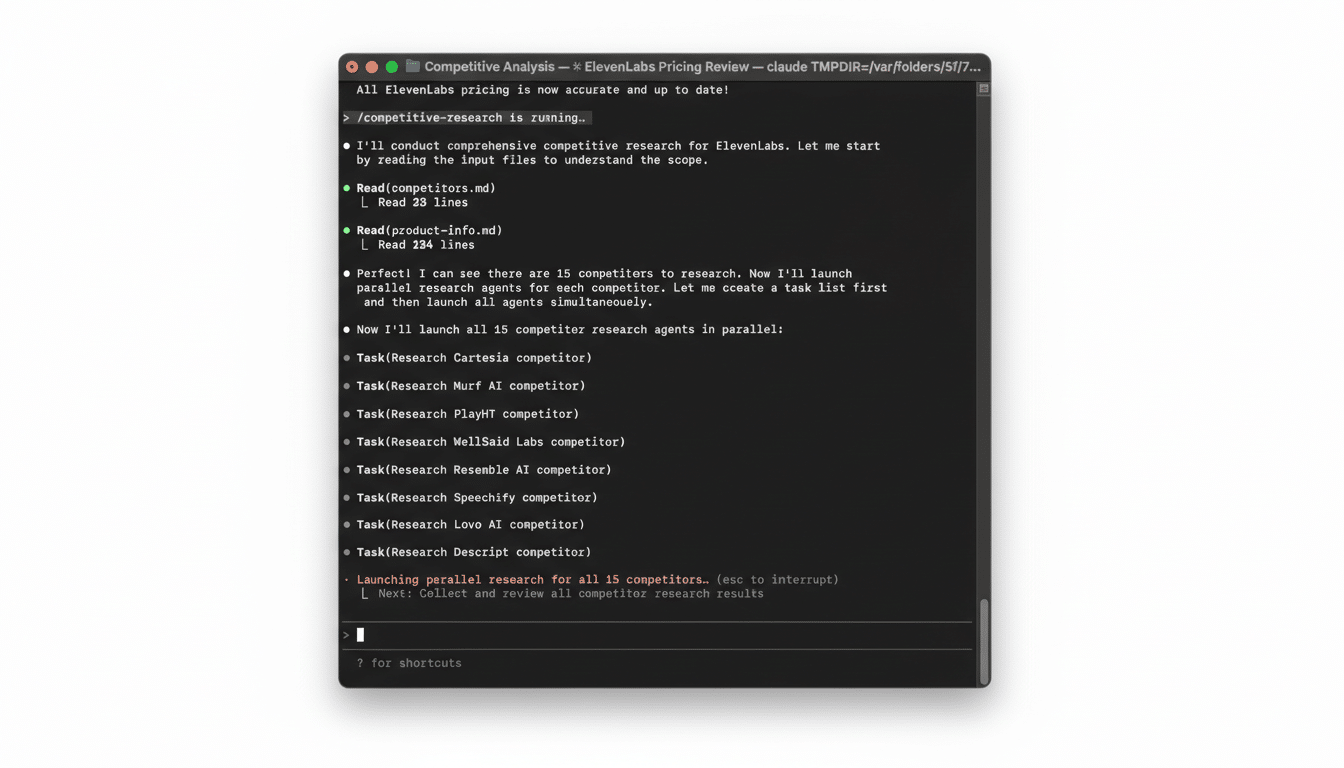
Executives described scenarios where an engineer prompts the assistant during a commute, the AI drafts and validates a fix, and a ready-to-ship build awaits human review on arrival. The model writes code; the developer curates intent, monitors impact, and approves the release. That inversion of effort—machines proposing, humans supervising—reflects a new normal for velocity at scale.
What the Productivity Data Suggests About AI Coding
Spotify’s claims align with broader industry data. GitHub has reported that AI pair-programming can account for a substantial share of accepted code in supported languages and help developers complete tasks up to 55% faster in controlled studies. Stack Overflow’s most recent Developer Survey indicates that over 70% of developers use or plan to use AI assistants in their workflow.
Major platforms are leaning in as well. Anthropic built parts of its own tools with Claude, and leaders at Meta and Microsoft have said AI now handles a growing portion of routine coding. The throughline: as models get better at reading context and adhering to project conventions, engineers spend more time on system design, edge cases, and integration quality rather than boilerplate.
Why Guardrails Can Make or Break AI Coding Gains
AI that can self-author and propose deployments raises obvious questions about safety. The practical answer is layered governance: strict test coverage, policy-as-code, feature flags, canary releases, and rapid rollback paths. Many organizations also gate AI changes behind mandatory reviews, audit trails, and automated static and dynamic analysis before a merge is allowed.
For sensitive code paths—payments, authentication, and rights management—companies increasingly segment repositories and redact secrets to minimize exposure to model context windows. The most mature AI coding setups resemble high-speed conveyor belts with brakes everywhere: fast by default, but constantly measured and easily stopped when telemetry deviates from expected baselines.
Beyond Code: Spotify’s Wider AI Push Across the Platform
Spotify also highlighted how its in-house language models grapple with music-specific queries that often don’t have a single correct answer—taste, mood, and culture rarely do. That subjectivity trains models to reason probabilistically rather than chase a canonical truth, which can help recommendation systems surface more contextually relevant playlists and shows.
On the content side, the company allows AI-generated tracks with clear labeling in metadata, while continuing to police the platform for spam and manipulative uploads. That dual stance—permit creativity, deter abuse—mirrors how many media platforms are threading the needle between innovation and integrity as synthetic content scales.
The commercial backdrop is robust: Spotify credited its latest Wrapped campaign with adding 38 million users in the quarter it ran. The service now reports 751 million monthly active users, including 290 million paying subscribers, figures that amplify the stakes of shipping faster without breaking trust.
Why This Shift Matters for Engineers and Product Teams
When senior engineers stop hand-writing most of their code, the job tilts toward architecture, policy design, and outcome assurance. That changes hiring profiles, performance metrics, and the division of labor between product, platform, and security teams. It also reframes the value of proprietary context—coding assistants are only as strong as the guardrails, data, and rituals surrounding them.
Spotify’s message is not that humans are out of the loop. It’s that the loop has been redrawn: AI drafts and deploys at machine speed; people decide what should exist, define how to prove it’s safe, and ultimately take responsibility for what ships. If that balance holds, the heavy lifting may keep shifting to AI—while accountability stays human.
