


Spotify is rolling out Prompted Playlist, a new AI tool that builds highly specific mixes from short written prompts, blending each listener’s history with real-time cultural trends. The beta is available to Premium users in the US and Canada, expanding tests that began in New Zealand, and marks the company’s most granular approach yet to user-directed curation.
How Spotify’s Prompted Playlists Work Behind the Scenes
Type a prompt—ideally detailed—and Spotify’s system cross-references your play history, likes, skips, and session behavior with what’s breaking across charts, social platforms, and editorial signals. The result is a custom playlist that reflects both your taste profile and the cultural moment, rather than a generic “for you” mix.
- How Spotify’s Prompted Playlists Work Behind the Scenes
- What You Can Ask It to Build: Examples and Use Cases
- Why It Matters for Music Discovery and Personalization
- Availability and How to Try It: Regions, Steps, and Beta
- Privacy and Control: Managing Data and Personalization
- Pricing Context: Premium Plans and Recent US Changes
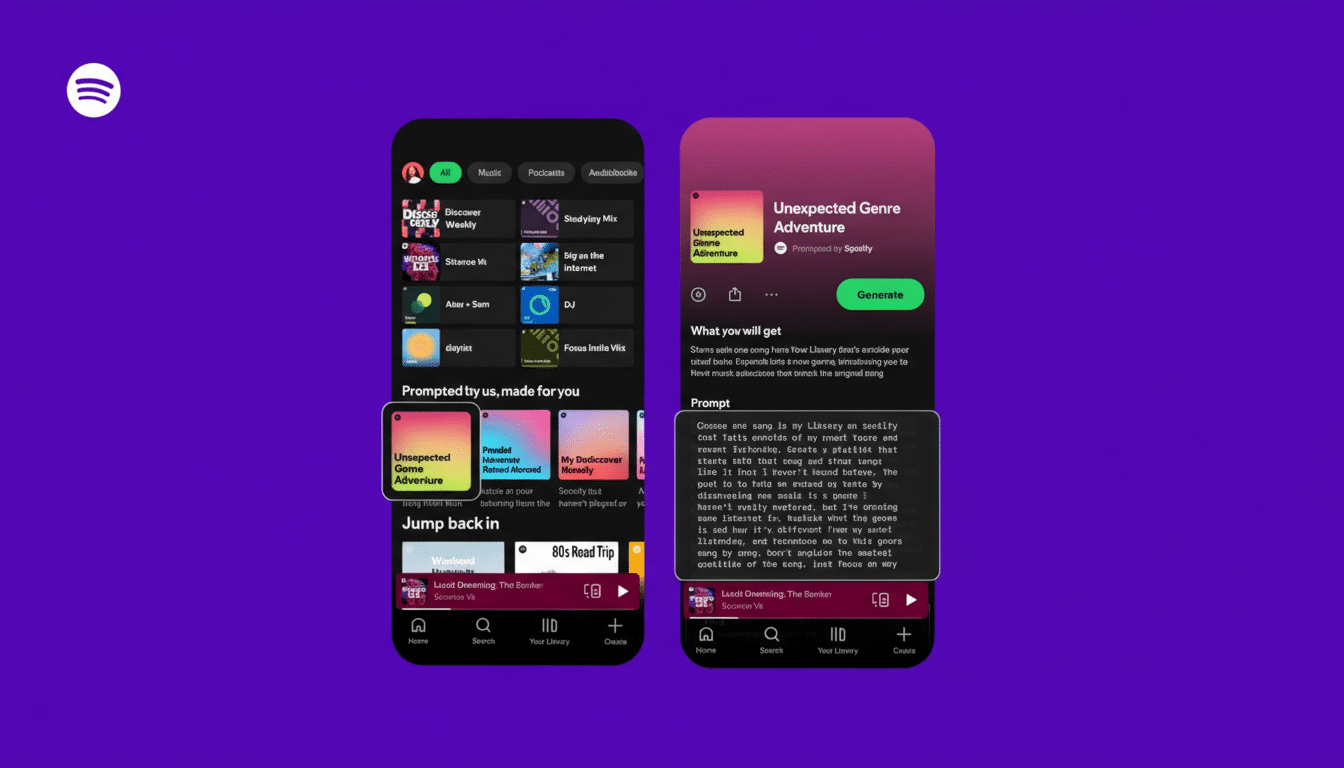
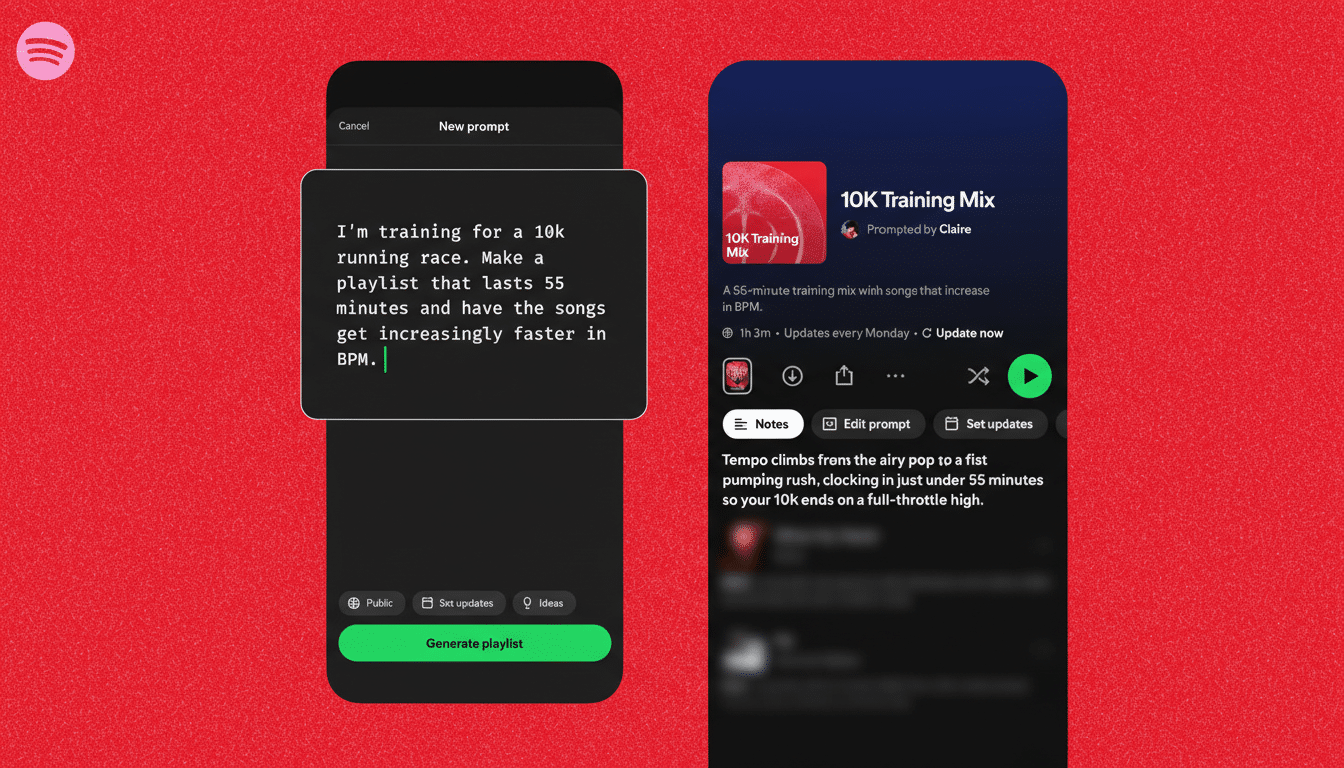
Transparency is a core design choice. Each playlist includes a short explanation of why individual tracks were included, a useful guardrail against black-box recommendations. You can set update rules so lists refresh automatically on a daily or weekly cadence, helping the playlist evolve with you and with the wider music conversation.
What You Can Ask It to Build: Examples and Use Cases
Spotify’s examples show how specific you can get. Think “songs featured on recent competition and reality shows that match my taste,” which merges TV-sourced heat with your personal preferences. Or prompt it to scan “my favorite songs over the years that have been sampled in other tracks,” a quick way to travel the lineage of your library. You can even resurrect “songs I’ve liked but haven’t listened to,” a gentle nudge to explore past saves.
Because the system weights cultural context, it can also reconcile trending sounds—say, tracks buzzing on TikTok or surging in regional charts—with the genres and eras you actually play. For discovery-fatigued listeners, that’s a significant shift from one-size-fits-all viral feeds.
Why It Matters for Music Discovery and Personalization
Spotify’s algorithmic staples—Discover Weekly, Daily Mix, and the AI DJ—lean heavily on passive signals. Prompted Playlist flips the script by letting users declare intent in plain language, then translating that into machine-readable rules. It’s a subtle but meaningful evolution: you steer the idea, the model does the heavy lifting.
This approach also meets listeners where culture actually moves. Short-form video and TV placements now spark measurable surges in streams, and catalog dominates listening. Luminate’s recent reporting shows catalog accounting for well over 70% of on-demand audio consumption in the US, while platforms continue to drive new discovery at scale. By combining “what’s happening” with “what you like,” Spotify is effectively narrowing the discovery gap.
Scale matters here. With a library exceeding 100 million tracks, surfacing the right song at the right moment is the core product challenge. Prompted Playlist’s explanatory blurbs also echo a broader push toward explainable recommendations across tech, which research suggests can increase user trust and engagement.
Availability and How to Try It: Regions, Steps, and Beta
Prompted Playlist is in beta for Premium users in the US and Canada. To find it, go to Create in the Spotify app and look for Prompted Playlist marked with a beta tag. Enter a prompt, review the track rationale notes, and choose an update schedule if you want the mix to refresh automatically.
The feature follows earlier testing in New Zealand and arrives as Spotify continues to refine its portfolio of personalized formats. It complements, rather than replaces, existing algorithmic playlists—think of it as a way to capture a specific mood, idea, or cultural thread with far more precision.
Privacy and Control: Managing Data and Personalization
Prompted Playlist relies on the same listening data Spotify already uses for personalization. If you want to limit what shapes your profile, Spotify offers controls like Private Session and Exclude from Your Taste Profile on select playlists. The “why this track” explanations provide an additional layer of clarity, making it easier to fine-tune prompts or remove songs that don’t fit.
Pricing Context: Premium Plans and Recent US Changes
The beta is limited to Premium subscribers. Spotify has announced new pricing tiers in the US: Individual moving to $12.99 per month, with Duo and Family shifting to $18.99 and $21.99 per month. For listeners already paying for ad-free music and offline features, Prompted Playlist adds another high-touch tool to justify the subscription.
Bottom line: by fusing your habits with the zeitgeist—then telling you how it got there—Prompted Playlist turns the algorithm into a collaborator. That’s a small change in interface, but a big step in how music discovery feels.
