


Spotify is making its in-app Messages more than a place to text for a song recommendation. The business of enabling interaction in the app ranges from new, real-time Listening Activity inside your threads (so friends and family can see what you’re playing as it happens) to a feature that gets tunes going faster and calls for them more easily via Request to Jam. Group chat support is also on the roadmap, suggesting a larger move into social music within Spotify itself.
What Listening Activity Adds to Spotify Messages
Listening Activity is opt-in and similar to the presence-like features users will recognize from the desktop Friends Activity feed, but in Messages. When enabled, you can play your current track in real time to friends in your one-on-one chats. If you’ve paused or taken off, Spotify instead shows your most recently played song.
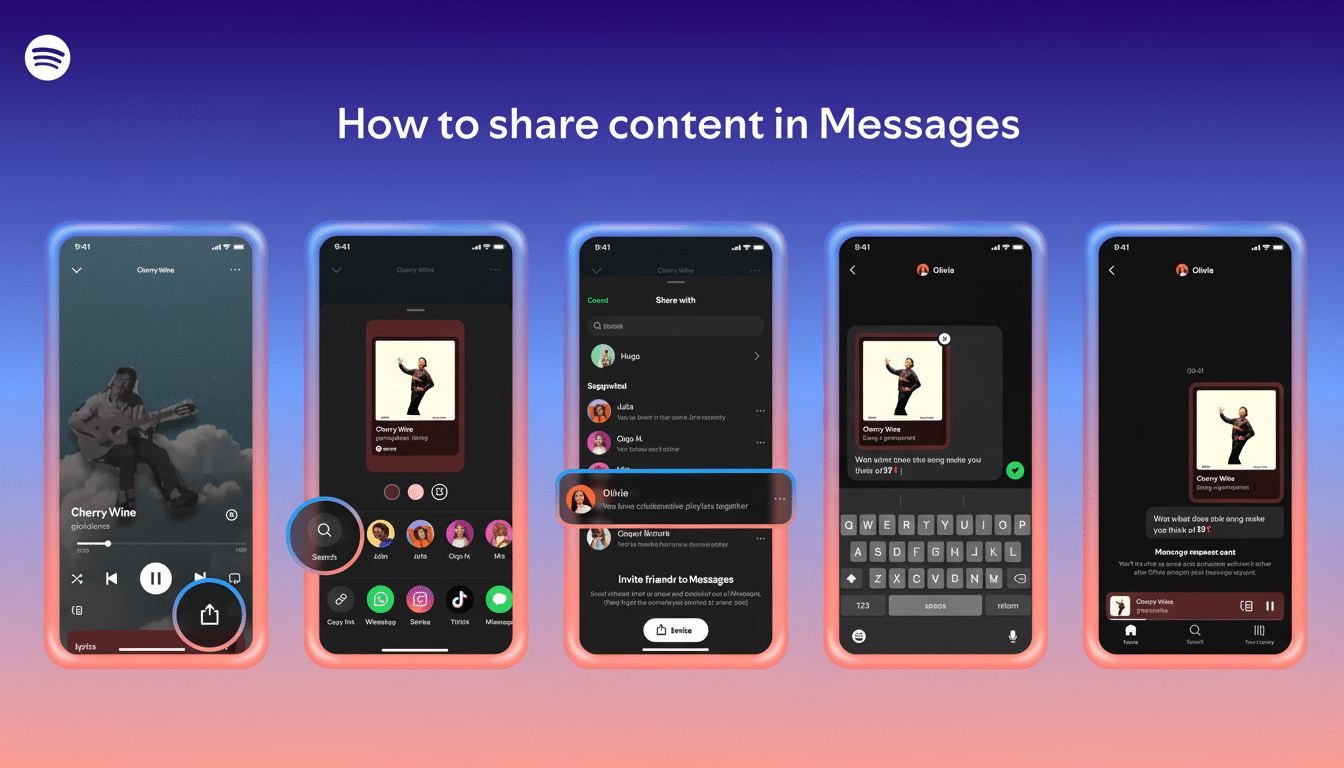
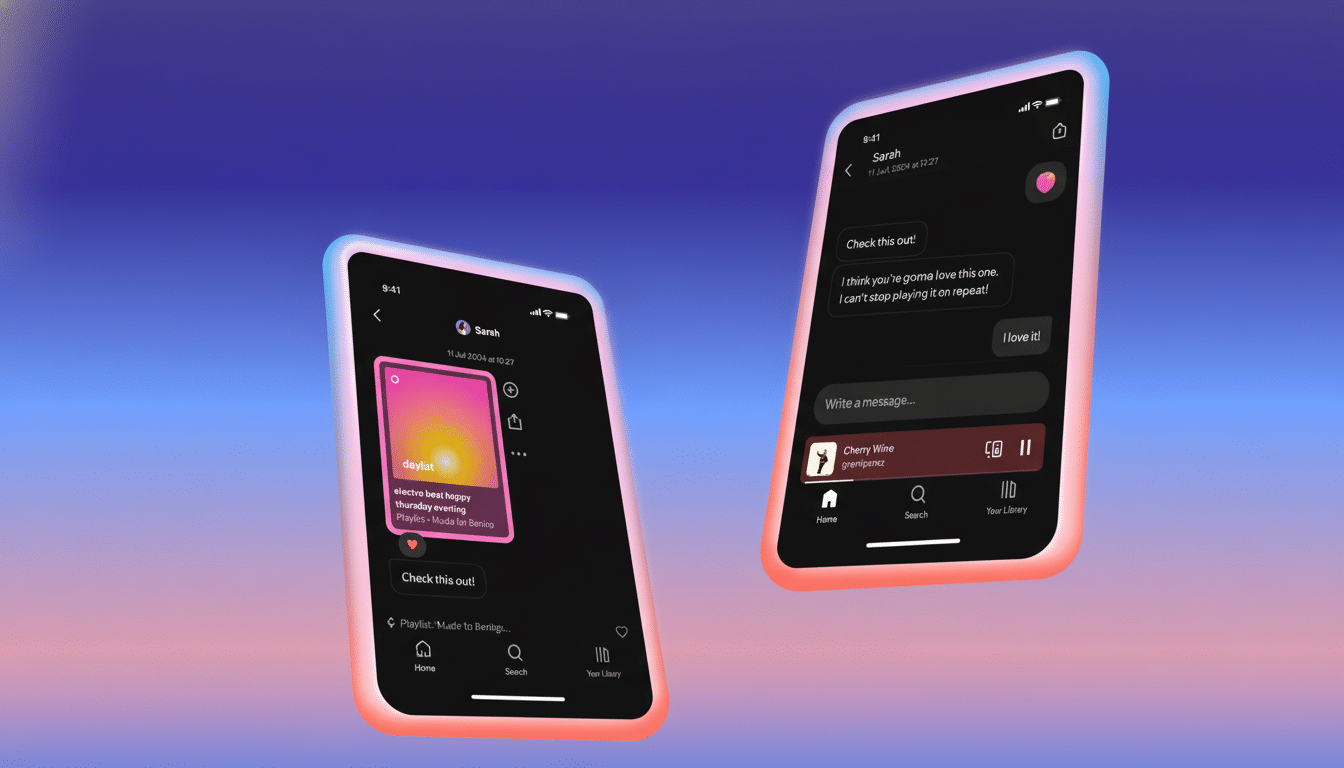
Tap a friend’s Listening Activity card and you can instantly begin playback, add the track to your library, access the context menu for richer actions, or react with one of six emoji. And your view is strictly limited to folks you’re already connected with through Spotify Messages. Mind you, if you haven’t activated your own and someone else has opted in, they might observe your activity, based on what I can see.
The result is an always-updating, lightweight snapshot of what your personal circle is listening to — but without leaving the conversation. For a service where discovery so often happens peer-to-peer, that’s meaningful friction dissolved.
Faster shared listening with Spotify’s Request to Jam
The new Request to Jam button appears at the top of a Messages thread. Tap it to request a contact initiate a remote Jam session. If they agree, they’ll be the host, and you can both add tracks to a mutual queue and listen in sync. Invites are lost if they go unclaimed, preventing the experience from lingering and clogging up chats.
Importantly, Free users can participate in a Request to Jam party once invited by a Premium subscriber, reducing the threshold for group listening. Now that Listening Activity telegraphs when someone is playing music, you can more easily time your Jamming without a dance of calls across apps.
Privacy and availability of the new features
Listening Activity is opt-in from the beginning and only surfaces to people with whom you’ve already connected by Messages. You can also opt out if you don’t want others to see your activity while continuing to see who has opted in. Spotify says the features are coming to iOS and Android in markets where Messages is available, with an expanded rollout as it continues.
The approach is on brand with Spotify’s piecemeal model of social features: layer presence into an existing user flow, rather than build a separate social network. It’s in the same vein as the existing threadbare desktop Friends Activity pane but housed where users are already discussing music.
Group chatting in Spotify Messages is coming soon
Group chat support for Messages is also coming to Spotify, the company says, although it’s not offering a public timeline for when that experience would arrive in some markets.
When it does, Listening Activity could conceivably integrate into group threads, and Request to Jam could be designed to scale upwards yet — perhaps as an invite-based larger room that works well for friend groups, sessions, or the closest thing we have to a virtual watch-party style listening experience.
This would essentially inject some of the spontaneity of listening in real time in Discord communities (where Spotify is already supported for Listen Along) directly into Spotify’s own platform, lessening the burden on coordinating this through third-party apps.
Why these updates to Spotify Messages matter now
Social presence is the glue of modern media apps. By putting live status and co-listening right inside Messages, Spotify is betting serendipity will draw in more streams, more saves and stickier daily use. The strategy comes when Spotify has an enormous audience (its latest earnings reported hundreds of millions of monthly active users, including a large entourage of Premium subscribers), so even marginal enhancements from social discovery can push the needle.
The set of features are also timely given the moves being made by rivals. Apple Music taps SharePlay in Messages and FaceTime for synchronous listening, while YouTube’s ecosystem accommodates shared links and collaborative playlists. Spotify’s version keeps the loop closed: see what a friend is playing, react and jump into a Jam without leaving the app.
The bigger story is momentum. Messages was introduced last year with rudimentary chat. Now it’s getting real-time signals and synchronized sessions, with groups on the horizon. For an app whose foundation is taste, the fastest way to lift its recommendations and retention could be one of the oldest: listening with friends.
