


Skylight is a brand new digital calendar (think: Google Calendar for your home) that just announced a new product at CES. The company also tells me it’s raised $16.6 million total from the Chernin Group, Upfront.
Skylight leveraged the CES spotlight to introduce Calendar 2, a refreshed version of its large 15-inch digital family calendar with a sleeker design, more speed, and swappable frames—but starting at the same $299.99 price tag.
- What’s new in Calendar 2: slimmer design and swappable frames
- Performance and display upgrades for faster, clearer use
- Price and availability: standard and brass editions timeline
- Design tweaks for real homes based on customer feedback
- Where it fits in the family tech stack and daily routines
- Bottom line: a thoughtful update focused on fit and speed
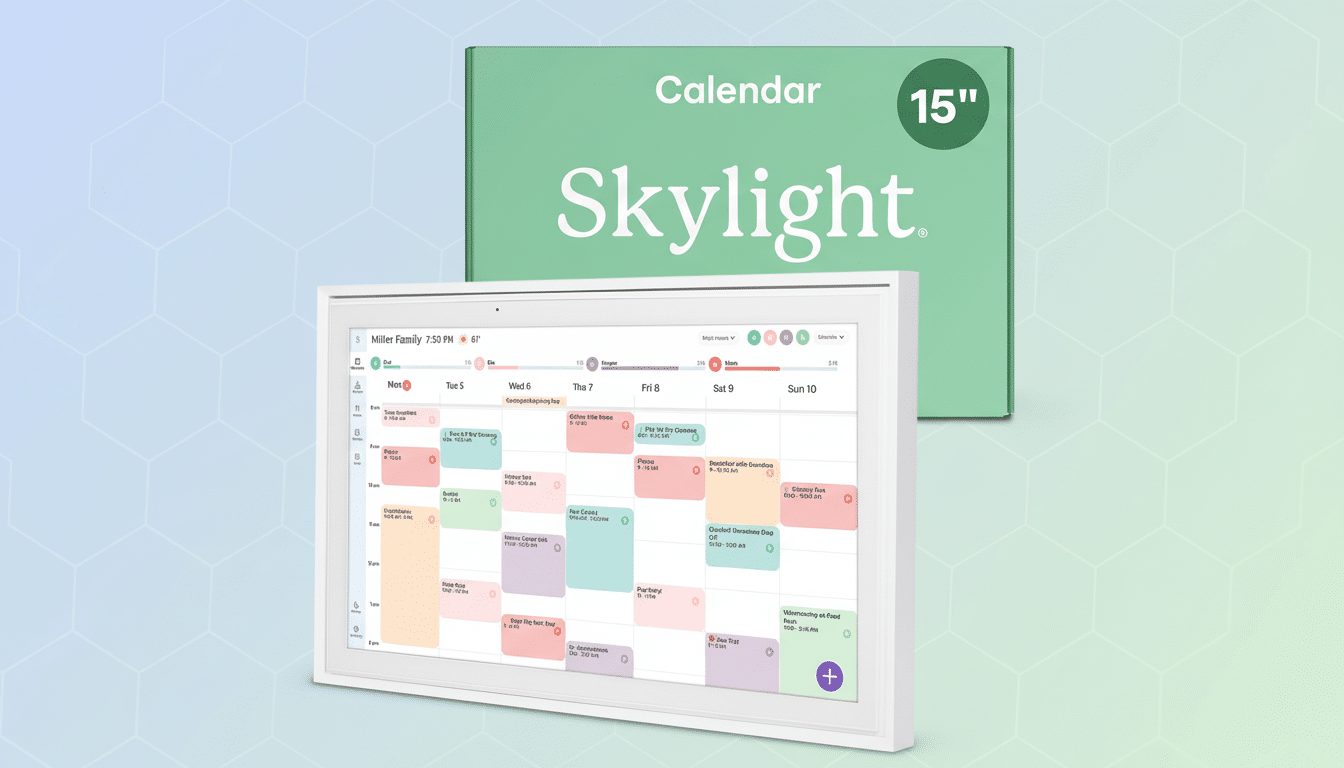
A $339.99 limited-edition brass model connected to Joanna Gaines’ Hearth & Hand with Magnolia brand is already at Target, while a standard variety will arrive in stores come February.
What’s new in Calendar 2: slimmer design and swappable frames
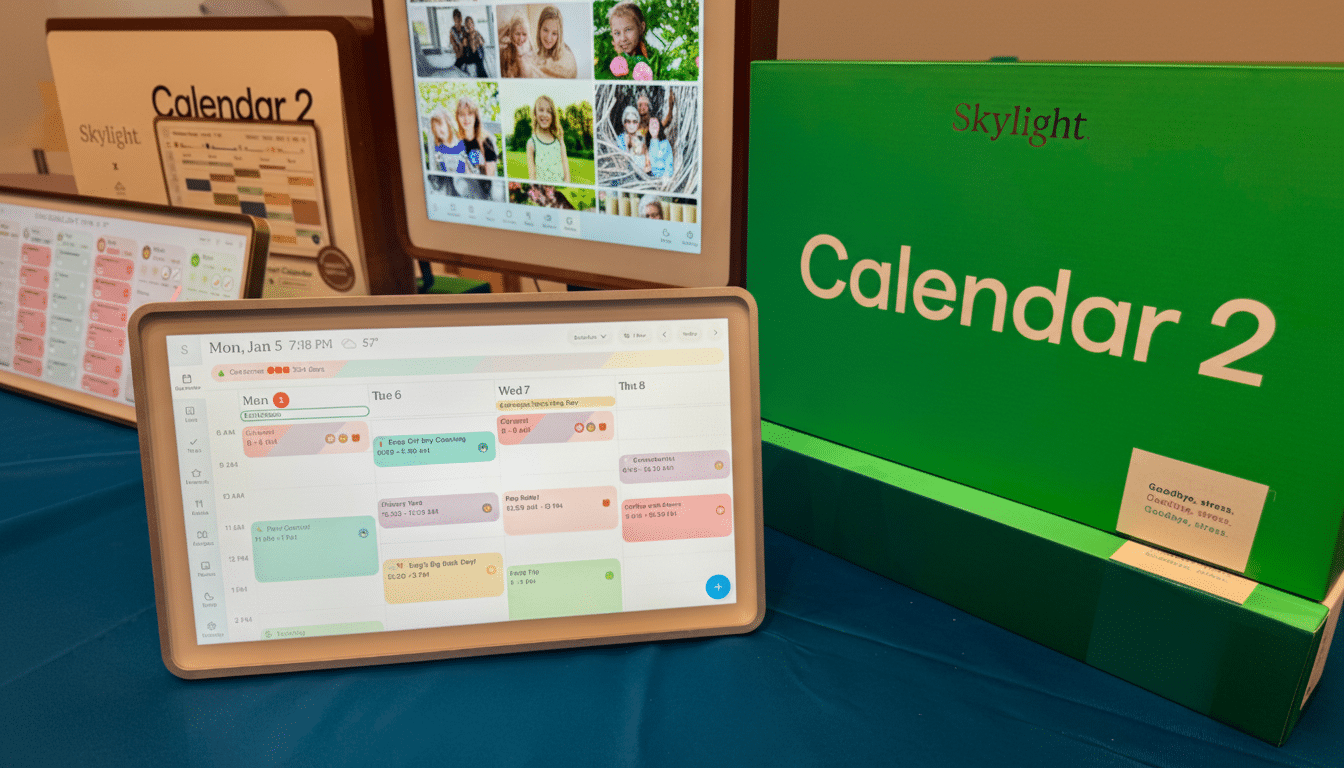
The second-gen model is as much about home decor as it is function. Changeable magnetic frames allow owners to swap styles without any tools, while an adjustable tabletop stand tilts up to 180 degrees for counters, shelves, or command-center walls. The chassis now matches the curved design of Skylight’s bigger Calendar Max, and it’s 20% slimmer than the preceding 15-inch release for a streamlined, photograph border-like profile.
Skylight does seem to have tackled assembly quibbles from previous reviews of the original model, when some owners complained of a fiddly fit between the screen and frame. At CES’ Pepcom showing, the snap-on magnetic system felt simple and secure enough form-factor-wise, with bezels snapping evenly into place and removing with a light tug.
Performance and display upgrades for faster, clearer use
Under the hood, Calendar 2 is equipped with a processor that the company says will let you navigate about three times faster. That adds up when you’re making quick edits to a busy family schedule, where tapping through color-coded calendars, to-do lists, and meal plans should feel instantaneous. The touchscreen is also said to be clearer, brighter, and better at reproducing color, which enhances readability across rooms as well as delineating the various categories more clearly at a glance.
Skylight hasn’t listed full display specs, but the improvements reflect a general trend among smart home screens toward more contrast and better off-axis viewing—useful in kitchens and mudrooms where lighting is seldom perfect. In real-world use, improved luminance and color accuracy should reduce the “squint factor” you may encounter with wall-mounted smart displays.
Price and availability: standard and brass editions timeline
Standard version: The Calendar 2 standard model will sell for $299.99, keeping the same price as the first-gen, even though it’s a hardware overhaul. The brass-frame version that comes with six exclusive screensavers — a stylized wave, an analog clock face, and sunsets, for example — is already on shelves at Target, which sells it through a partnership with Hearth & Hand with Magnolia, for $339.99. The standard model will roll out for the masses sometime in February after it makes its public debut at Pepcom during CES.
Design tweaks for real homes based on customer feedback
The redesign, Skylight says, was based on a key piece of customer feedback: a family calendar should look like something that belongs in your home, not just resting on a tech shelf. “Snapshots become art,” its online copy reads.
Interchangeable frames go right toward making up for that by allowing households to match seasonal palettes (or surrounding finishes), and the 180° stand makes it convenient to reposition between a countertop and a wall over time.
The approach is in line with what the Consumer Technology Association has called out over the last few years at CES: smart home devices succeed when they don’t look like “smart” gadgets. Branding tie-ins with design-first brands — Skylight paired with Joanna Gaines, for example — serve as a reminder that home technology is now as much about taste as it is about specs.
Where it fits in the family tech stack and daily routines
Calendar 2 occupies a space between voice-first smart displays and app-only coordination. Via a bright screen dedicated to shared events, chores, and lists, it reduces the friction of taking out a phone or switching views on a multifunction device. Put it near the fridge, or by the door — and that “ambient glance” becomes the purpose: everyone can see an equally fresh picture, all day.
Keeping price in check helps, too. Inflation is pinching consumer electronics, so maintaining the $299.99 tag while dropping 20% of the weight of the body, upgrading the processor, and attempting to pack in a better screen will be an attractive pitch to families wary of adding functionality at creeping costs.
Bottom line: a thoughtful update focused on fit and speed
Calendar 2 isn’t a groundbreaking reimagining; it’s a conscientious spanner work that deals with issues of the two things that count in a household hub — fit and speed. If the onstage demo turns into real-world ease of use, then Skylight’s new version appears to be on its way toward becoming a default selection for homes that need an uncomplicated, good-looking screen where everyone can stay on the same page.
