


A pocket-size Bitcoin “ticket miner” is drawing attention for doing what full-blown ASIC rigs can’t do quietly or cheaply. The BlockChance Bitcoin Ticket Miner, now $59.99 with free shipping at a 60% discount, promises a silent, ultra-low-power way to take a statistical shot at a full Bitcoin block reward without a dedicated computer, noisy fans, or complex setup.
What a Bitcoin Ticket Miner Actually Does
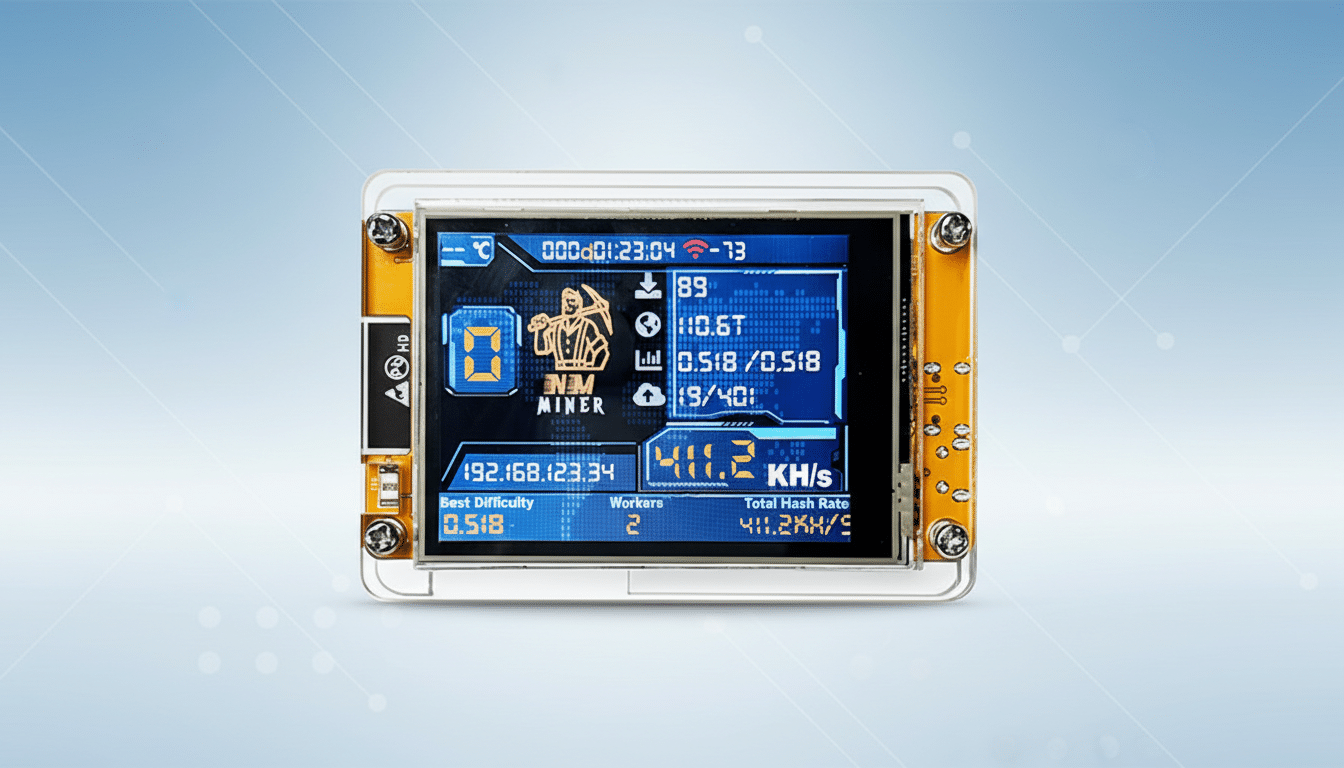
Unlike pool mining, where you earn incremental payouts for submitted shares, a ticket miner performs true solo mining. Each hash it computes is essentially a “lottery ticket” for a valid block. If one hits, you receive the entire block reward. The BlockChance unit runs official, license-free NMMiner firmware from NMTech, pushes about 1,000 kH/s (1 MH/s), and includes lifetime firmware updates. A 2.8-inch touchscreen shows hashrate and status, while Wi-Fi and Bluetooth simplify setup and over-the-air updates. No PC is required—plug it in, join your network, and it starts hashing.
- What a Bitcoin Ticket Miner Actually Does
- Why This Miner Is Quiet and Frugal by Design
- Understanding the Odds and Expected Value of Solo Mining
- Who This Silent Bitcoin Ticket Miner Is Really For
- Setup and Features in Practice for Everyday Use
- How It Compares to Traditional Bitcoin Mining Hardware
- Price and Availability for the Bitcoin Ticket Miner
- Bottom Line on This Silent Bitcoin Ticket Miner
Why This Miner Is Quiet and Frugal by Design
This category exists for one big reason: power and noise. Traditional Bitcoin ASICs (think Antminer-class machines) can draw hundreds to thousands of watts and exceed 70dB of fan noise, similar to a vacuum cleaner. The BlockChance miner sips power in the single-digit watts—less than a typical LED light bulb—and is passively cooled, so it’s essentially silent. Running 24/7 at, say, 5W uses about 3.6 kWh per month, a fraction of the energy of conventional rigs. For apartment dwellers or anyone who values a quiet workspace, that’s the appeal.
Understanding the Odds and Expected Value of Solo Mining
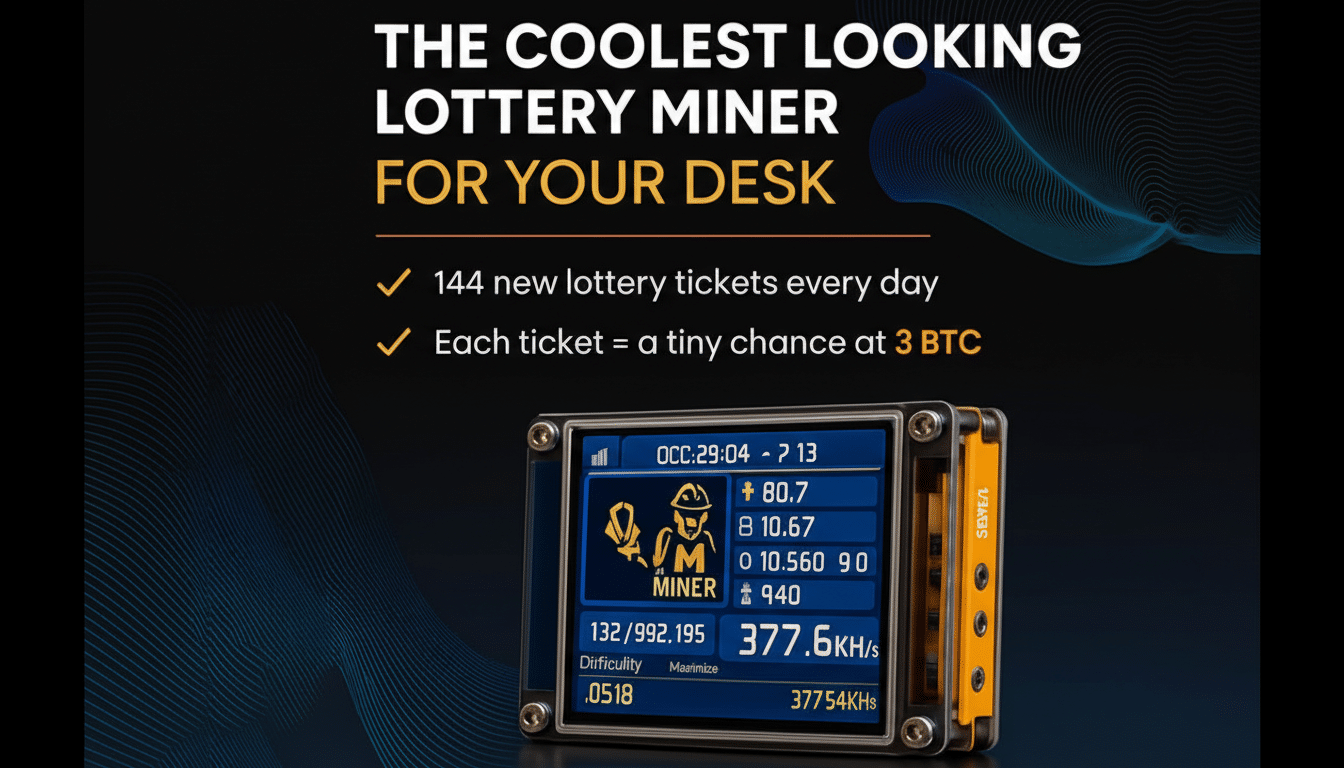
Here’s the sober math. Bitcoin’s network hashrate has hovered in the hundreds of exahashes per second—around 600 EH/s in recent months, according to public dashboards from Blockchain.com and Hashrate Index. With 1 MH/s, your share of that pie is roughly 1.7e-15. Because the network produces about 144 blocks a day, your expected wins per day are vanishingly small. In plain English: treat this like a true lottery with near-zero expected revenue.
The upside is the jackpot. After the 2024 halving, the base block reward is 3.125 BTC, and fees occasionally add meaningful extra value during congested periods, as seen in on-chain analytics from firms like Coin Metrics and Glassnode. If you solve a block while solo mining, you keep it all. The catch is probability—no device at 1 MH/s is a rational ROI machine against a multi-hundred EH/s network.
Who This Silent Bitcoin Ticket Miner Is Really For
Think of the BlockChance unit as an educational and hobbyist tool, not a profit engine. It’s ideal if you want to learn how mining works, contribute a sliver of decentralized hashrate, or run a conversation-starting gadget on your desk that quietly hums along. It’s also a safe way to tinker: no loud fans, minimal heat, negligible energy bills, and no third-party payout schedules to track. For parents teaching teens about Bitcoin, home-lab builders, or crypto-curious newcomers, it’s a low-friction on-ramp.
Setup and Features in Practice for Everyday Use
Unbox, power up, and connect to Wi-Fi via the touchscreen—Bluetooth is there if you prefer pairing during initial configuration. The dashboard shows live hashrate and submitted tickets, so you can monitor activity without a PC. Because it’s a self-contained miner, there’s no need to manage pool accounts or run a dedicated node to get started, though advanced users can point the device at their own solo-mining setups. NMTech’s firmware lineage is a plus: ongoing updates can improve stability and compatibility over time.
How It Compares to Traditional Bitcoin Mining Hardware
Serious miners use modern ASICs measured in terahashes per second, often hosted in facilities with industrial cooling and negotiated power rates. The Cambridge Bitcoin Electricity Consumption Index underscores why: at scale, efficiency dictates survival as difficulty ratchets upward. A micro miner like this cannot compete head-to-head on throughput. What it offers instead is approachability—silent operation, trivial setup, and a cost of entry roughly equal to a couple of streaming subscriptions.
Price and Availability for the Bitcoin Ticket Miner
The BlockChance Bitcoin Ticket Miner is currently listed at $59.99 with free shipping, reflecting a 60% cut from its stated MSRP. For hobbyists and educators, that’s a reasonable price for a purpose-built, always-on device that demonstrates real Bitcoin proof-of-work without the noise and energy penalty of conventional rigs.
Bottom Line on This Silent Bitcoin Ticket Miner
If you want a quiet, set-and-forget way to participate in Bitcoin’s mining process, this $60 ticket miner is a clever, low-risk start. Go in for the learning experience and the novelty of owning a solo miner. If you’re chasing payouts, the math hasn’t changed—this is a lottery. But as a silent, power-thrifty window into how blocks are found, it’s a neat little machine with just enough hashrate to keep hope alive and curiosity satisfied.
