


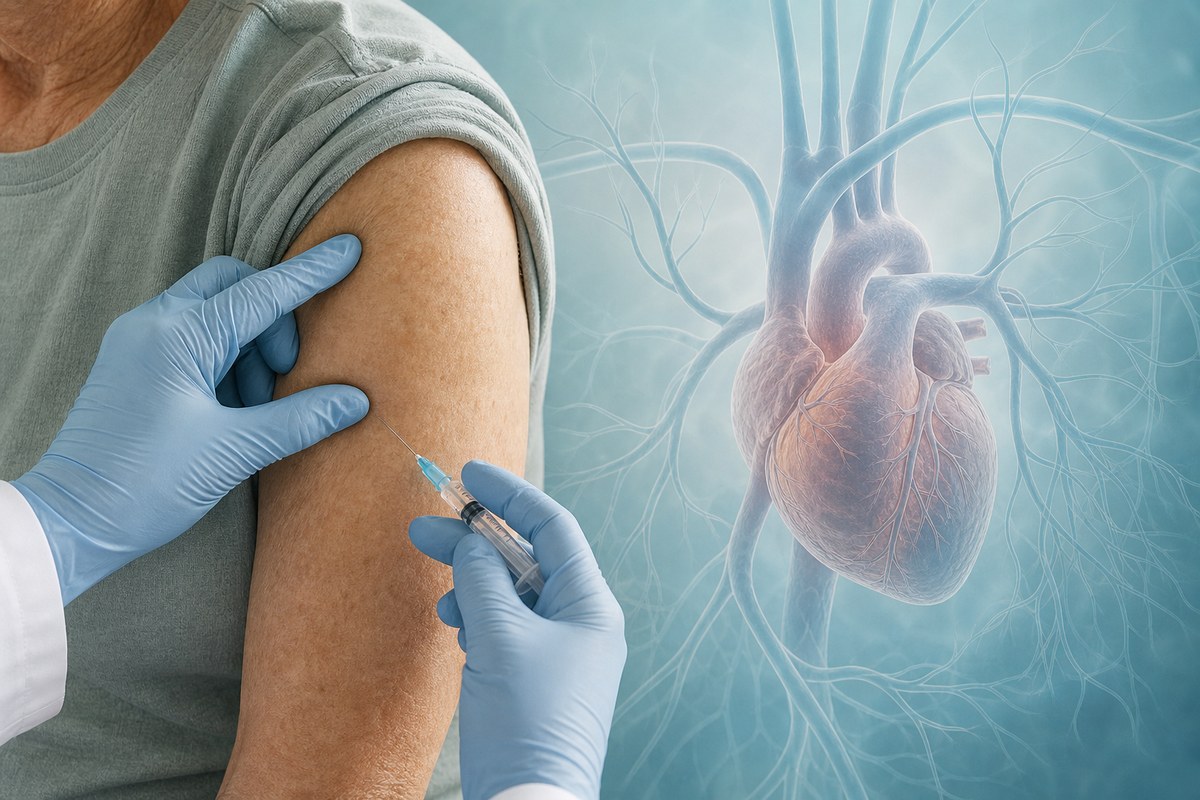
A newer shingles vaccine, Shingrix, was associated with fewer subsequent cardiovascular outcomes than the older vaccine Zostavax among U.S. adults 60 and older in an Oxford-led observational study reported Aug. 26. The result is potentially important because heart disease and stroke are common in the age group eligible for shingles vaccination, but it does not show that Shingrix itself prevented those events.
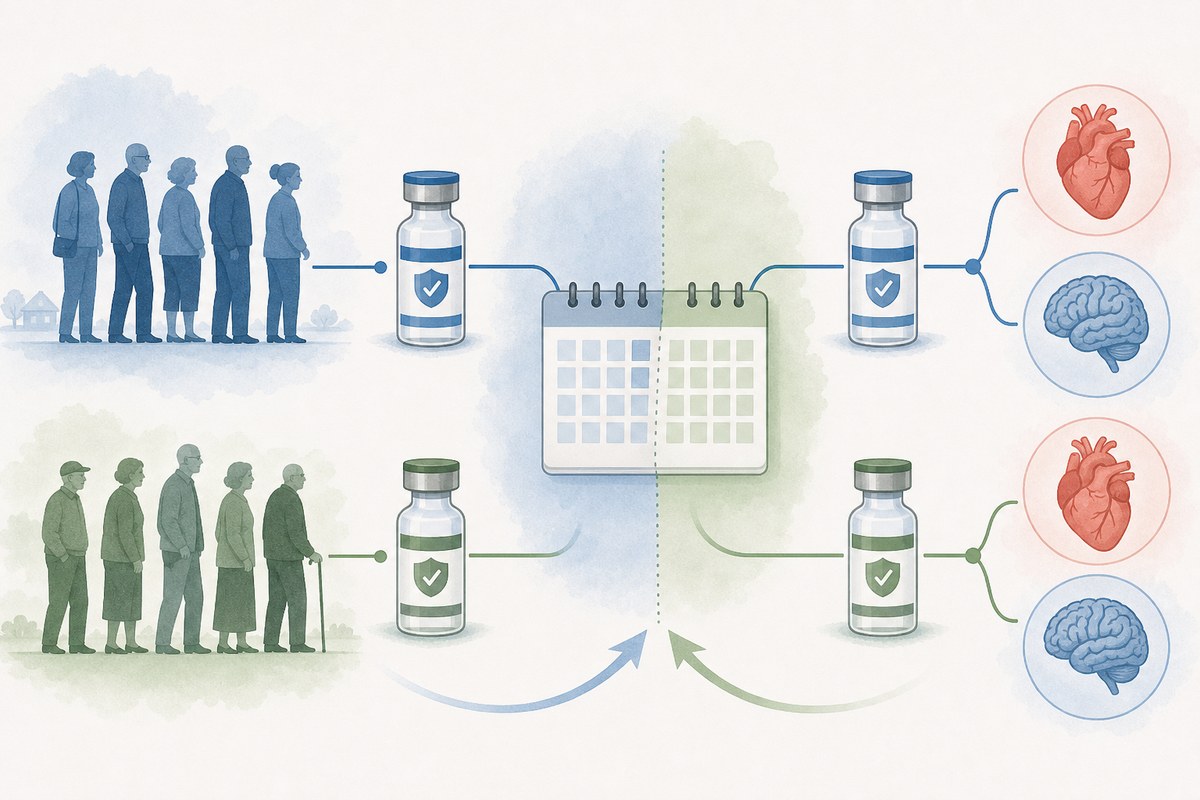
The analysis took advantage of the 2017 U.S. changeover from Zostavax, a live vaccine, to Shingrix, a recombinant vaccine. Instead of comparing vaccinated people with people who chose not to be vaccinated—a comparison vulnerable to major health and access differences—the researchers compared matched groups vaccinated around the transition. Accounts by The Guardian and STAT describe the findings as published in Nature Medicine.
What the study found
The study drew on electronic health records for roughly 70,000 older vaccinated adults, although the two reports give slightly different rounded totals. Participants who received Shingrix had lower measures of cardiovascular disease during follow-up than comparable recipients of Zostavax, according to both accounts. The key comparison was between the two vaccines, not between vaccination and no vaccination.
The reported numerical estimates differ because they appear to refer to different outcome groupings and periods of follow-up. The Guardian reported a 12% relative reduction in cardiovascular events—including heart attacks, heart failure and stroke—over the first three and a half years after vaccination. It also reported a 4% lower cardiovascular-disease risk by the end of follow-up.
STAT reported a 9% lower overall cardiovascular burden after seven years for Shingrix recipients compared with Zostavax recipients. Its account included associations with 10% less coronary heart disease, 12% less heart failure and 7% less atrial fibrillation. The reported reduction in stroke was not statistically significant among women. Without the full study paper’s endpoint definitions and analytic tables, those figures should not be treated as interchangeable estimates of one single effect.
Relative percentages can sound larger than the difference experienced by an individual patient. STAT reported that the seven-year comparison translated to about 1% fewer cardiovascular events in absolute terms. A difference of that size could still be consequential across a large population of older adults, but it is very different from saying that one in 10 vaccinated people avoided a heart attack or stroke.
Why the design is more informative, but not conclusive
Earlier research has often compared vaccinated and unvaccinated people. Such studies can be distorted by the “healthy-vaccinee” effect: people who seek vaccination may differ in preventive care, income, contact with clinicians, underlying illness or other factors that also shape cardiovascular risk.
The Oxford team used the replacement of Zostavax by Shingrix as a natural experiment. People vaccinated shortly before and shortly after that switch may be more alike than people who decide to vaccinate and those who do not. Matching participants on available characteristics further attempts to make the groups comparable.
That approach can reduce confounding, but it cannot remove it as fully as random assignment. Changes in medical practice, patient characteristics or health-care use during the transition could still influence the observed gap. Electronic health records can also miss diagnoses or care received outside participating systems. STAT reported that the TriNetX data network used in the work does not include people with public health insurance, a limitation for applying the findings to the broader U.S. population.
The biological explanation is also unsettled. Shingles itself may be linked to short-term vascular risk, so preventing infection could conceivably affect later events. Researchers have also raised the possibility of broader immune effects from Shingrix and its adjuvant, an ingredient designed to strengthen immune response. Those are hypotheses, not established mechanisms.
A pattern worth testing in randomized trials
The new analysis fits with an earlier signal but does not settle the question. A 2025 European Society of Cardiology review and meta-analysis found an association between shingles vaccination and lower risks of heart attack and stroke. The society noted that most of the studies included were observational, meaning their combined results also could not establish a causal benefit.
Randomized trials are better positioned to answer whether Shingrix changes cardiovascular risk because chance determines which participants receive the intervention. STAT reported that a Danish trial called DAN ZOSTER has enrolled about 162,000 people and is expected to produce initial results in 2027. Its findings could clarify whether the association is caused by the vaccine, whether it applies across populations and which cardiovascular outcomes, if any, are affected.
For now, Shingrix remains an established vaccine for preventing shingles and its complications, not a treatment for heart disease. The study does not support using it in place of blood-pressure control, cholesterol-lowering treatment when indicated, smoking cessation, diabetes care or prescribed cardiovascular medicines. Its most useful implication is narrower: a vaccine already used for shingles prevention may have an additional benefit that merits a definitive test.

