


Abbott said the Food and Drug Administration has authorized its Libre Duo 10 Day wearable through the De Novo pathway, clearing the way for a U.S. launch later this year of a sensor designed to monitor glucose and ketones continuously. The device is intended for people with diabetes age 2 and older who use insulin or other glucose-lowering medicines.
The development could give patients and clinicians a new way to spot a rise in ketones, substances produced when the body does not have enough usable insulin. High ketone levels can precede diabetic ketoacidosis, or DKA, a serious acute complication that requires prompt care. But the evidence described publicly for the authorization concerns the sensor’s measurement performance, not whether wearing it prevents DKA, reduces hospital admissions or saves lives.
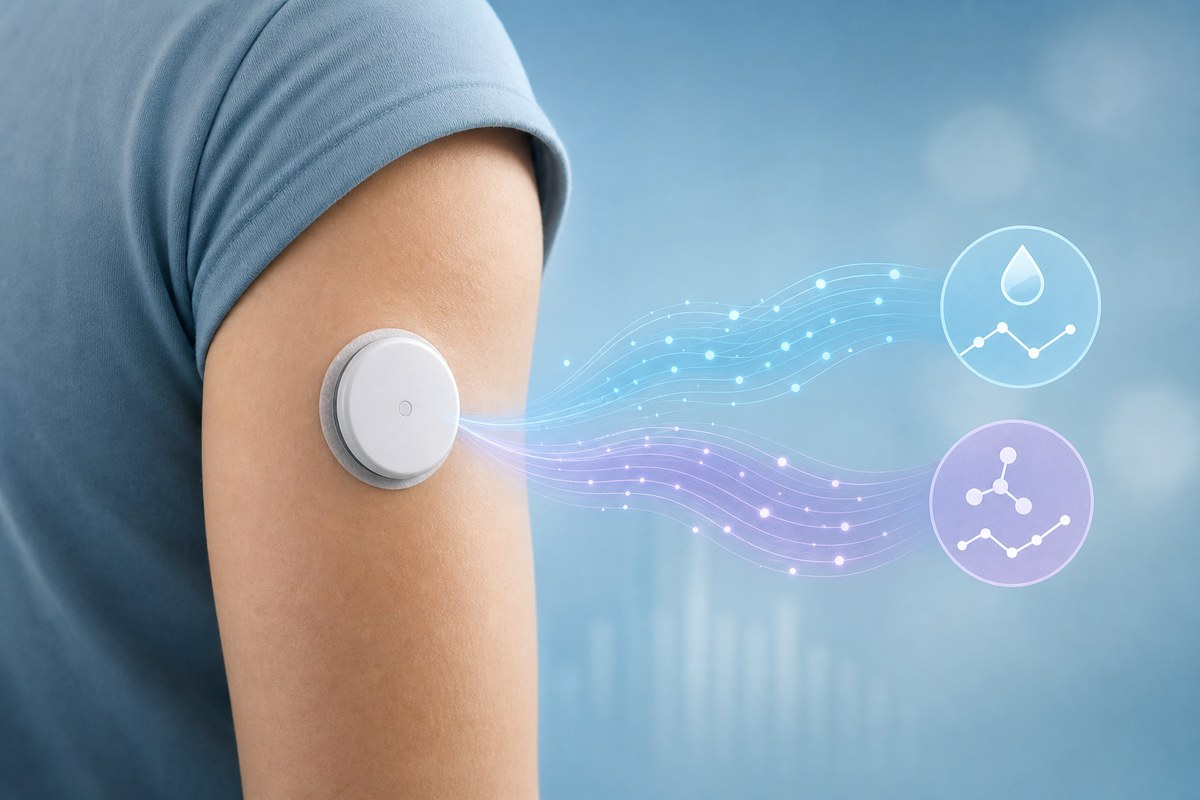
Abbott’s Aug. 25 announcement described Libre Duo 10 Day as a single sensor worn for up to 10 days. MedTech Dive independently reported the FDA action and said the agency reviewed six clinical studies involving more than 600 participants age 2 and older. Abbott has not announced a firm launch date, price or insurance-coverage arrangements.
Why simultaneous ketone monitoring could be useful
People with diabetes may check ketones with blood or urine tests during illness, sustained high glucose readings or other circumstances that raise concern about DKA. Those tests provide a result at one moment. A continuously worn sensor is intended to show how ketones are changing over time alongside glucose, potentially alerting a user before a single spot check might be performed.
That distinction is especially relevant because glucose and ketones reflect related but different metabolic signals. Glucose readings help guide day-to-day diabetes management, while ketones can increase when insulin is insufficient. Conventional continuous glucose monitors generally measure glucose in the fluid between cells and update at intervals of roughly one to five minutes, according to an NIH-hosted Endotext review of continuous glucose monitoring. Libre Duo 10 Day is designed to extend continuous sensing to ketones in the same wearable.
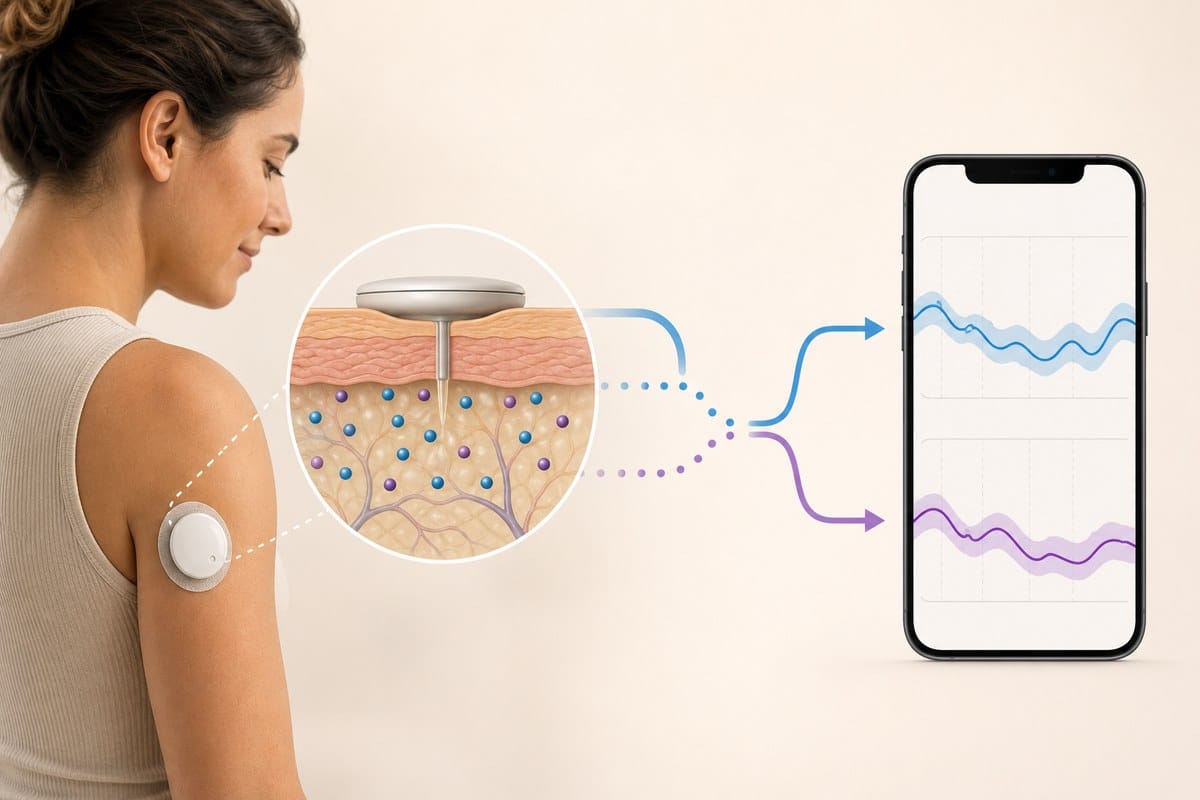
Abbott says the system will work with the latest U.S. Libre app and is intended to connect with automated insulin-delivery systems. The company expects compatibility with Beta Bionics’ iLet and Sequel Med Tech’s twiist systems by the end of 2026, with additional projected integrations in 2027. Those are company timelines, rather than currently available functions for users.
What the studies appear to show — and what they do not
The available account of the FDA review is limited. MedTech Dive reported that the six studies evaluated glucose and ketone monitoring accuracy and that the agency found the system could track clinically meaningful ketone differences over the 10-day wear period, including elevated ketones before DKA onset. Detailed protocols, participant characteristics, statistical results, comparison methods and peer-reviewed reports were not publicly described in the materials available.
That leaves an important gap between analytical performance and clinical outcomes. A device can accurately detect changes in a biological marker without evidence that its use changes what happens to patients. To establish that Libre Duo 10 Day prevents DKA or lowers hospitalization rates would ordinarily require outcome research comparing users with an appropriate control group and following DKA events, treatment decisions and other real-world factors.
Abbott says the sensor can offer earlier awareness of rising ketones and may help people avoid DKA. That is a plausible intended use for trend information, but it remains a company claim rather than a demonstrated outcome from the studies described so far. The company’s characterization of the product as the world’s first dual glucose-ketone sensing technology has also not been independently established in the available reporting.
Sensor durability is another practical consideration. Abbott reported that, in a wear-duration study, 84.1% of adult sensors and 68.8% of pediatric sensors lasted the full 10 days. The company did not provide the sample size for that study in its announcement. Those figures indicate that a labeled 10-day wear period does not mean every sensor will remain in use for the entire interval.
Authorization follows a separate European milestone
The U.S. action follows a May 27 announcement that Abbott had received a CE Mark for Libre Duo systems in Europe. The European product announcement described two configurations: Libre Duo, with up to 15 days of wear and intended for adults, and Libre Duo 10 Day, intended for users age 2 and older. The U.S. authorization announced in August applies specifically to Libre Duo 10 Day.
That product distinction helps avoid treating the European and U.S. announcements as identical regulatory events. A May statement from Abbott said it anticipated select European launches later in 2026; the U.S. statement similarly says Libre Duo 10 Day is planned for release later this year.
Alerts do not replace symptom-based care
Abbott’s safety information says the system may not identify every event, including all glucose readings below 55 mg/dL or ketone readings above 3.0 mmol/L. It advises users to obtain a fingerstick glucose reading when a sensor value or alarm does not match their symptoms or expectations, and to use ketone information together with glucose readings when making treatment decisions.
Those warnings are consequential for a device aimed at a potentially dangerous complication. Continuous data can add information, but a sensor alert is not a diagnosis, and an absence of an alert cannot rule out illness. How much the technology changes care will depend not only on accuracy, but also on training, access to supplies, app and pump compatibility, response plans and whether insurers cover it.
For now, the FDA authorization marks the arrival of a new monitoring category in the United States. Its clinical value will be clearer when detailed performance data, pricing and coverage information, and studies of DKA-related outcomes become available.

