


SB Energy, the SoftBank-controlled developer of power and data-center infrastructure, has filed for a U.S. initial public offering that would put an unusually early-stage AI-infrastructure business before public-market investors. The proposed listing arrives with a crucial disclosed dependency: OpenAI is both a prospective tenant and an equity investor, while SB Energy’s data centers have yet to begin operating.
CNBC’s account of the registration filing said SB Energy plans to list under the ticker SBE on Nasdaq and Nasdaq Texas, subject to completing the offering. The company had not announced a share price or debut date. CNBC also reported that SB Energy said it is substantially dependent on OpenAI’s performance under its lease and related agreements, placing customer concentration alongside construction and financing risk at the center of the prospective IPO.
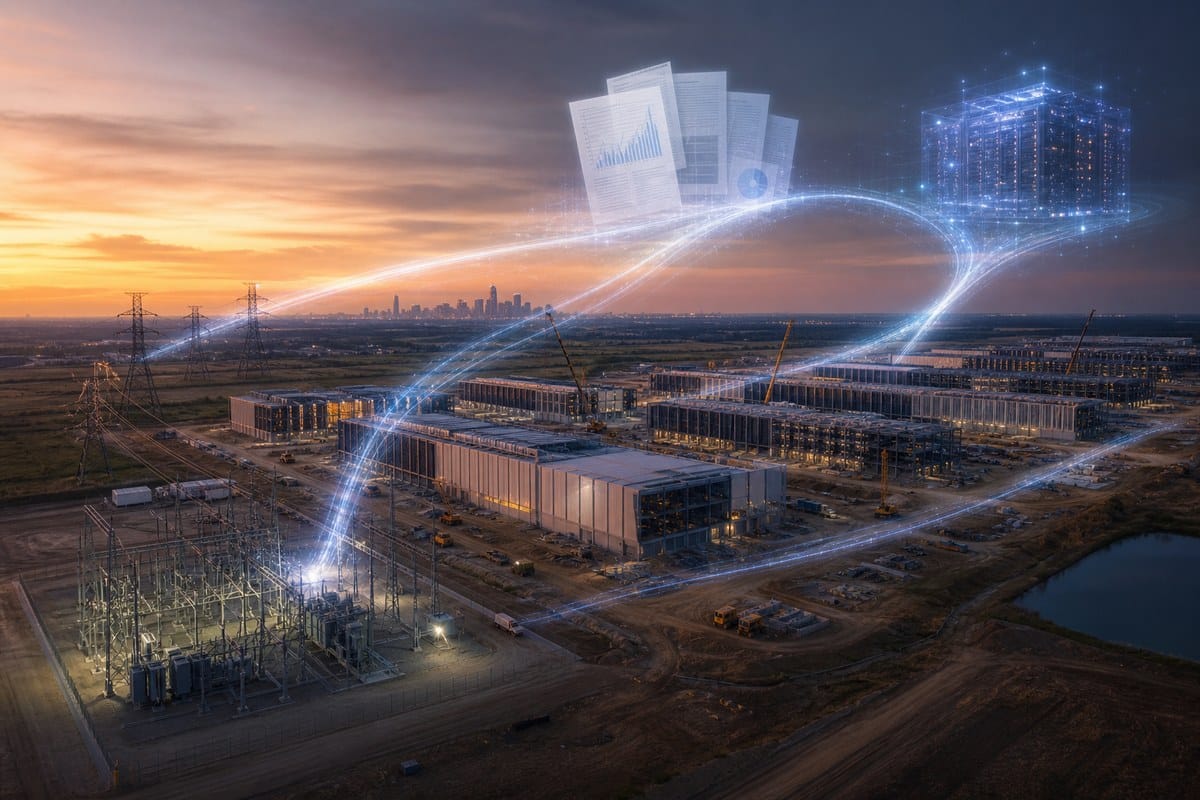
A public-market test for an unbuilt data-center business
The filing disclosures describe a company with a functioning legacy energy operation and an expansive but still pre-operational data-center plan. CNBC reported that SB Energy generated roughly $139 million of revenue in the first half of 2026, mostly from its legacy energy business, while posting approximately $3.2 billion in net losses. Its data-center business had not generated revenue, and none of its data centers was operational.
Those figures illustrate the gap investors will need to assess. Using the reported first-half numbers, net losses were more than 23 times total revenue. That comparison does not establish why the company incurred the loss, and the filing details available through CNBC do not support assigning it to any particular project cost, financing item or accounting treatment. It does, however, show that the future data-center operation is being valued and financed before it has contributed operating revenue.
SB Energy is seeking to develop, build and operate facilities that combine data-center demand with power infrastructure. Such projects require several linked commitments: a customer willing to lease computing capacity, access to electricity and transmission, construction capital, and project financing that remains available through completion. A delay in any one element can affect the economics of the others, especially before facilities enter service.
CNBC reported that SB Energy’s filing also flags community opposition, local moratoria and broader resistance to AI-related infrastructure as risks to its data-center and power-generation businesses. Those cautions are material for a company whose planned campuses require both land development and energy supply, rather than simply the installation of computing equipment in existing buildings.
OpenAI relationship combines demand, capital and concentration
The OpenAI connection is more extensive than a conventional customer contract. In separate partnership announcements, SB Energy and OpenAI said OpenAI and SoftBank Group had each committed $500 million to SB Energy, for a combined $1 billion investment. The companies also said OpenAI selected SB Energy to build and operate a 1.2-gigawatt data-center site in Milam County, Texas.
The two companies’ announcements corroborate the investment amount and the Milam County assignment, providing primary-source support for the commercial framework behind the filing. They also indicate the arrangement is tied to OpenAI’s broader Stargate data-center effort. SB Energy said it was developing multigigawatt campuses and expected initial facilities to enter service beginning in 2026, a forward-looking plan that contrasts with the IPO filing disclosure, reported by CNBC, that no data centers were then operating.
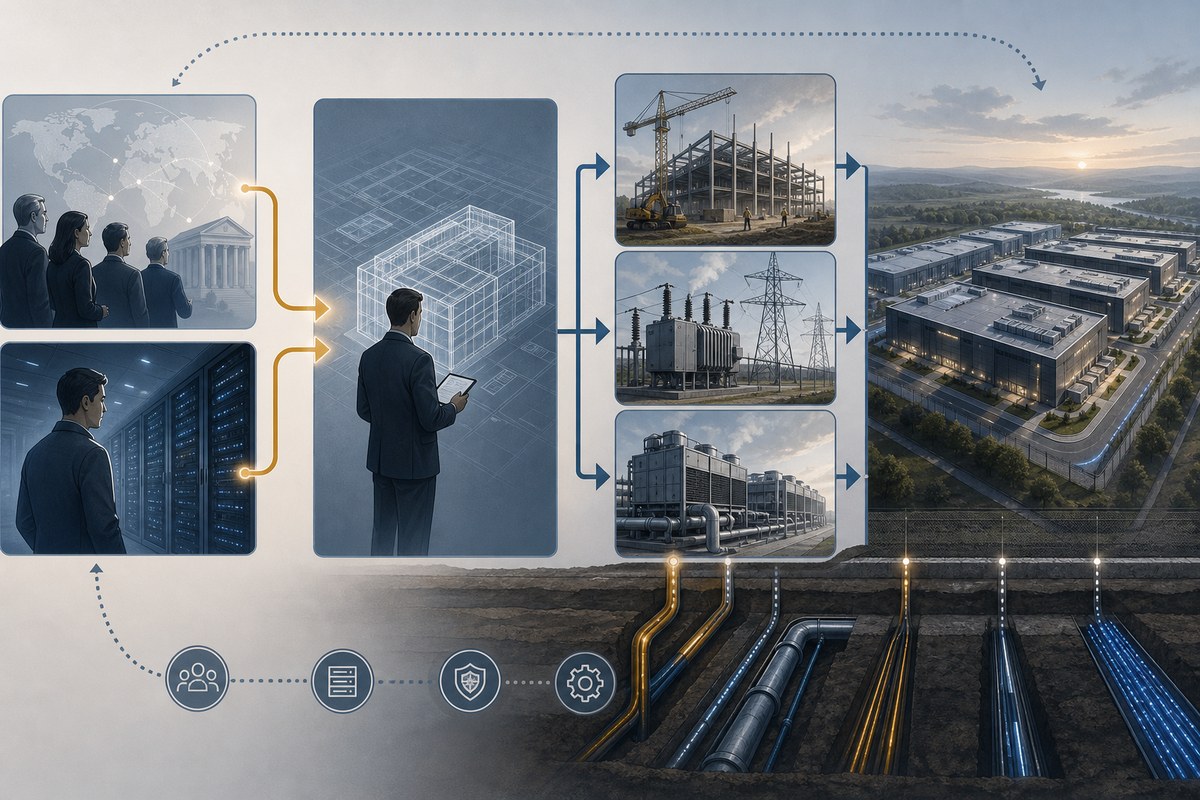
For investors, the structure creates a dual exposure. OpenAI could provide demand that helps justify construction and financing for major facilities; at the same time, SB Energy’s own disclosure, as reported by CNBC, says its near-term revenue, project-financing arrangements and development plans are significantly linked to OpenAI’s performance under the lease and related agreements. A change in the tenant’s needs, timetable or ability to perform could therefore affect more than occupancy at one site.
The available disclosures do not establish the final duration, pricing or volume of any lease arrangement, nor do they show how much future data-center revenue SB Energy expects to derive from OpenAI. That leaves public investors to weigh a strategically valuable anchor customer against an acknowledged concentration risk.
Financing history underscores the scale of the buildout
The prospective IPO follows substantial private commitments. SB Energy said it secured $800 million of redeemable preferred equity from Ares in 2025, in addition to the $1 billion pledged by OpenAI and SoftBank Group. Together, those announced commitments total $1.8 billion, though the instruments are not equivalent: the Ares funding was described as redeemable preferred equity, while the OpenAI and SoftBank commitments were announced as strategic-partnership investments.
That distinction is relevant because data-center expansion can consume capital long before a site produces rent or service revenue. Equity, preferred equity, construction financing and project-level debt can carry different repayment priorities, returns and conditions. The public offering would add another potential source of capital, but the company has not publicly set its terms.
CNBC reported that The Wall Street Journal had said SB Energy could seek $5 billion to $7 billion and begin trading as soon as September. Neither figure was confirmed by SB Energy in the material available, and CNBC said the company had not announced pricing or a specific timetable. The only firm development is the filing itself and the stated intention to list, subject to the offering’s completion.
The IPO will consequently be judged less as a financing event for a mature operator than as a market test of whether investors will fund a developer whose planned AI-data-center capacity is backed by a prominent customer and strategic investors, but whose facilities and data-center revenue remain in the future.

