


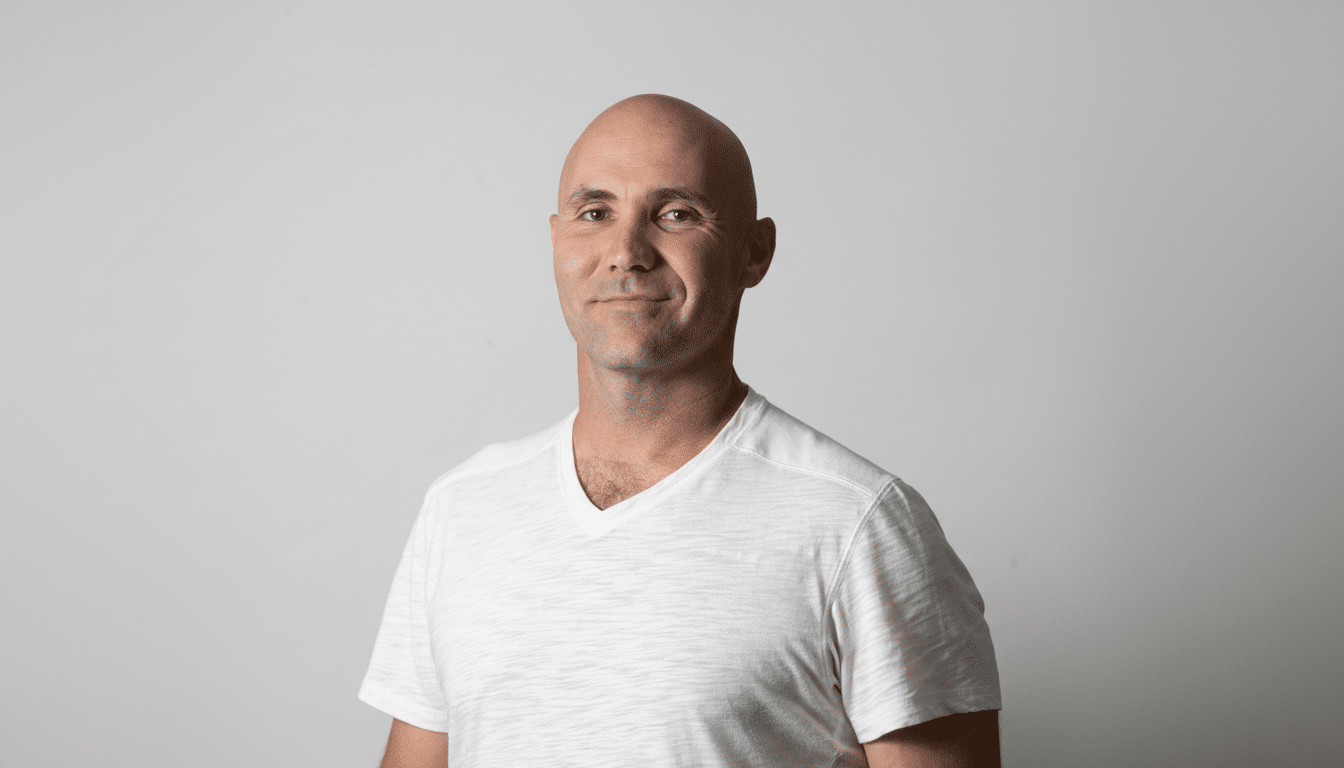
Sauron, an upscale home security startup for “super premium households,” has hired Maxime Bouvat-Merlin, formerly of Sonos, as its new CEO, answering a unique take on the hardware-software-auto services that better cater to the boutique customer. The hiring also comes as the company is resetting timelines and focusing its product strategy, following early buzz around military-grade capabilities — for tech elites.
Sonos veteran takes over Sauron leadership as CEO
Bouvat-Merlin had spent years helping Sonos scale a multi-device platform that captured high-end consumers with design, reliability, and word-of-mouth. Sauron says Sauron itself faces those same core decisions: Do you start at the very top of the market or aim for mass premium; professional installation or DIY; and what do you build natively versus relying on partners? It’s a familiar playbook for high-end consumer-tech plumbers, but the stakes are higher when the product protects people’s homes.
The company’s founders, Kevin Hartz and Jack Abraham, imagined the service after their own security experiences failed to account for potential threats because traditional alarms can’t always distinguish a real one from a false positive. Early backers comprise executives connected to Flock Safety and Palantir, defense-oriented investors in the form of 8VC, and startup studios A* and Atomic. A new CEO’s mandate: create a tech company that serves society. The edict to the new chief executive: Turn a promising idea into something that works, and adapt it for the most discerning markets.
A super-premium playbook for targeted high-end rollout
Sauron is strategically opening in the locations with the most to lose and at the highest price points, in estates and homes where owners can afford to pay not just for rigorous perimeter detection but for concierge responses and thoroughly concealed installations. The idea is to accrue credibility with demanding customers, then expand into what the company describes as “mass premium.” It’s the same ladder that many luxury-first brands climb — establish greatness at the top, and then scale without weakening.
The company is small by design, with fewer than 40 employees and slow hiring planned for this year. A targeted rollout to early adopters is on the cards before a mass market push, with funding next spring hoped to speed delivery once key elements satisfy tests in harsh conditions.
Tech stack and deterrence strategy for elite properties
Sauron’s rig is built around camera pods that combine several modalities — high-resolution video with advanced sensors like LiDAR, radar, and thermal imaging — all orchestrated by machine learning software running on local or nearby servers. Human-in-the-loop verification, escalation, and customer follow-up is created with a 24/7 concierge team of veterans and law enforcement.
Deterrence is not an afterthought. The firm is testing layered responses that start before anyone sets foot on a property — identifying casing behavior, cars circling repeatedly, or a pattern of suspicious activity over time. Solutions under consideration include focused audio challenges and doses of lighting meant to disrupt bad choices before they snowball. Drones are still part of the discussion, and the leadership sounds interested in partnerships as opposed to build-our-own for parts the ecosystem already provides.

Addressing false alarms, but not surveillance overreach
It’s a common problem in the industry known as alarm fatigue. Indeed, many police departments (and municipal audits and law enforcement groups) report that essentially 90% or more of dispatched alarm calls are false in the end, which is a disincentive to respond. Sauron’s reply is a mix of superior sensors, “smarter” computer vision, and trained analysts to suppress nuisance alerts quicker while escalating credible threats sooner.
That sophistication butts up against privacy expectations. The startup is working on a trust model that differentiates between “known” household members and regular visitors, versus all others who are treated as strangers until confirmed otherwise. With the increased regulatory attention to biometrics — think Illinois’ Biometric Information Privacy Act and compliance with California’s privacy laws, to name a few — privacy-by-design, informed consent, and on-device processing whenever possible will be key. Civil liberties groups have long cautioned that face and plate recognition both pose the potential for bias and overcollection; Sauron’s distinguishing will depend as much on controls as capabilities.
Execution path and market background for Sauron rollout
The company has delayed its original launch window by at least a year, and is now plotting to take an iterative approach: validating sensor selections, honing human-in-the-loop operations, and rolling out end-to-end installs with an initial cohort before opening the floodgates. I expect manufacturing to also start regionally, close to home for QC reasons, and then once volumes go up cheaper production will be moved onshore.
Sauron joins a crowded market in which traditional incumbents and smart-home brands have struggled to combine premium hardware with responsive monitoring and nuanced deterrence. While some city crime measures have improved, fears among wealthy homeowners are on the rise after a spate of high-profile robberies and crypto-related heists. The bet of Sauron is that a credible deterrence layer plus concierge-caliber service can determine loyalty — and price — where classical systems fumble.
With this round of funding, Bouvat-Merlin’s most urgent objective is execution discipline — locking in the sensor stack and proving down-funnel accuracy while ensuring that using your machine feels more like a utility from a trusted household service than operating some gadget.
If Sauron can prune false alarms, increase faith in the responses, and keep privacy protections front and center, it will have won what is security’s most precious asset — quiet, accumulating word of mouth.
