


I spent an hour with Samsung’s $2,899 tri-foldable in a quiet demo room off the CES show floor, and it took only minutes to realize this form factor is the most convincing vision of a phone-tablet hybrid yet. The device moves past novelty and into “I could actually use this every day” territory.
A Foldable Design That Finally Makes Sense for Daily Use
Unfolded, the TriFold becomes a wide 10-inch AMOLED canvas in a comfortable 4:3 aspect ratio, closer to a compact tablet than the square-ish layouts typical of earlier foldables. That matters. Web pages render naturally, spreadsheets breathe, and split-screen feels designed rather than improvised.
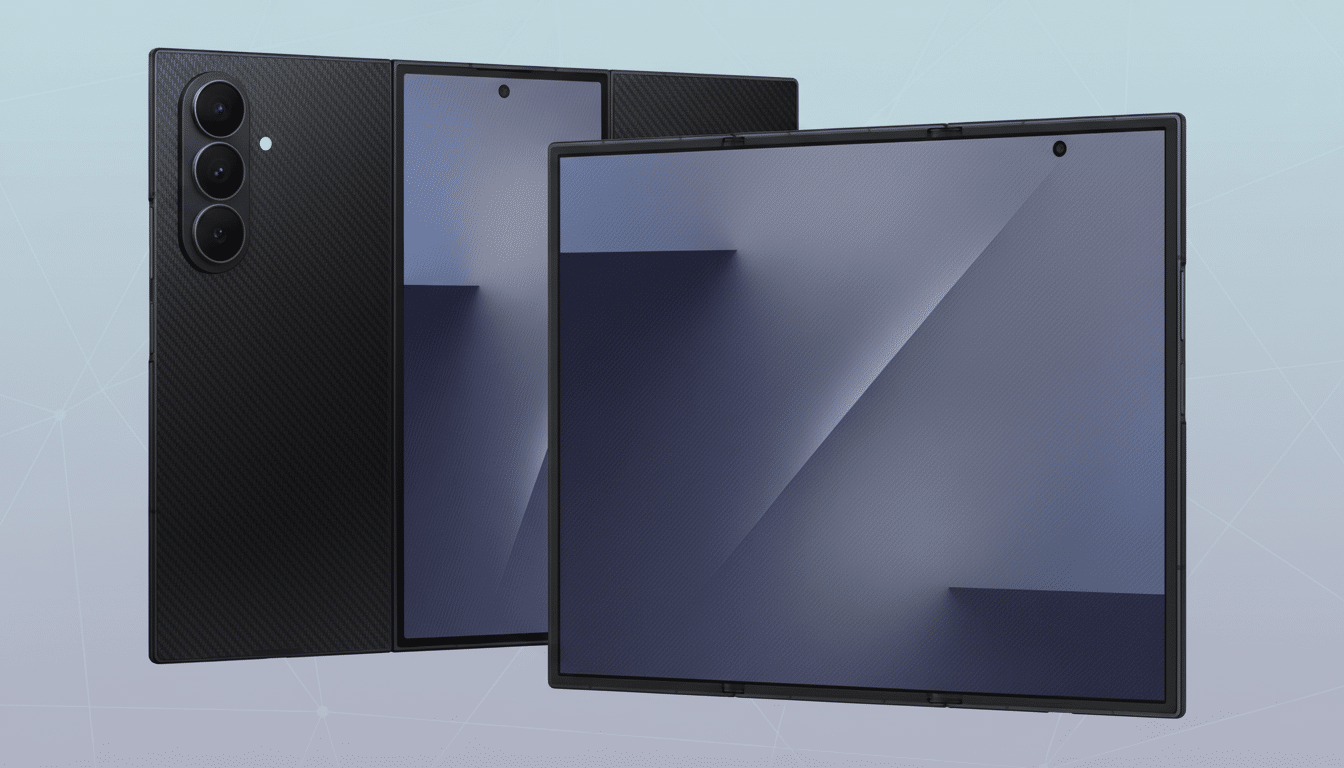
The transition from phone to tablet is fluid: closed, it behaves like a traditional premium handset; unfurled, it turns into a workspace. Seeing one device morph cleanly between those roles is the breakthrough foldable advocates have been waiting for.
Hardware Confidence in the Hand, Build Quality You Feel
Three panels join with two hinges that feel solid and deliberate, with a damped resistance that inspires confidence rather than anxiety. Gone are the micro-creaks and flex-y moments that early adopters learned to tolerate. The chassis feels tightly engineered, with consistent tolerances at the seams.
There are trade-offs. This is unequivocally a two-handed device when unfolded, and with two folds come two visible creases. You also notice more fingerprints on both the outer shell and inner display. The Crafted Black finish looks premium but will have you reaching for a microfiber cloth often.
Samsung is positioning this as a luxury tier product, starting at $2,899 for 512GB. That price puts it well above most flagships and into phone-plus-tablet territory, which is precisely the point: it aims to replace both. Early units have already landed in South Korea, with the US rollout to follow.
Productivity on a 10-Inch Canvas for Work and Play
The value emerges the moment you split the screen. Running email alongside a browser and a notes app feels natural on the 4:3 canvas, and drag-and-drop between panes is fast. This is where Samsung’s years refining Multi-Active Window and app continuity pay off; the UI behaves predictably as you fold, unfold, and rotate.
Large-screen optimizations introduced through Android’s big-screen initiatives (often referred to collectively with Android 12L improvements) show here: toolbars tuck where they should, text reflows properly, and media players scale intelligently. Microsoft 365, Google Workspace, and many creative apps now handle resizable layouts with fewer quirks than in the early foldable era.
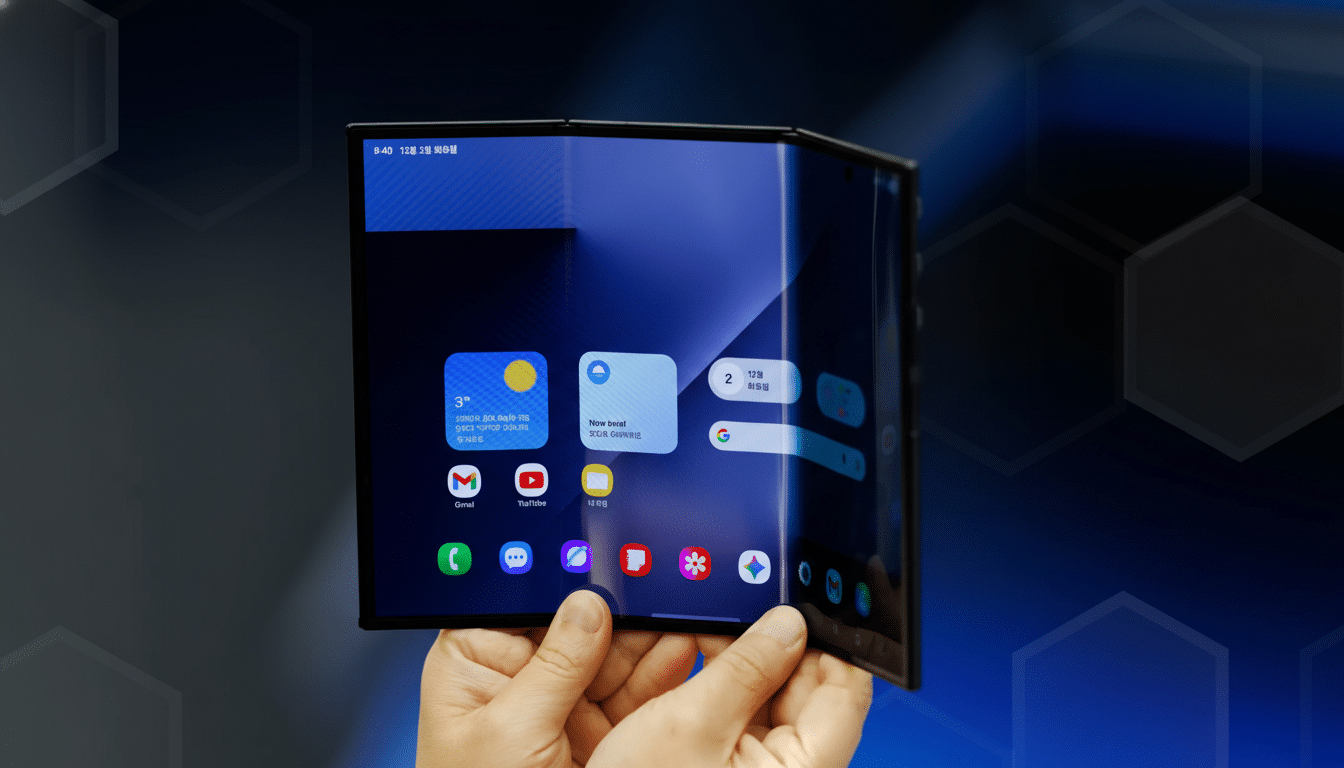
The 10-inch panel transforms entertainment, too. Video looks rich, comic readers and magazines feel true to print, and cloud gaming benefits from the extra real estate for controls. It’s the first foldable I’ve used that made me forget I also carry a small tablet.
Where It Still Falls Short and What Needs Improvement
The most conspicuous omission is a true, integrated stylus experience across the entire unfolded surface. There’s no system-level pen input that tracks evenly across all three panels, which limits precise note-taking and illustration. For some, that will be the one feature keeping a tablet in the bag.
Ergonomics are also a factor. Weight and thickness are well managed for the category, but there’s no escaping physics: three layers of glass or polymer and two hinges make for a device you won’t thumb-type one-handed for long. If your routine is dominated by quick, on-the-go replies, a slab phone still wins for simplicity.
App optimization is much improved, but not universal. A few holdouts still letterbox awkwardly or fail to respect the split-screen grid. The good news: the list is shrinking as developers follow Google’s large-screen guidance and as more users demand better support.
Why This Could Replace Two Devices for Many Users
For travelers, students, and mobile professionals, the TriFold’s promise is straightforward: one device that handles calls and pockets easily, then becomes a tablet for serious work or leisure. In practice, it meant triaging inboxes while referencing a briefing in the next pane, then folding down to check messages between meetings without juggling devices.
Market watchers have been betting on this direction. Display industry analysts have pointed to rising shipments of foldable panels, and researchers at firms like Counterpoint have noted a steady climb in consumer interest tied to productivity use cases. The TriFold is the clearest hardware response to that demand to date.
After a week with a typical premium slab, I usually miss my larger tablet for reading, editing, and video. After minutes with the TriFold, I stopped thinking about carrying both. It isn’t perfect, but it’s the first foldable that convincingly feels like a phone and a tablet without the usual compromises—and that’s a turning point.
