


One of the most extreme gaming displays on the market just got a wallet-friendly moment. The 57-inch Samsung Odyssey Neo G9 is marked down to $1,499 from a $2,299 list price, a 35% drop that brings this ultra-wide, dual‑UHD powerhouse within reach for enthusiasts and power users. Inventory-driven deals like this rarely last, so if you’ve been eyeing a single-screen replacement for a dual-monitor setup, this is the window.
Why This 57-Inch Behemoth Truly Stands Out Today
Samsung markets the Neo G9 57" as the world’s first dual UHD gaming monitor, effectively merging two 27-inch 4K panels into one seamless 32:9 expanse at 7,680 x 2,160. That canvas clocks around 141 pixels per inch, so text and textures look crisp rather than stretched—a common pitfall in older super ultrawides.
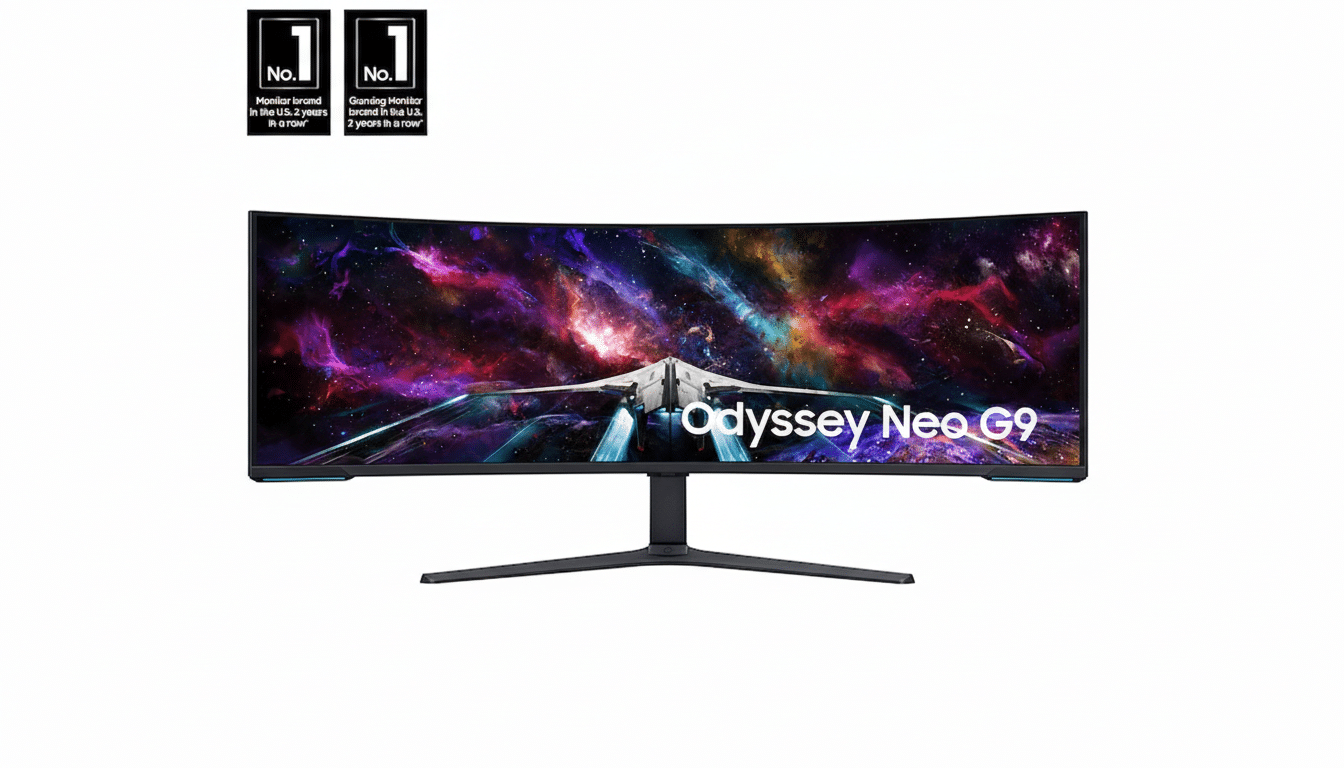
Under the hood, a Mini‑LED backlight with full‑array local dimming drives high-contrast HDR performance, and models in this line target VESA DisplayHDR 1000-class brightness for specular highlights that pop. The 1000R curve wraps your peripheral vision, while a 240Hz refresh rate and a 1ms GtG response time deliver the kind of fluidity competitive players chase. Variable refresh support (including AMD FreeSync Premium Pro) helps keep motion clean when frame rates fluctuate.
Connectivity is similarly forward-leaning: DisplayPort 2.1 is on tap for the bandwidth you need at dual‑UHD resolutions and high refresh with DSC, alongside HDMI 2.1 for consoles and a USB hub for peripherals. In short, it’s built for today’s GPUs and tomorrow’s, not a stopgap.
Real-World Gains for Games and Everyday Workflows
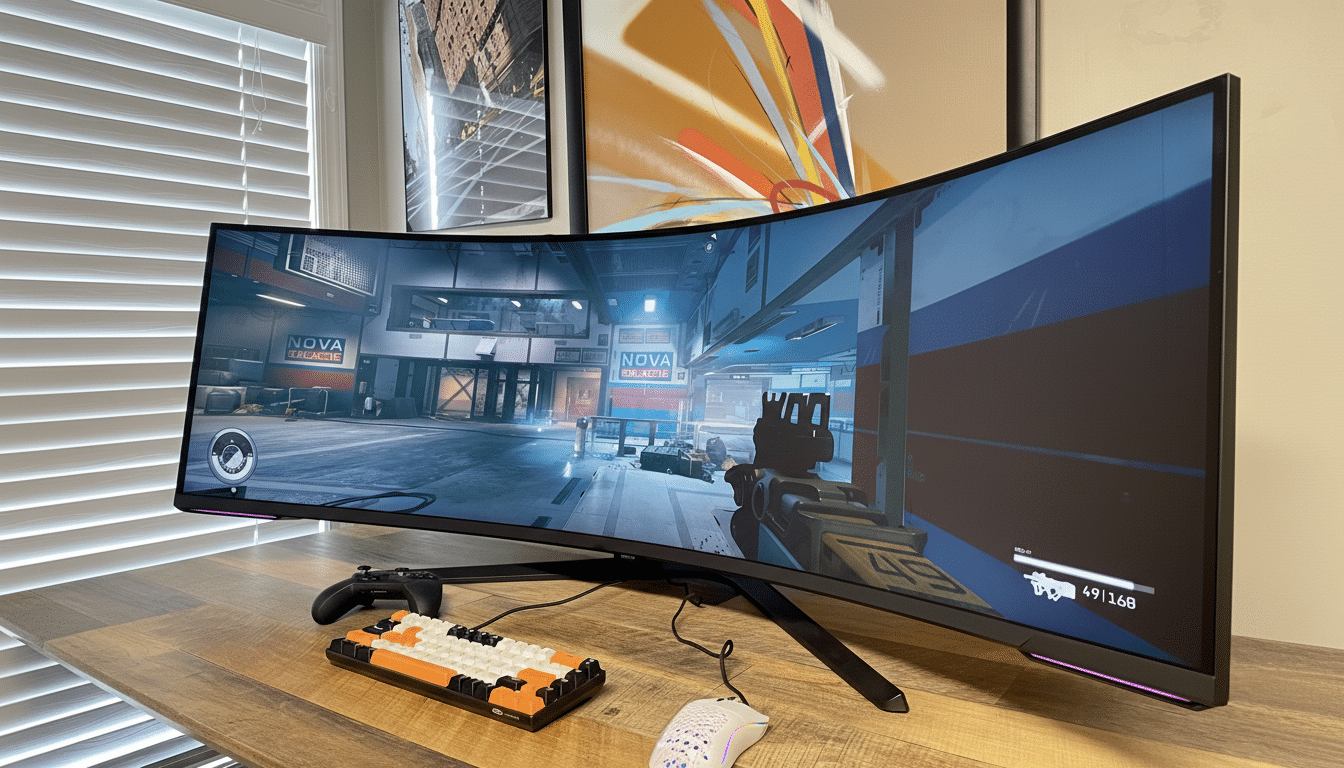
In cockpit and sim titles—think Microsoft Flight Simulator or iRacing—the 32:9 field of view is the difference between “playing” and “being there.” You see instruments and scenery without panning, and the extra horizontal pixels translate to earlier target visibility in racers and shooters. Fast action staples like Apex Legends and Call of Duty benefit from the 240Hz ceiling when paired with a top-tier GPU.
The productivity upside is just as tangible. That dual‑UHD width makes timeline editing in Adobe Premiere less cramped, spreadsheet warriors can view multiple panes side by side, and developers can keep code, logs, and previews open simultaneously. Picture‑by‑Picture and Picture‑in‑Picture modes let you run two systems at once—say, a work laptop and a gaming rig—without juggling inputs.
What You Need to Run It Well at Dual-UHD Resolutions
Pushing 7,680 x 2,160 at triple‑digit frame rates is demanding. For many esports titles, an upper‑tier GPU such as an NVIDIA GeForce RTX 4080/4090 or AMD Radeon RX 7900 XTX is recommended to fully exploit the 240Hz refresh, while visually heavy games may call for DLSS or FSR upscaling. A DisplayPort 2.1 connection unlocks the best mix of resolution, refresh, and HDR with chroma intact.
Plan for the physical footprint, too. At 57 inches with a deep 1000R curve, you’ll want a wide desk with generous depth to avoid neck craning. The chassis is hefty—north of many standard ultrawides—so ensure your VESA arm or stand is rated well above the monitor’s weight. A quick calibration pass (gamma, color temp, and local dimming level) will pay dividends; review labs and display pros consistently note that Mini‑LED sets can swing from merely good to stunning with smart settings.
How This Deal Stacks Up Against Similar Ultrawides
The Neo G9 57" typically sits in the upper echelon of ultrawides—often $2,299 to $2,499 depending on retailer cycles—because few panels match its resolution, size, and refresh combination. An $800 discount is among the steepest cuts we’ve seen since launch and puts it in striking distance of smaller 49-inch competitors. For shoppers debating between a premium 4K 240Hz flat panel and a super ultrawide, this pricing materially shifts the value equation toward the Neo G9 for users who can leverage the width.
Who Should Pull the Trigger on This Massive Monitor
If you split your time between fast-paced games and serious multitasking, and you have the hardware (and desk) to back it up, this is the kind of rare, high-impact upgrade that can simplify your setup and elevate both performance and immersion. Creators working across dense timelines or multi-pane workflows will see immediate quality-of-life gains. If your GPU is midrange and your play leans toward cinematic single‑player titles at modest frame rates, you’ll still enjoy the scale and HDR, but you won’t fully tap the 240Hz ceiling—something to weigh as you consider a future graphics upgrade.
Bottom line: At 35% off, the 57-inch Odyssey Neo G9 moves from aspirational to attainable. Act quickly if it’s on your shortlist; deep cuts on flagship ultrawides tend to vanish as soon as stock tightens.
