


Samsung’s Galaxy Z TriFold took a bow at CES, and a quick hands-on tells you one thing loud and clear: This is its most daring foldable yet. It not only opens, but unfolds into an almost 10-inch canvas that feels like more tablet than phone. It also requires a painful conversation about trade-offs, because it means making real compromises chasing that dream of the pocketable slate.
Design and first impressions of Samsung’s Galaxy Z TriFold
Despite the “TriFold” name, two hinges link three segments of display in the device. Samsung opts to continue with the inward-folding inside panel and a typical glass-covered outside display, unlike the around-the-outside approach of HUAWEI’s Mate XT. The upside is clear: when you slide the phone into your pocket, the delicate flexible screen is protected.
- Design and first impressions of Samsung’s Galaxy Z TriFold
- Specs That You Know, Different Form Factor
- Multitasking and on-device DeX on the TriFold’s screen
- Ergonomics and the unavoidable laws of physics at play
- Price expectations and market outlook for tri-fold phones
- Early verdict: promise, trade-offs, and who it’s for
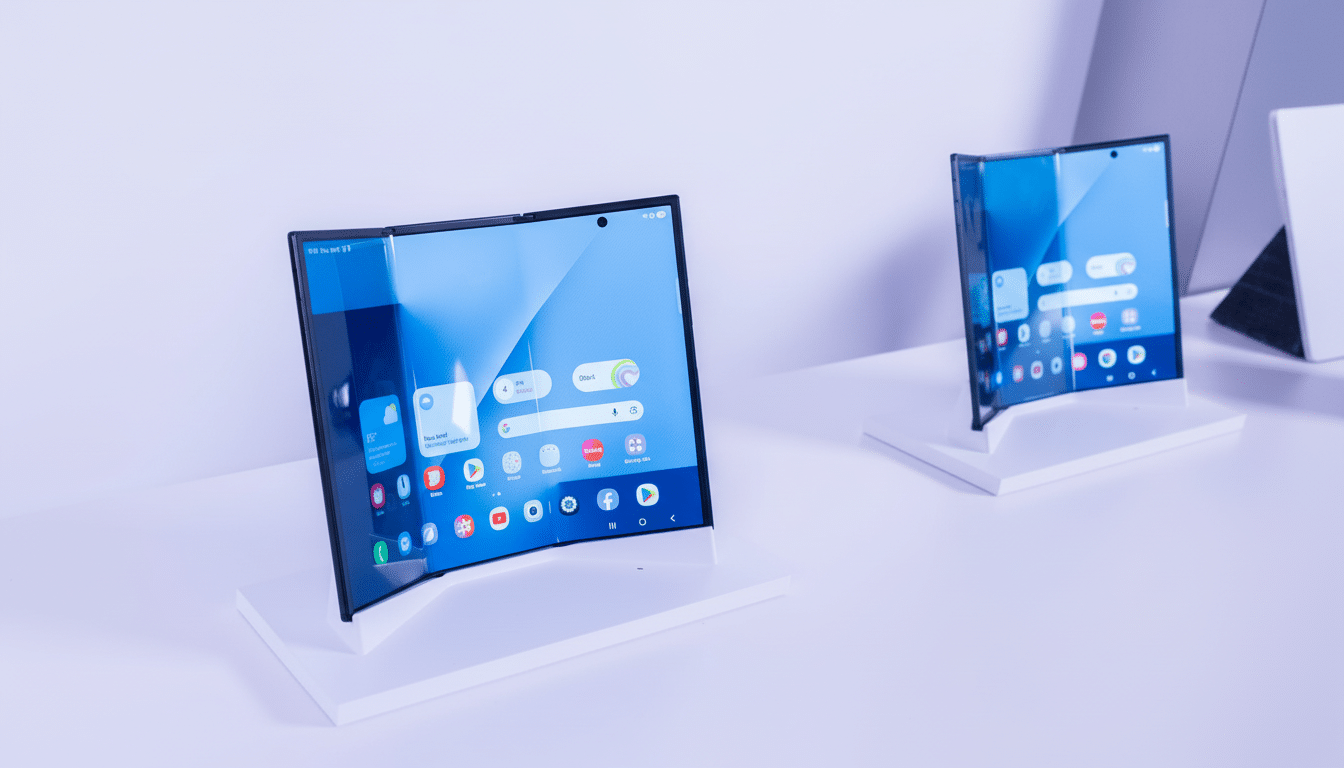
Samsung also installed what it called a smart guardrail. Fold it improperly and the software slaps a terrifying full-screen warning, while the haptics crescendo to nudge your hands into compliance. It is a no-brainer save on a hen’s-teeth repair bill if this is something you don’t want to discover for yourself.
Unfurled, the inner expanse of the TriFold lands firmly in tablet territory. The big-screen frame keeps you from thinking much about trade-offs and lets you start dragging some windows around. Folded, reality intrudes. This is a thick, dense slab that makes today’s single-hinge foldables look slim in the pocket.
Specs That You Know, Different Form Factor
Inside, Samsung does not reinvent the recipe. The Galaxy Z TriFold will utilize the same Qualcomm Snapdragon 8 Elite silicon as the Galaxy Z Fold and a similar camera stack with a 200MP sensor, ultrawide lens and another dedicated to zoom. What this means, in other words, is that we should see no more than performance and imaging equivalent to what we’ve seen on Samsung’s ultra-premium foldable phones.
The battery grows to 5,400mAh, roughly 23% larger than the Fold 7’s cell. This would seem like a win except for that, you know, the TriFold has to illuminate a much larger display. All those pixels require straining both the CPU and GPU, which tends to negate capacity gains on large-screen devices. Only full testing will tell whether Samsung’s power management can spin that spec bump into real-world endurance.
Weight is the spec that smacks you right in the face. The TriFold weighs in at north of 300g, more than 100g heavier than the Fold 7 and around half as heavy again as your basic slab phone. That’s the cost of two hinges, additional layers and a bigger battery all residing within that same chassis.
Multitasking and on-device DeX on the TriFold’s screen
Running One UI 8 on Android 16, the TriFold is one device that finally gives Samsung’s software some breathing room. Real three-app multitasking continues with a spread on the internal display, and each app has a familiar phone-like aspect ratio as well. Having Slack, Chrome and YouTube open next to each other no longer feels like a party trick: it’s productive.
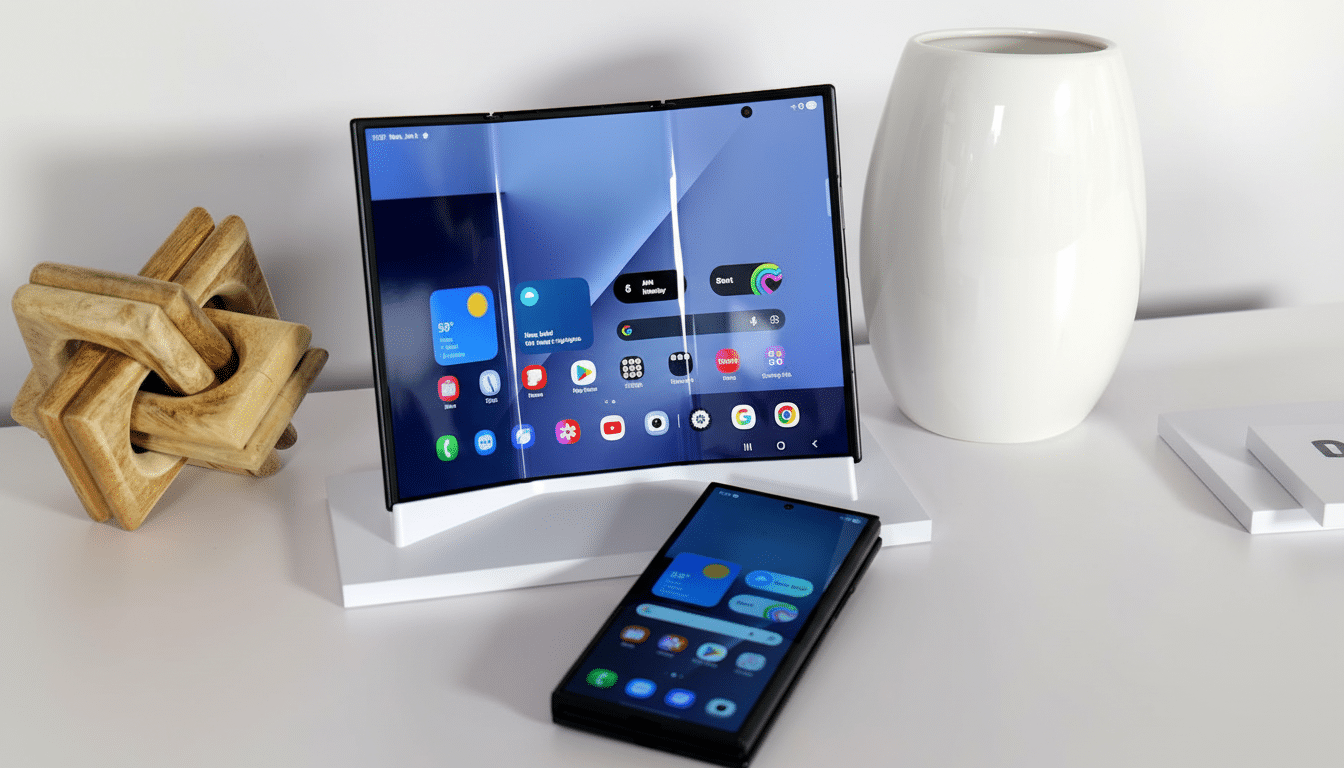
Even more interesting is native Samsung DeX. There’s no external monitor required to receive a desktop-style taskbar and windowed apps — the TriFold’s inner screen is just large enough. For the business traveler, the field worker or students out in the world, that “PC in your pocket” promise is no longer just a theory. DeX has always been a niche curio, but with a tablet of this size, it’s now more than fleshed out enough for daily use rather than just tech demo novelty.
Ergonomics and the unavoidable laws of physics at play
The TriFold’s magic trick is evident once it’s open; the concessions are apparent once it’s closed. Thickness and mass revive the early complaining that plagued first-gen foldables. Lighter, sure — a common 10-inch tablet weighs a little over 430g; the TriFold weighs less, but as a phone, it will stretch your pocket.
Engineering realities are in play. More hinges, more layers of reinforcement, as well as a ribbon cable result in added volume. The battery energy density, or the amount of energy you can pack into a given unit of weight or volume in batteries, has barely budged in recent years, so cramming multi-day power and big cameras into a slimmer tri-fold is apparently still a puzzle with pieces missing. Display Supply Chain Consultants has said for a while now that any extra fold adds mechanical complexity and cost; it’s a lesson every time you press the thing into your hand, if presumably not yet in long-term reliability data.
Price expectations and market outlook for tri-fold phones
It is not available in markets where it’s listed, but the Galaxy Z TriFold would be positioned between $2,500 and $3,000. That’s halo-product territory and probably a volume-limited play that helps seed a new category. It also prices the device far above premium slabs and most laptops, meaning that buyers need to justify using one device for both tasks.
On a broader level, things are looking good for foldable devices. Analysts at IDC and Counterpoint Research say foldable shipments — which are a large part of the premium smartphone market — outpaced the broader smartphone market’s growth, even as the industry cooled. Demand is concentrated among the haves, those willing to pay more for differentiated experiences. We’ll see what happens if tri-folds are the next wave, but it all depends on how quickly thickness, weight and price can come down while software maturity continues its upward trend.
Early verdict: promise, trade-offs, and who it’s for
The Galaxy Z TriFold is a technological showpiece that finally delivers on the promise of the “tablet in your pocket.” Its multitasking functions and on-device DeX apps feel native, not like tacked-on moments. But the benefits come with the same trade-offs made by those early foldables — bulk, heft and a price that will prevent mainstream adoption.
If Samsung can reduce the weight 10 to 15%, get more out of the big screen, and maintain performance and camera quality, this could be the tipping point. For now, the future is here — but it’s heavy, expensive and squarely aimed at early adopters willing to carry the torch before the rest of us.
