


We spent some time with Samsung’s Galaxy Z TriFold during a public demo in Dubai, and the first impression is straightforward: this is the most ambitious folding phone that Samsung has ever put in people’s hands. It’s more polished than a child of the first attempt has any right to be, but it also makes some obvious trade-offs that will rankle power users.
Think of it as a pocketable 10-inch tablet that folds up into an ordinary phone. The engineering is impressive, the software feels familiar and the form factor finally gets back to why we even have tri-folds. But it’s not a slam dunk for all cases.
- First impressions and ergonomics of the Galaxy Z TriFold
- Hinges and safeguards designed to prevent misfolds
- Display quality and performance in early hands-on use
- Multitasking that actually scales on the 10-inch canvas
- Where it falls short vs. Huawei’s Mate XT tri-fold design
- What we still need to test before a full review phase
- Early verdict and availability timeline for the TriFold
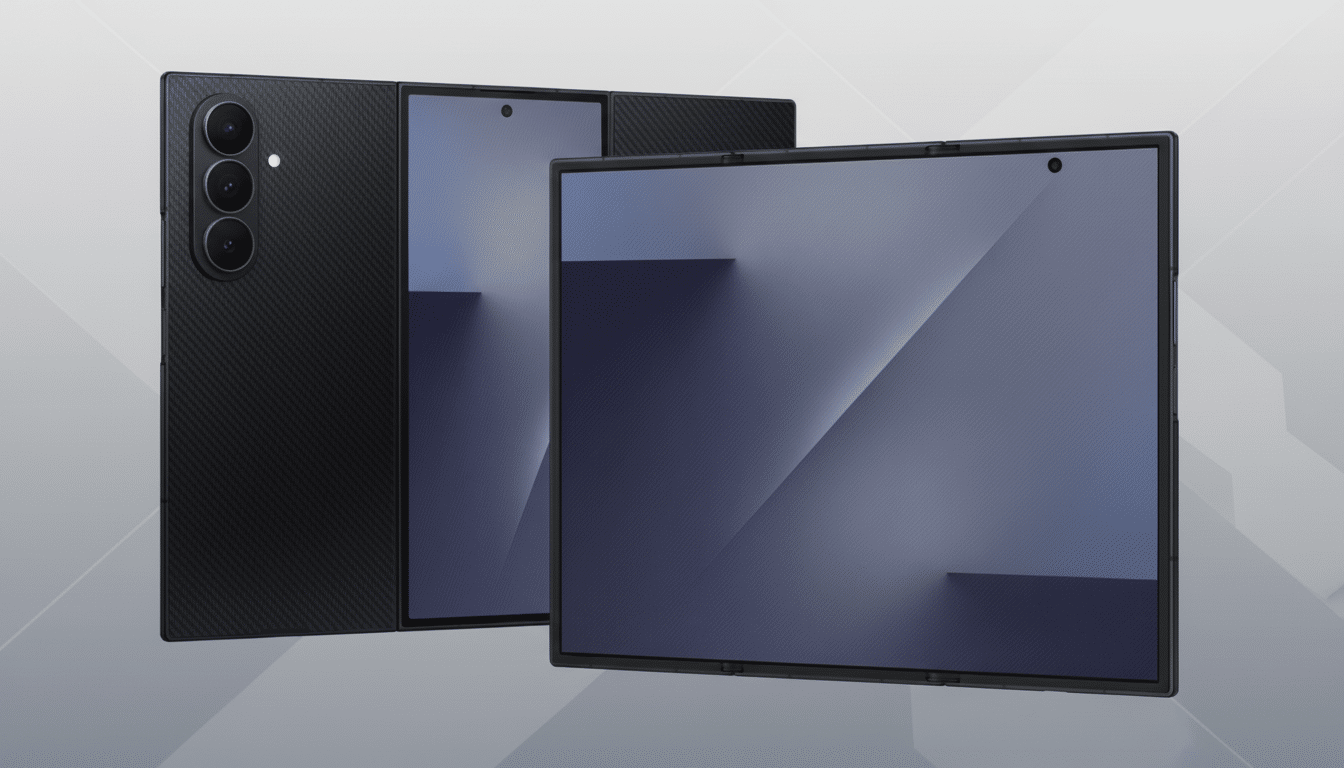
First impressions and ergonomics of the Galaxy Z TriFold
On paper that weight does look a little daunting though, 309 g in the case of the TriFold. In hand, the weight balance does the heavy lifting. The chassis folds into three segments, so it doesn’t feel quite as top-heavy as some of the book-style foldables I’ve been seeing. It’s even lighter than Huawei’s Mate XT, despite the larger gulf in spec sheet between the two (11 g by our measurements), perhaps because Samsung’s dedicated cover display means the heft is kept closer to the spine rather than pulling it away.
Hinges and safeguards designed to prevent misfolds
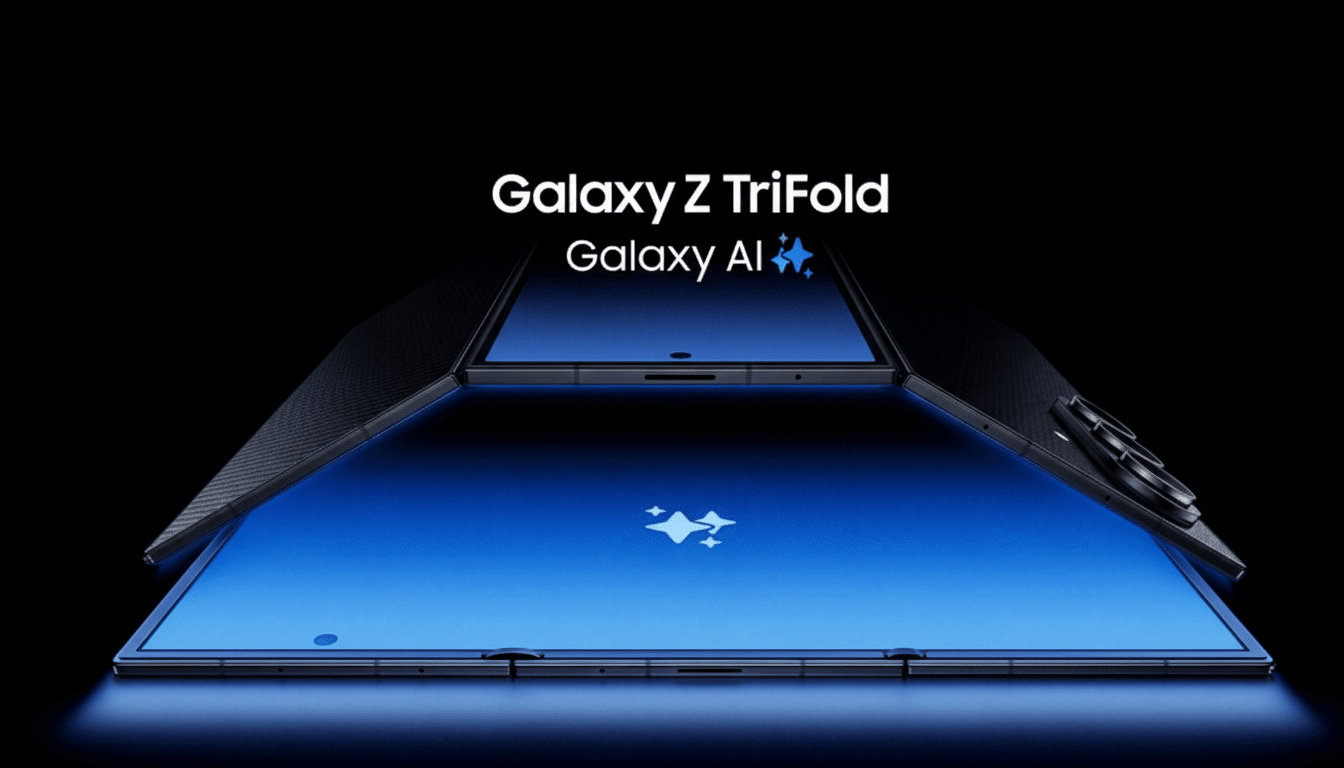
The hinges are the star. Opening and closing is noticeably smooth, with even resistance in segments. For good measure, Samsung built in guardrails: attempt to fold the wrong part of the thing when it’s fully opened and you’ll get an on-screen warning as well as a haptic nudge. It’s a considerate fail-safe that mitigates the chance of twisting the wrong way—just the kind of detail it takes to pull off a multi-fold.
Display quality and performance in early hands-on use
Unfolded, its 10-inch AMOLED 2X canvas with a 4:3 aspect ratio looks fabulous. Colors pop, motion is smooth at 120 Hz and there’s room to actually do some work. With Qualcomm’s Snapdragon 8 Elite, the TriFold felt snappy when jumping between apps and browsing complex web pages. We didn’t check the brightness in the demo area, but reflections were well kept under control and text was sharp even on high-contrast pages.
Multitasking that actually scales on the 10-inch canvas
One UI on the TriFold is what you’d expect and more from Samsung’s other foldables, but now with noticeable flex. Three apps can float side by side in full, resizable panes without feeling crowded, and single-app views have the space they’ve long been yearning for. The app continuity from the 6.5-inch cover screen to the extended canvas was excellent in our time with the phone, and made moving between “phone mode” and “work mode” feel intuitive.
Where it falls short vs. Huawei’s Mate XT tri-fold design
It’s a thoughtful design from Samsung that prioritizes safety and durability, but it does restrict posture choice. The purpose of the TriFold is to have a cover display that’s either closed or fully open to expose the inner screen. That’s not the case with Huawei’s Mate XT, which has three usable points: a smallish slab at about 6.4 inches, an in-between size of 7.9 inches or so, and then you get to swing out the full 10.2-inch panel. Samsung’s approach to keep the delicate inner screen safe when stowed is a good one, but it does mean you’re giving up that flexible, mid-size sweet spot. If you are in the US, the equation shifts slightly: Huawei’s device isn’t on sale there, and Samsung’s TriFold is due to appear.
What we still need to test before a full review phase
We haven’t stressed battery life, camera quality or sustained performance — three areas where bigger screens usually reveal thermal and power weaknesses. Crease visibility and long-term hinge durability will also be an issue. Display Supply Chain Consultants has observed that multi-fold structures add complexity and yield potential issues, meaning higher prices and secured supply. In the meantime, Counterpoint Research is still forecasting strong double-digit growth for foldables as designs mature, which could mean we will see room for tri-fold supplies if the core economics hold up.
Early verdict and availability timeline for the TriFold
The concept of an ultra-portable slate product long has been evidenced by the existence of accessories that can turn a smartphone into a computer, but this offers big-screen productivity without needing a bag. And its hardware polish is further along than many would have expected. The hinge solution feels assured, the 10-inch display makes multitasking genuinely practicable and familiarity with day-one software helps keep the learning curve low. The trade-off is flexibility: you give up some intermediate posture modes you might miss if you’re a power user.
Samsung is aiming for a general release, including the US, in early 2026 with a price tag that’s likely to carry a premium. If the company nails things like battery and camera, then the TriFold could become the de facto “phone-to-tablet” hybrid for people who inhabit spreadsheets, timelines, and dashboards all day. If it doesn’t, it will stand as a sparkling monument to engineering that has not yet found its encore.
